How i scour wool
-
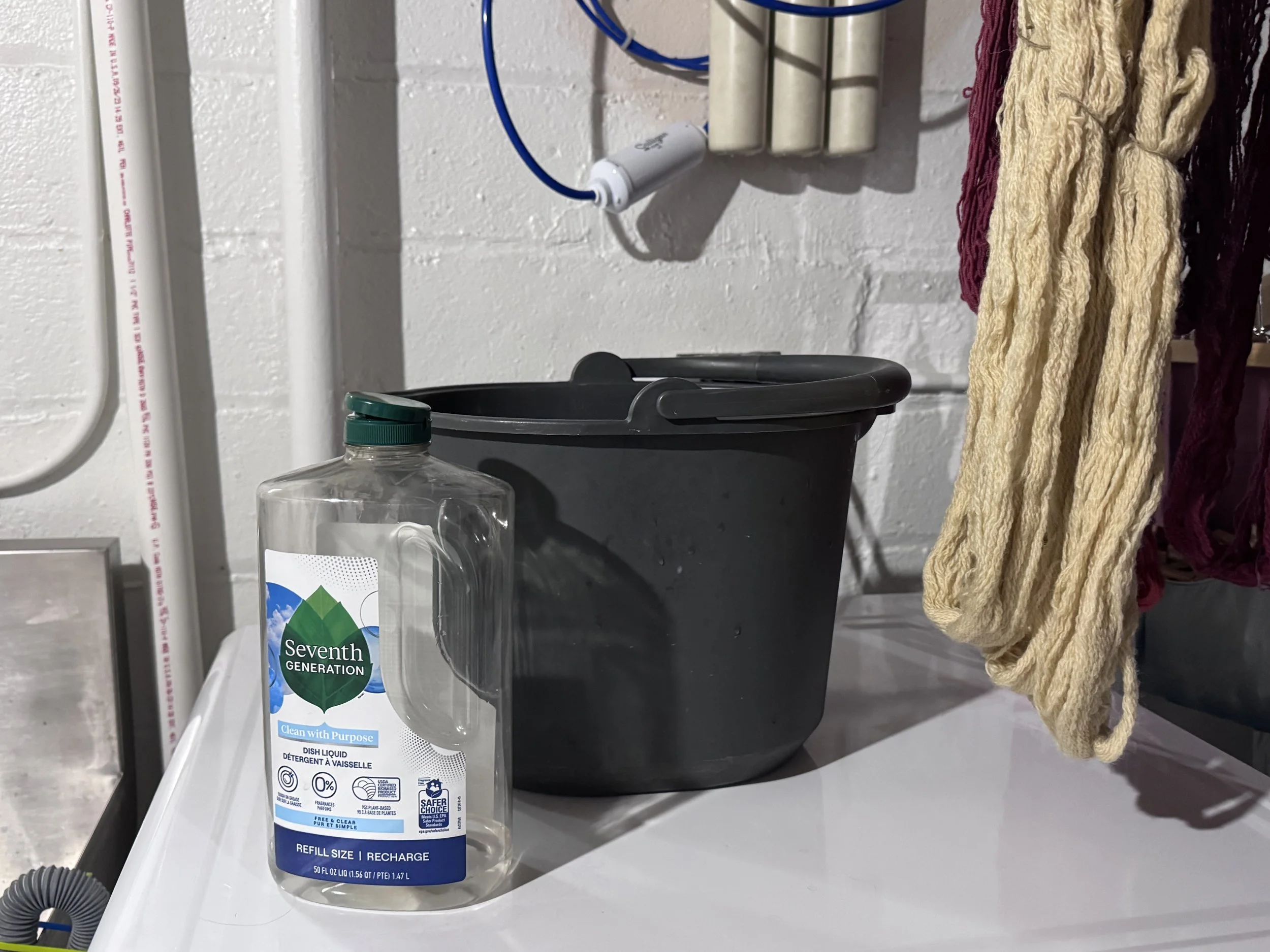
You will need
a bucket, some mild soap, and some pretty warm but not scalding hot water
-
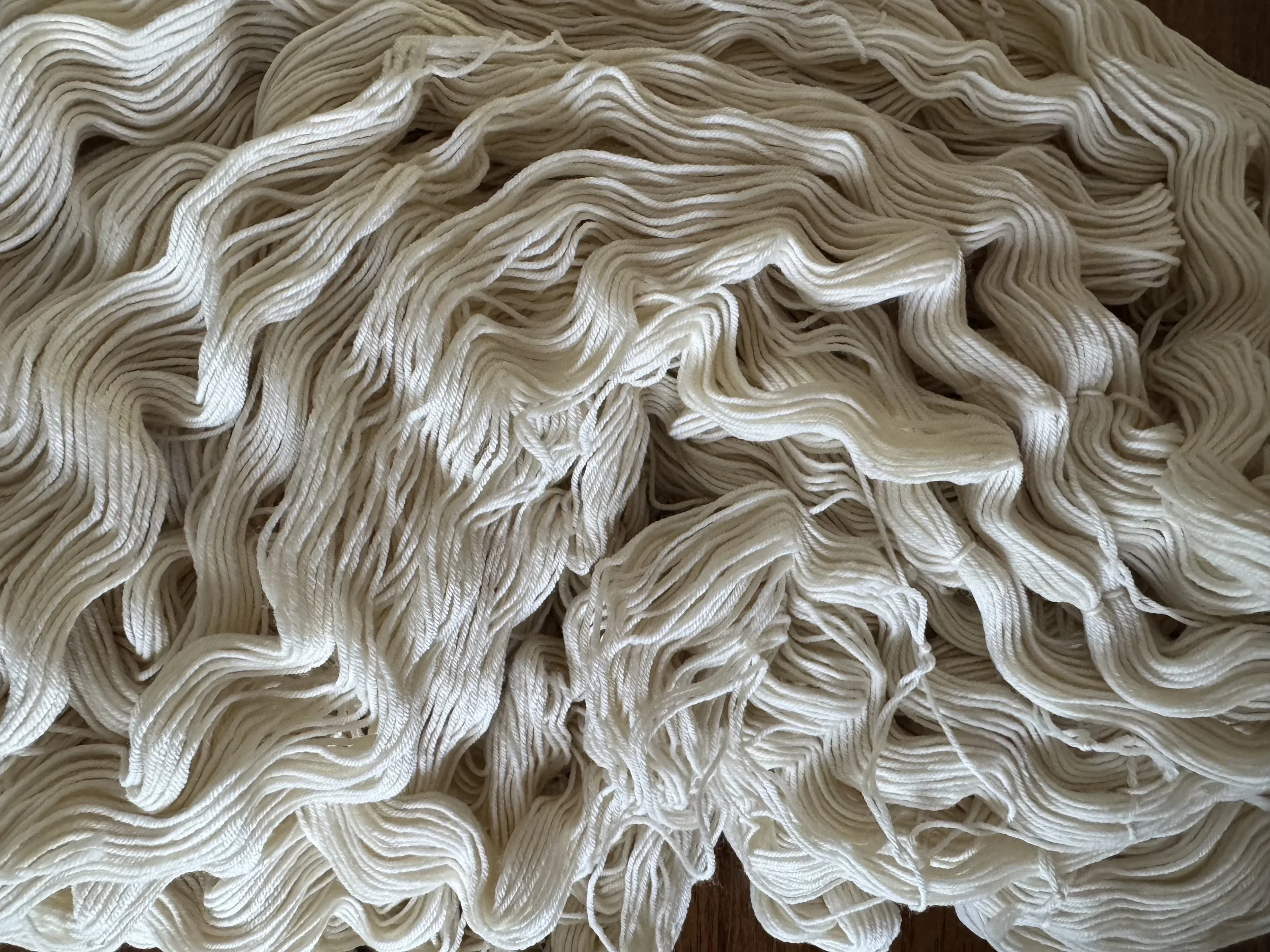
and some wool
This is 100% merino wool. It is organic and according to the seller, the sheep on whom it grew were treated well.
-
how much wool?
It depends on your project, if you have one in mind, and also on the size of your dye pot. I often dye 400g of wool at a time and use a pot that holds 5 gallons, so I often scour 400g at a time.
-
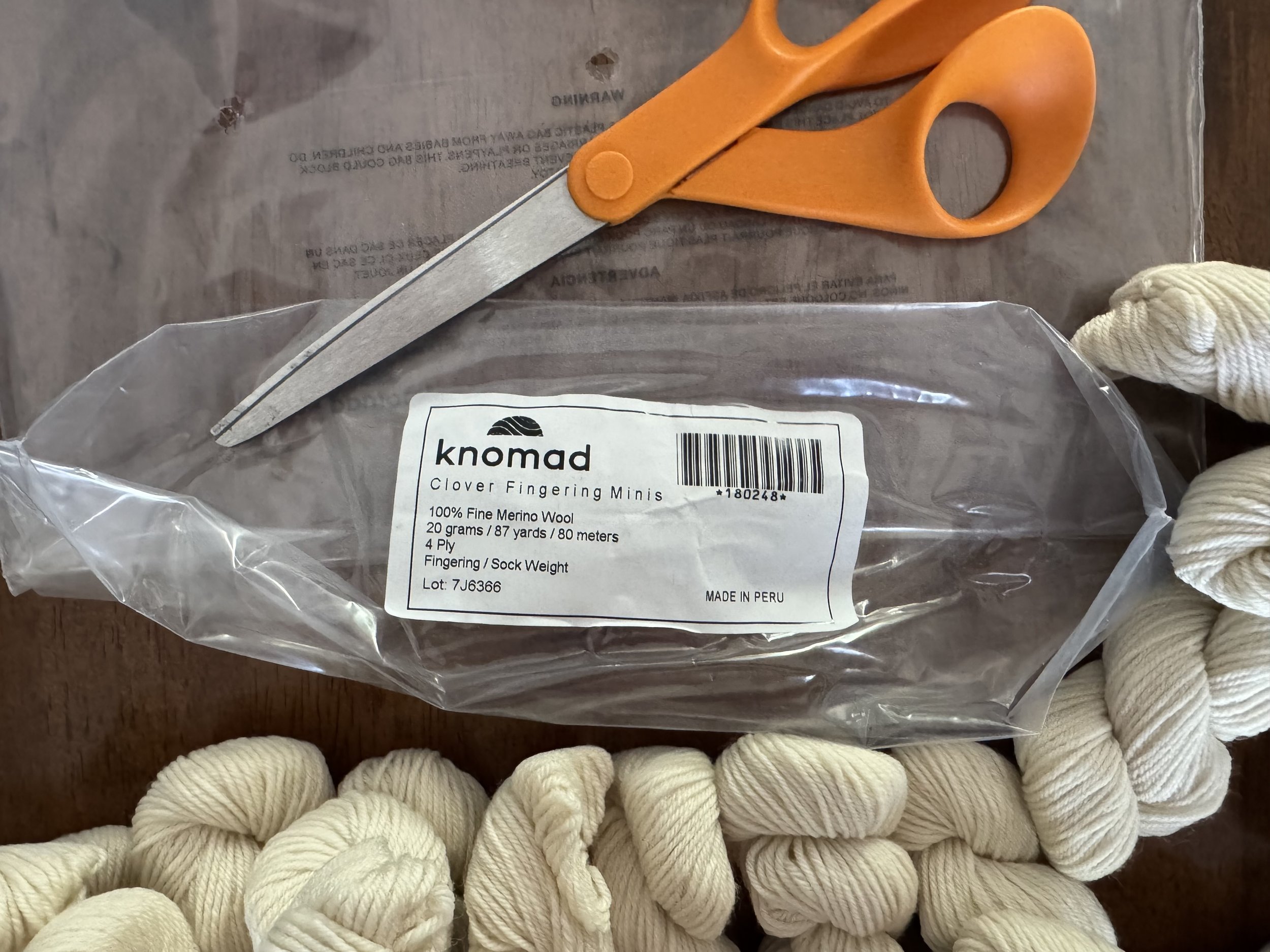
minis
For this little demo, I am going to use mini skeins that are 20g, 87 yards. That is about 1/5 of the size of typical hank of yarn - they frequently weigh 100g/4oz.
-
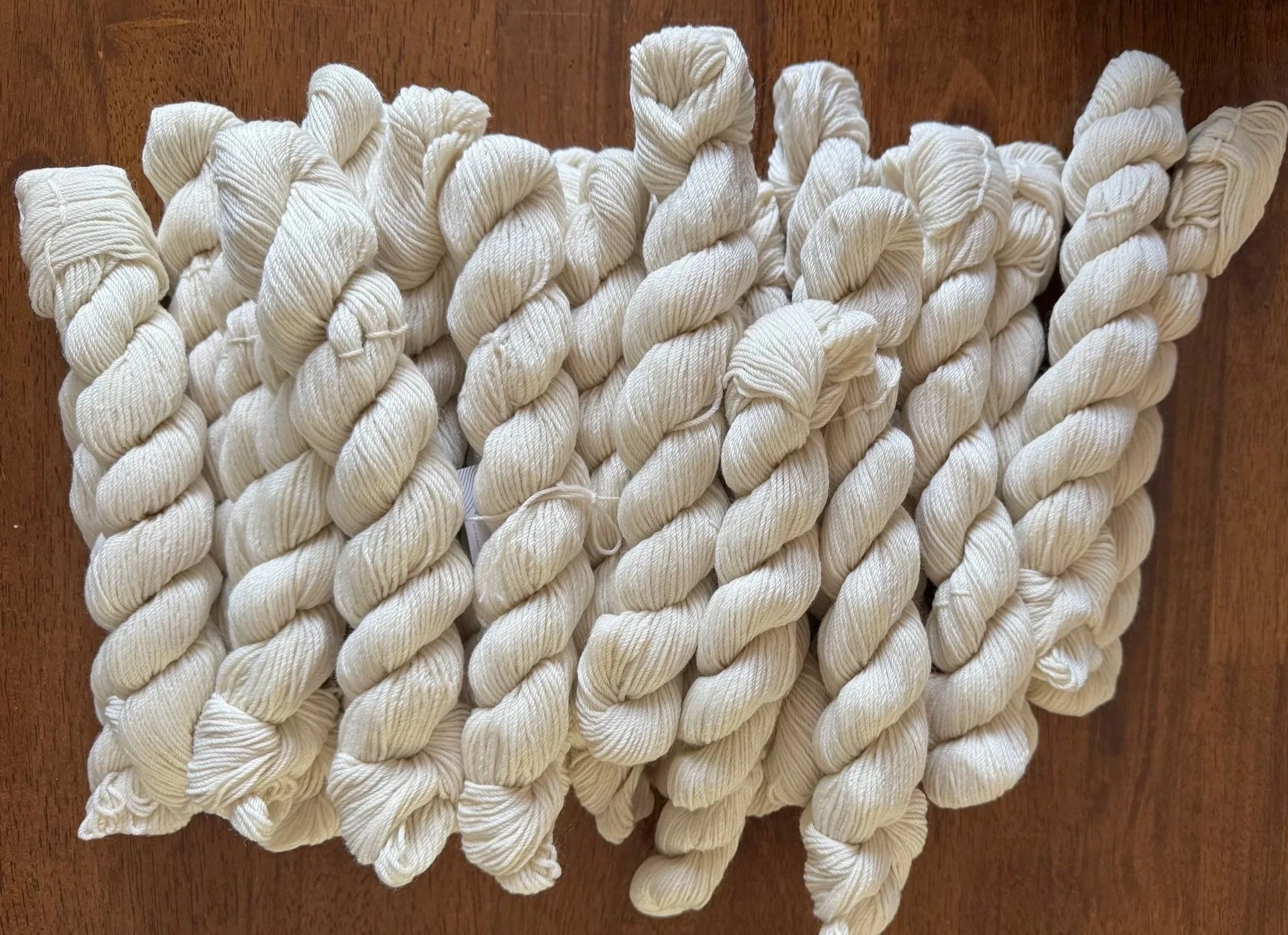
one package
I got these from Knomad yarns, and they came in a package of 25 little fellas.
-
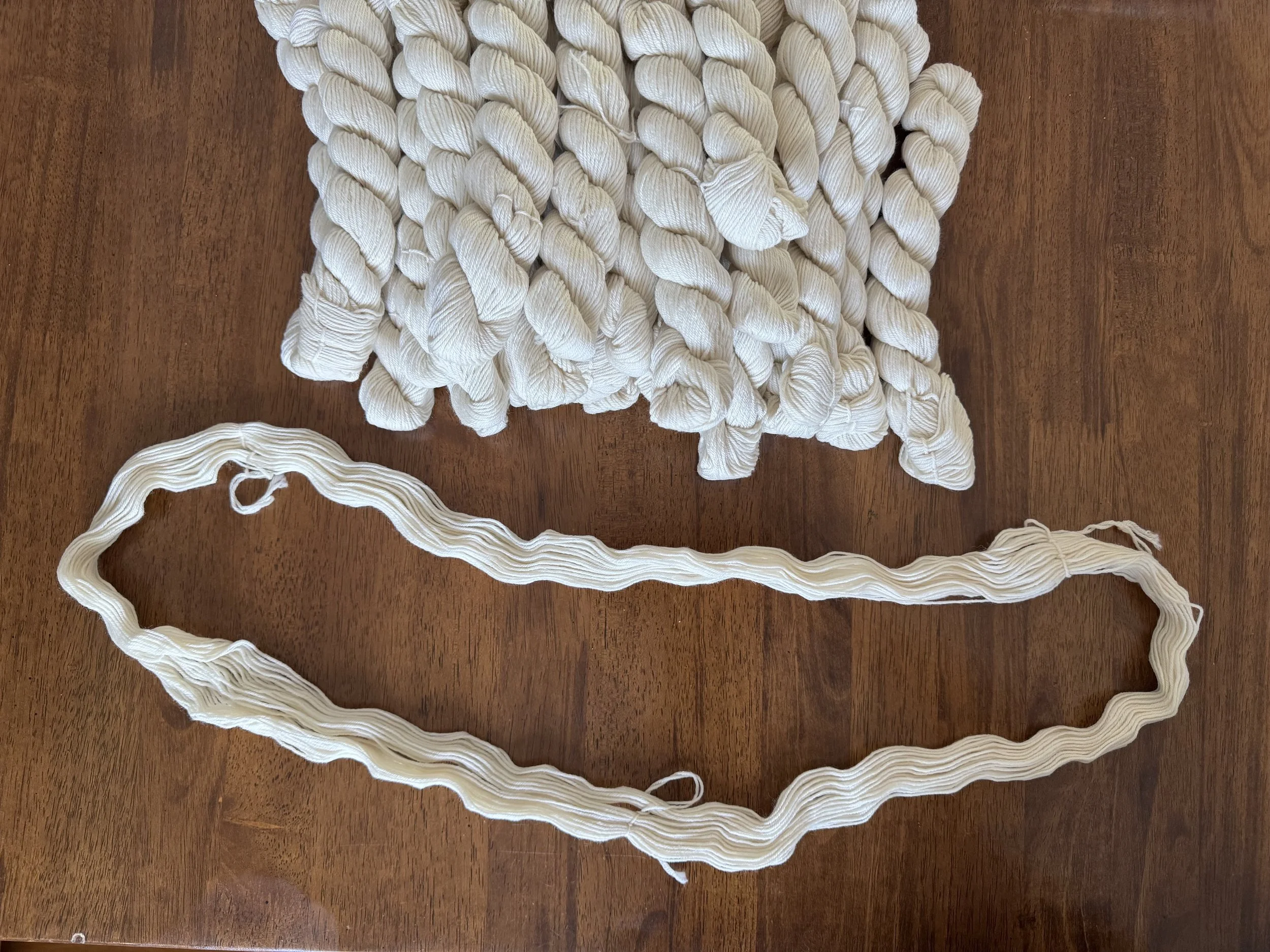
the first job
I open up the hanks and make sure that they are tied in at least three places. If they are not, I add the requisite number of ties. You want your ties to be tight enough to hold things together but not so tight that they will prevent dye from entering the yarn underneath the ties. Experiment a bit and you will find your sweet spot.
-
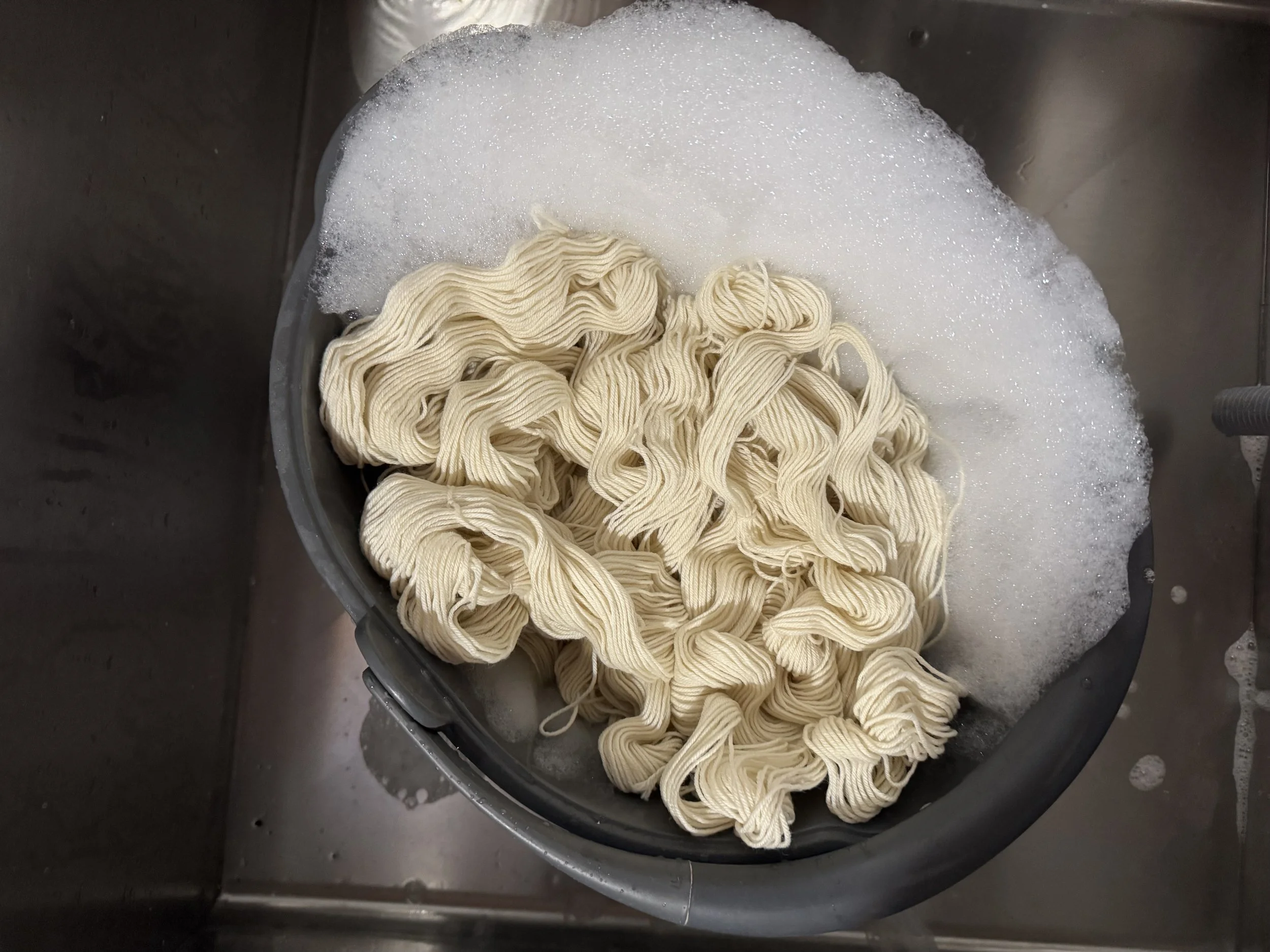
now for the bucket
I use fairly hot water and a good glug of soap. I use Seventh Generation dish soap. Advice from those who know better than I will give you amounts of soap per weight of fiber, but I just give it said glug and stir it around until it is nice and foamy, and then I add the dry yarn.
-
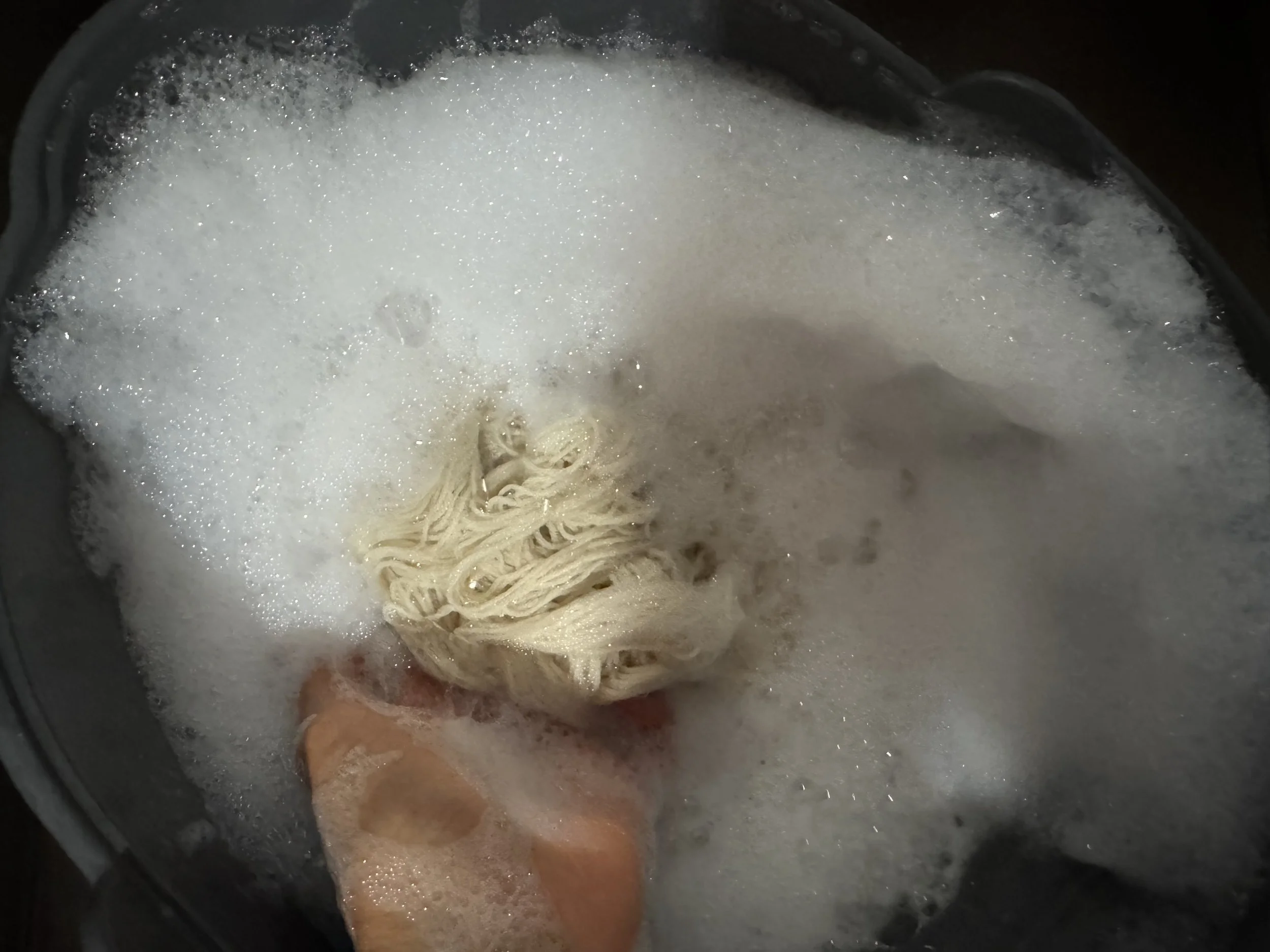
gentle squeezes
Those who know better than I will also tell you not to be rough with the yarn, and I do follow that advice. I squeeze the water and suds through it but do not rub it or wring it.
And then I let it sit for a few hours. Sometimes I forget about it until the next day, but that is probably not great practice.
-
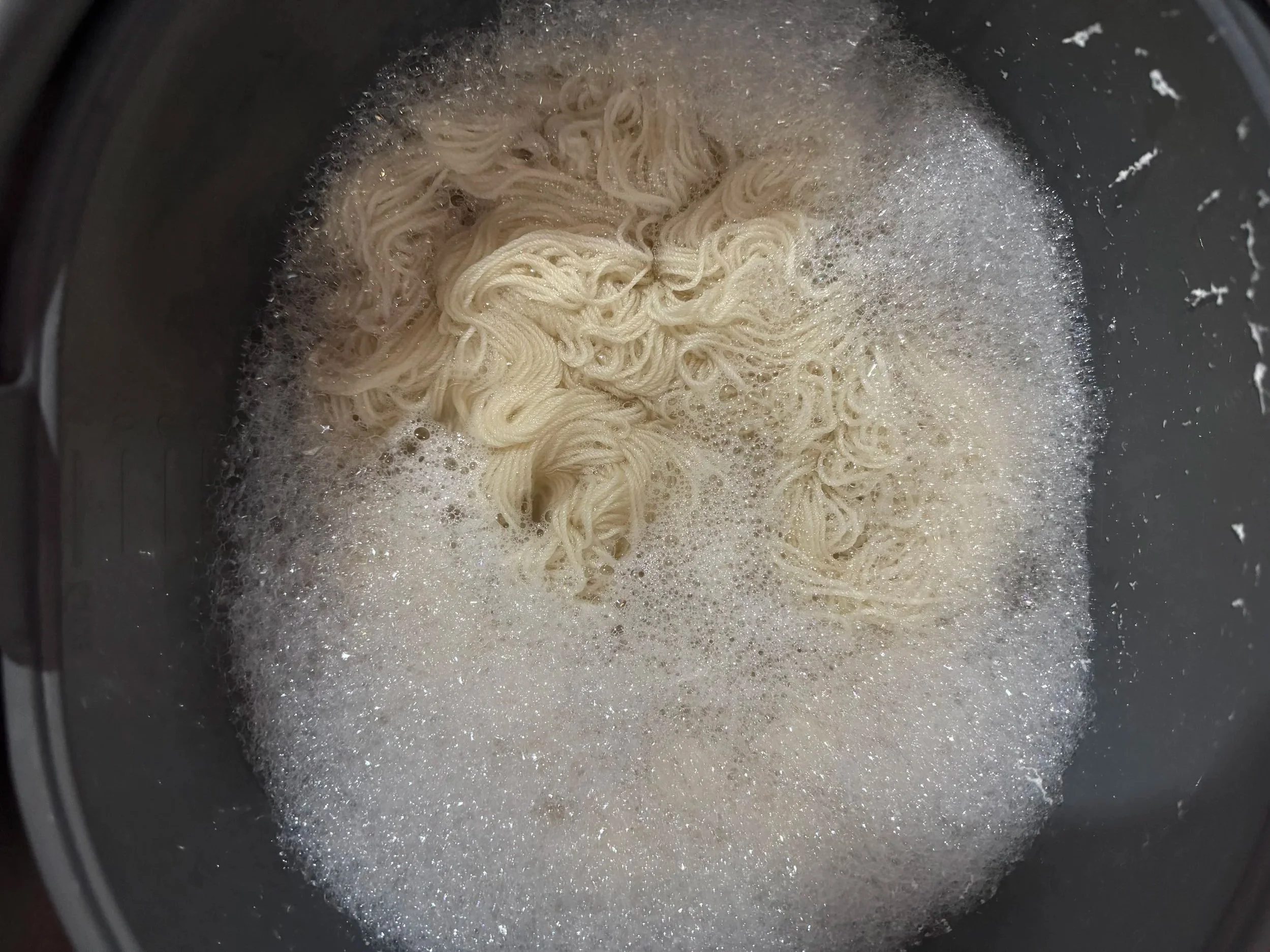
when the soaking time is up
It is now time to rinse the yarn. The only trick here is that you want to use water that is approximately the same temperature as the water that the wool is sitting in. Anything much colder (not likely) or much warmer (more likely) could felt your yarn.
-
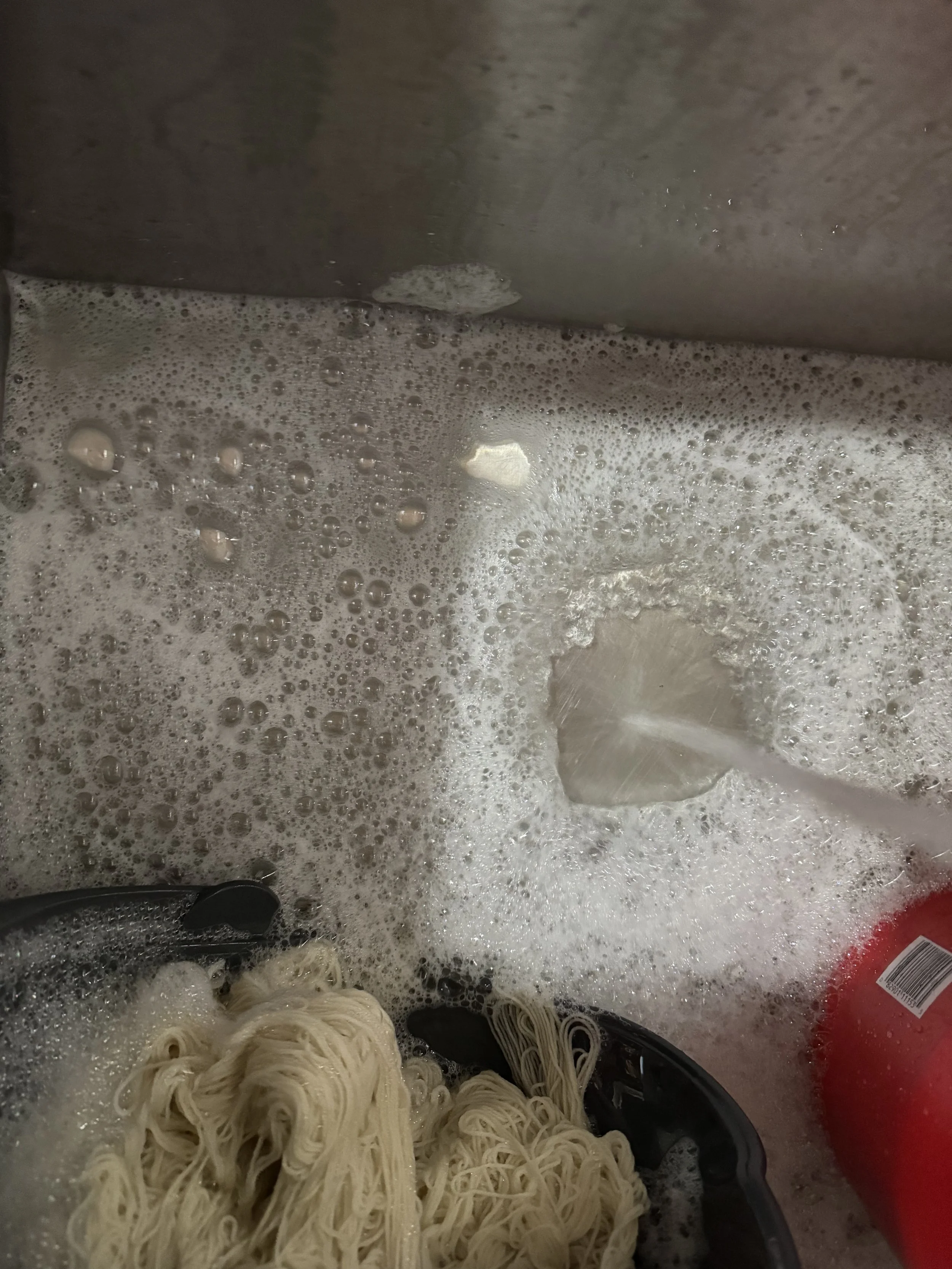
This is a photo of the soaking water
It is not very dirty, but sometimes, depending on the state of the wool you are scouring, it can be pretty impressively yellow or even brown. If it seems scarily brown, you might want to scour twice. Excessive dirt and oils could keep your mordant and dye from adhering to the yarn.
-
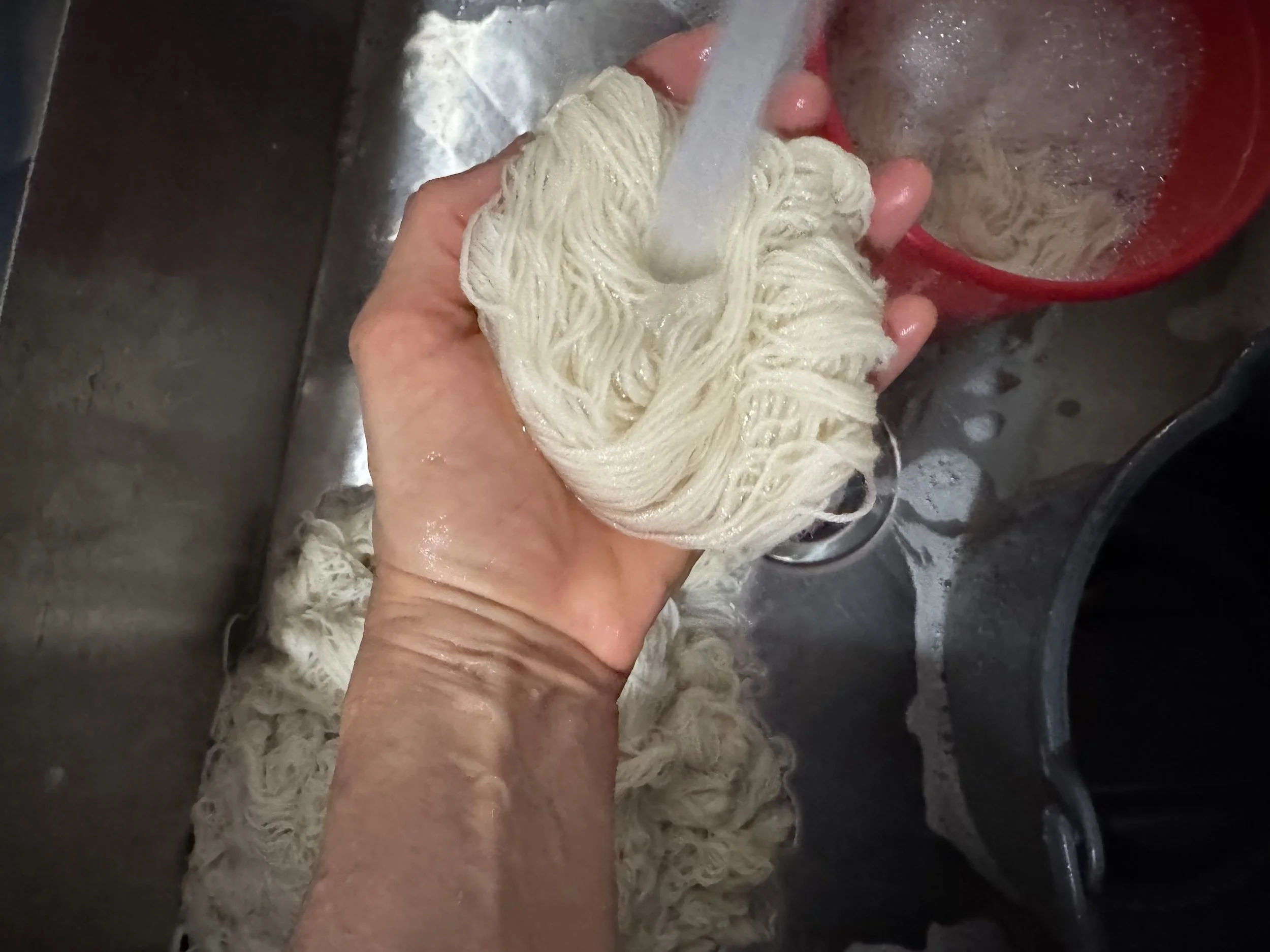
rinsing
I tend to rinse each skein individually, opening up the skein and getting as much water as I can onto every strand.
-
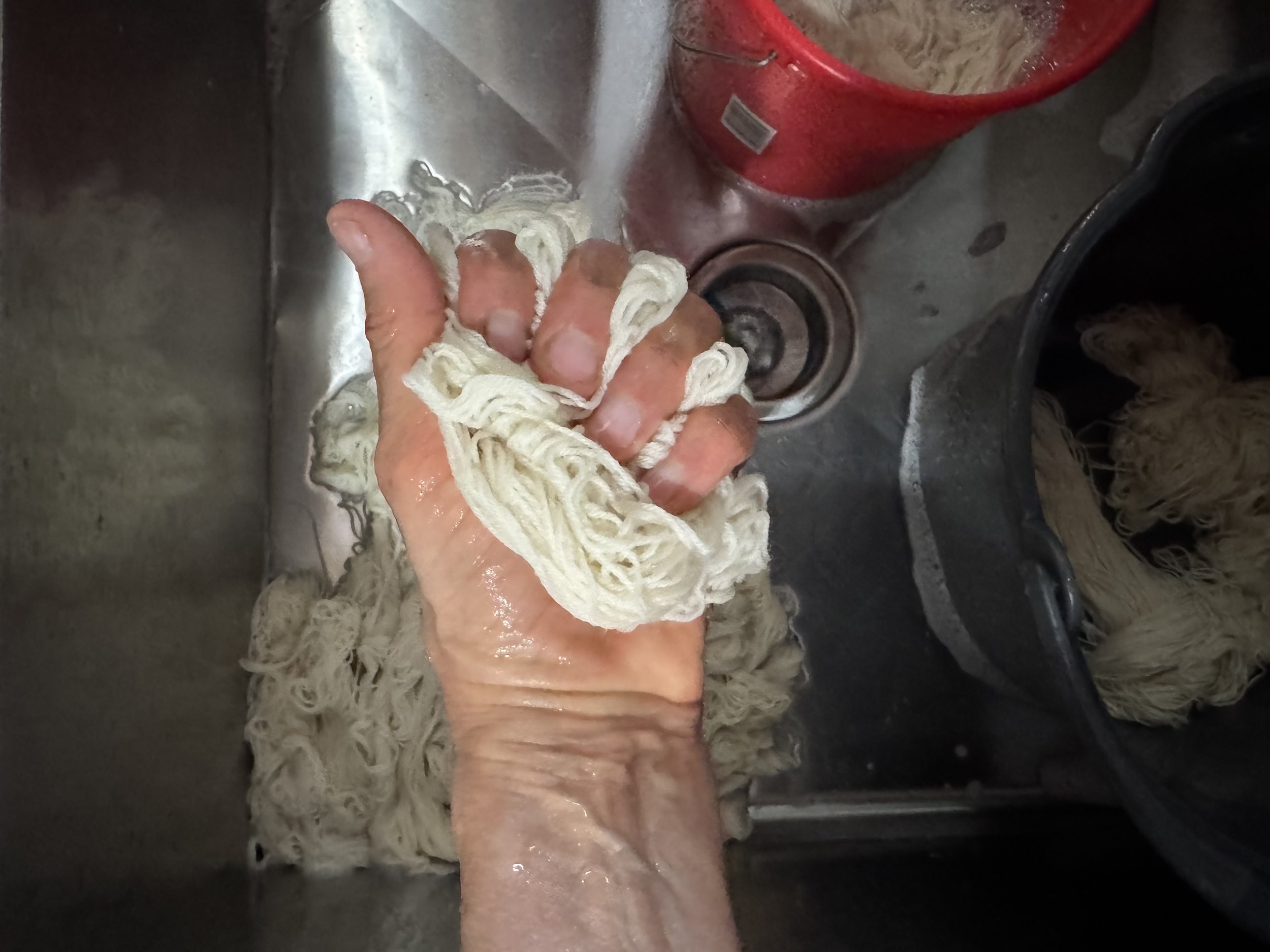
squeeze, don't wring
The goal is to free the yarn of excess water but to avoid any abrasion, which can lead to felting which can lead to sadness.
-
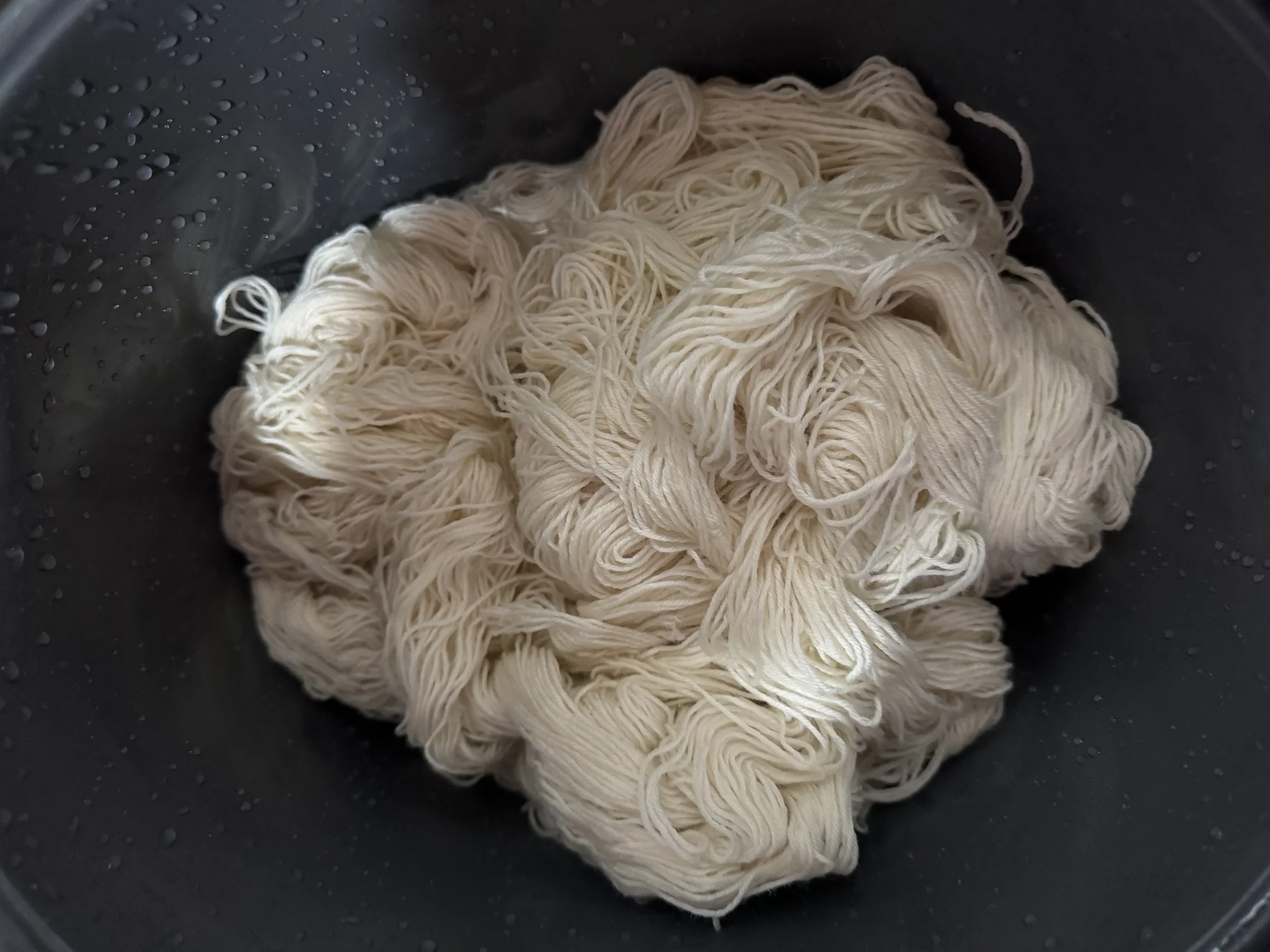
ready for mordant
Or, if you prefer not to mordant your wool or are going to use a dye containing tannins (such as walnut or another tree dye) or a pigment like indigo, you can skip the mordanting (but you don’t have to) and move straight to the dye step.