knitting some halloween-y socks
-
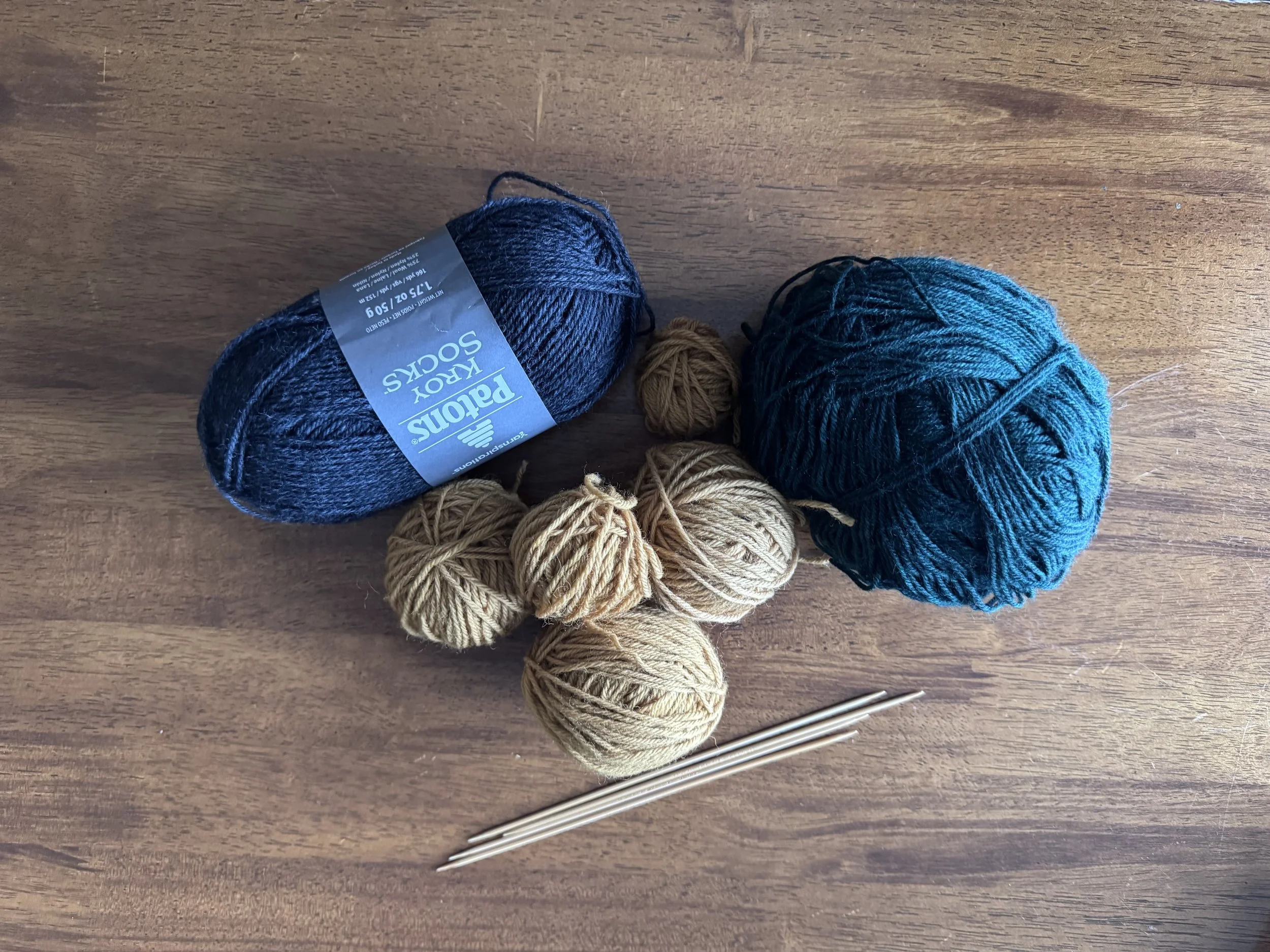
I still have a lot of old sock yarn
I thought it might be nice to make some stripey socks for Halloween. Here I have Patons Kroy Sock yarn in Gentry Grey, a nice name, and more Patons that I dyed some time ago, probably with St. John’s Wort. The green is a KnitPicks sock yarn; I don’t have the sleeve anymore so I don’t know what its right name is.
-
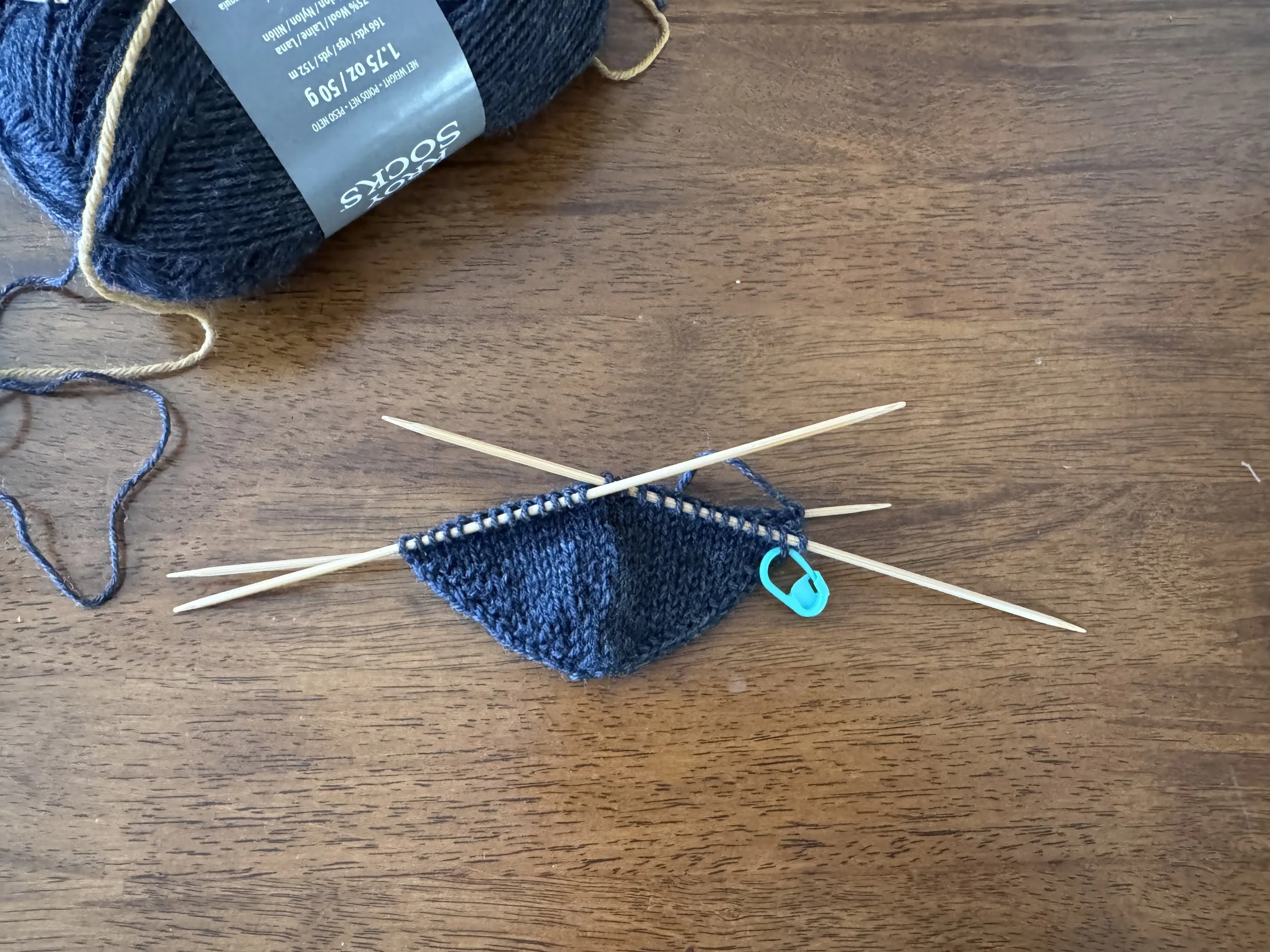
first toe
I will attach a pattern below once these guys are all done, but will show the stages of production here. I generally knit my socks on US no. 1 needles (2.25mm) and work on 52 stitches. I like making my socks from the toe up because I have quite skinny ankles, and socks worked the other way rarely fit me well.
-
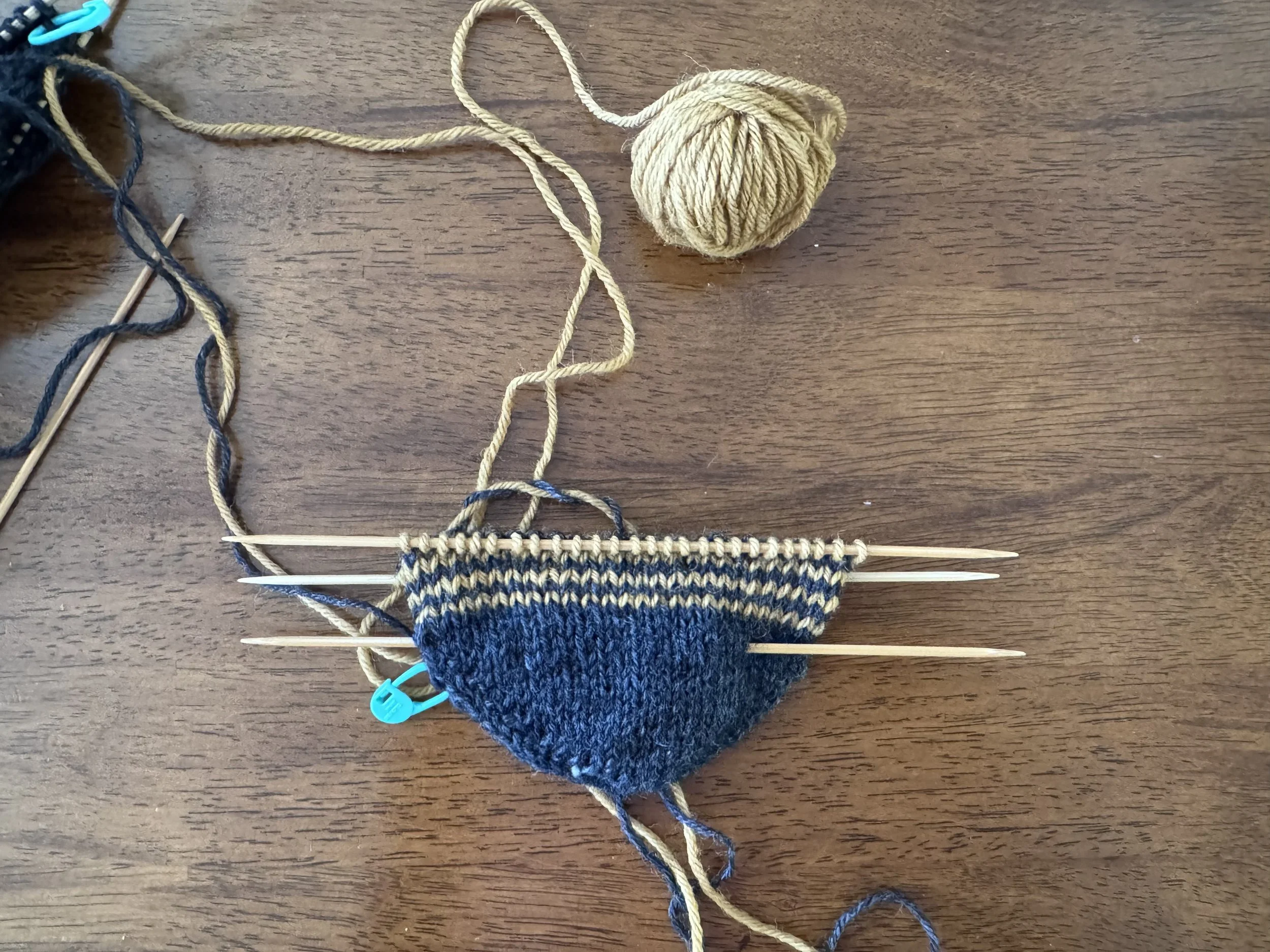
stripes
I make these socks by alternating the colors every round. They could be bee socks as well as Halloween socks, I guess.
-
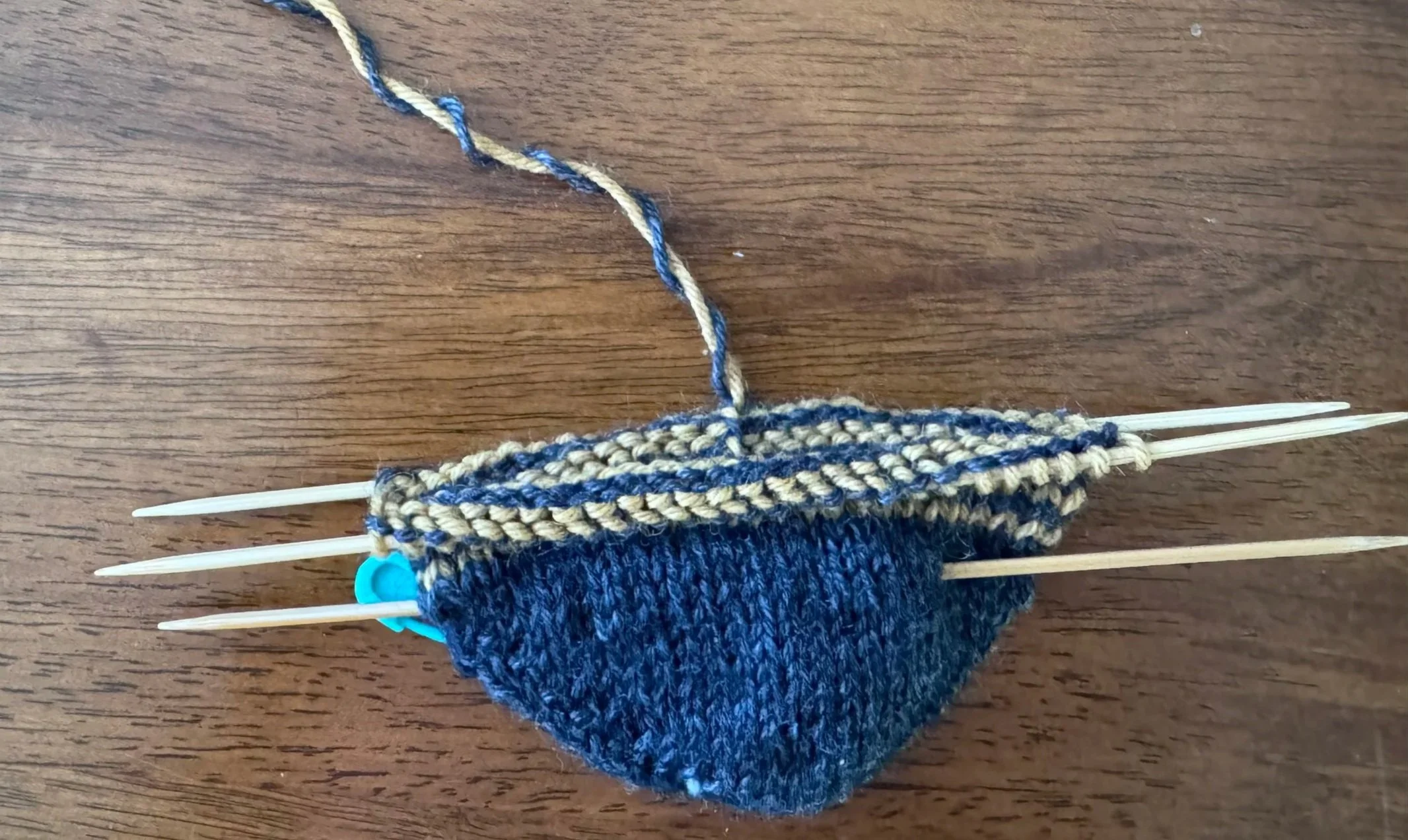
starting rounds at the bottom of the foot
I am not going to worry about color jogs here; instead I will hide them by putting the beginning of my rounds at the bottom of the foot.
-
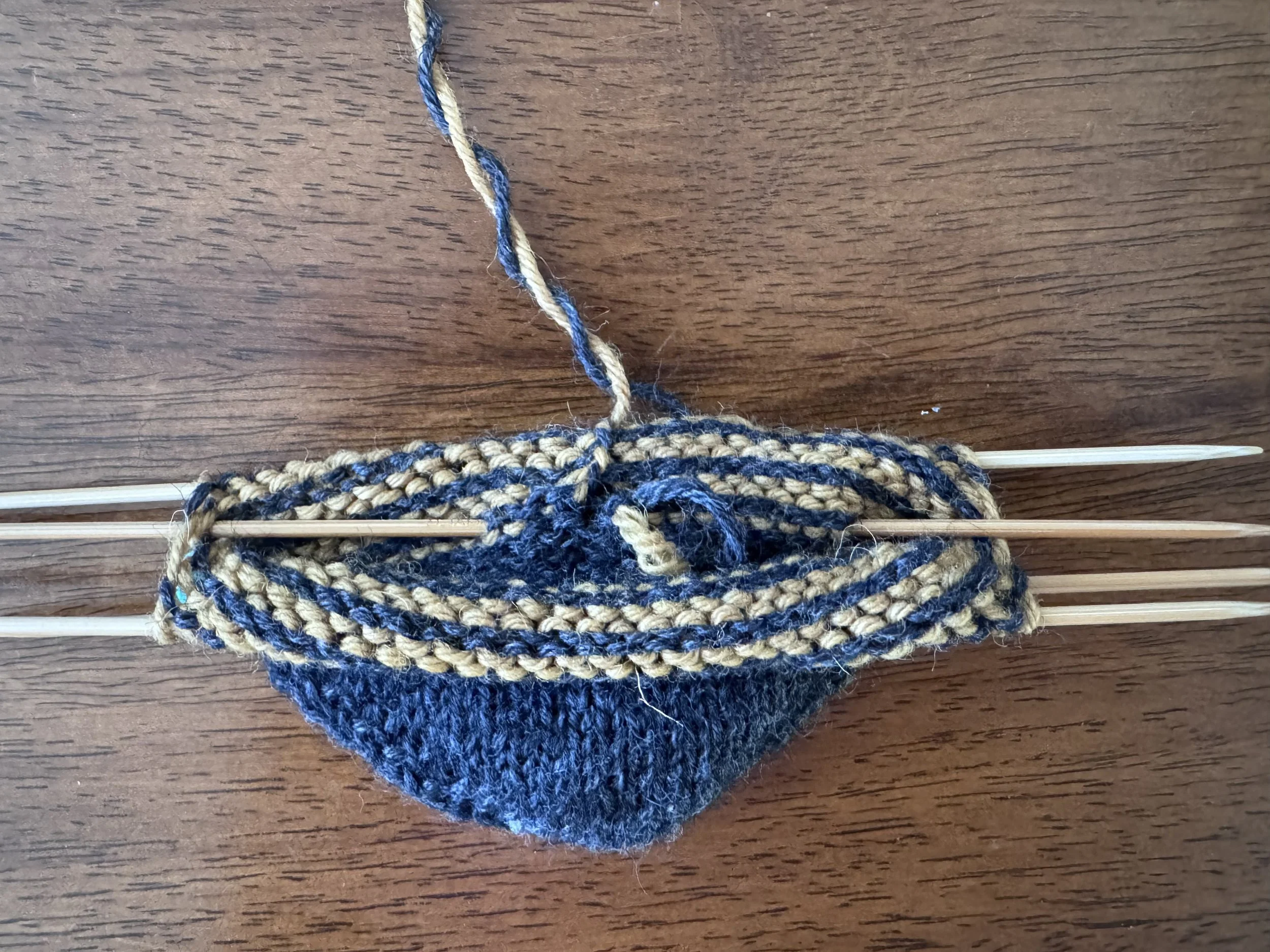
twisting the yarn
When I change colors, I twist my yarn in the same direction. That leads to a twist in the unworked yarn which I occasionally have to untwist, no great hardship.
-
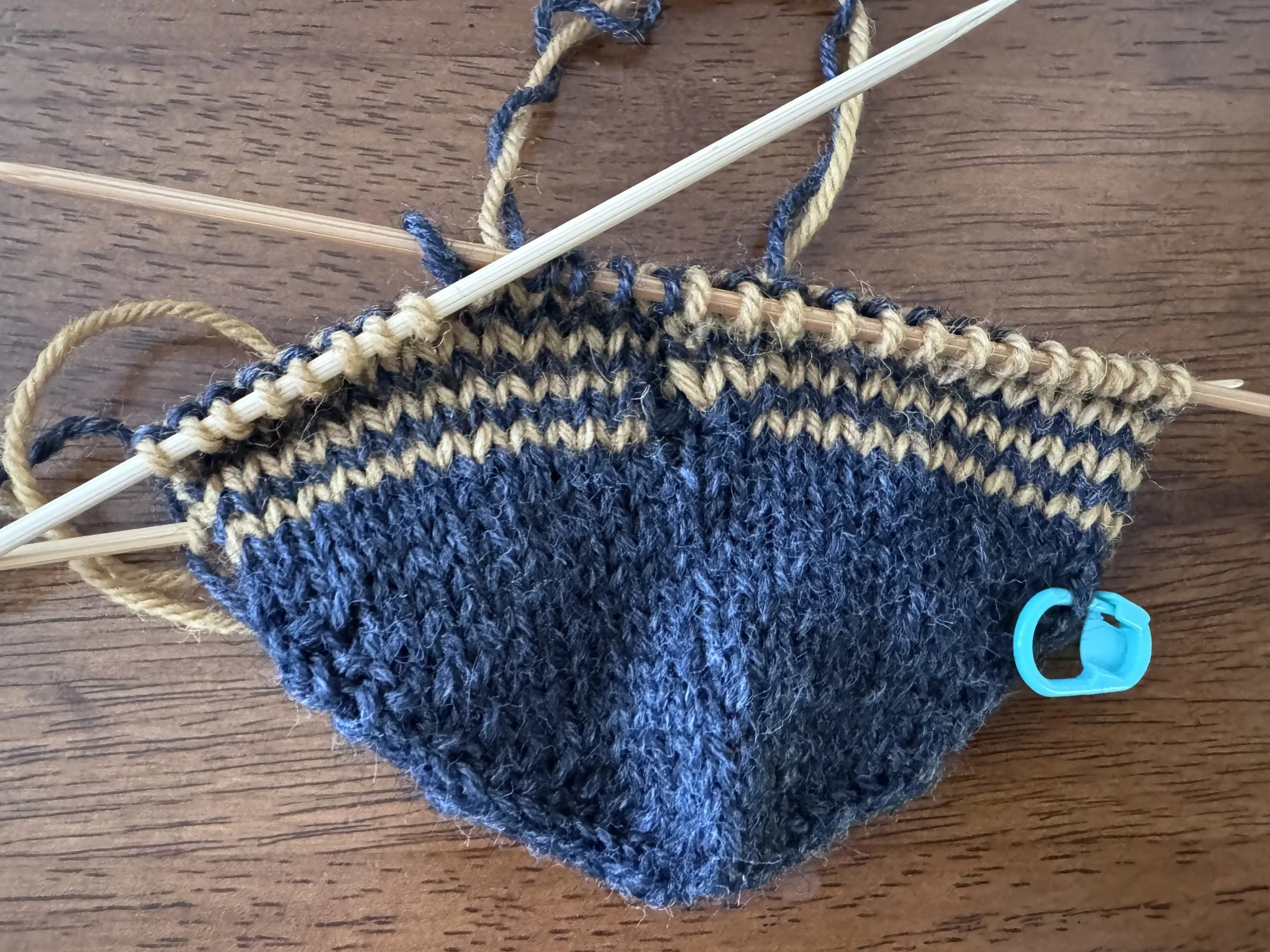
a big jog
I am not sure why it is there, but as it will be at the bottom of my foot, I can live with it.
-
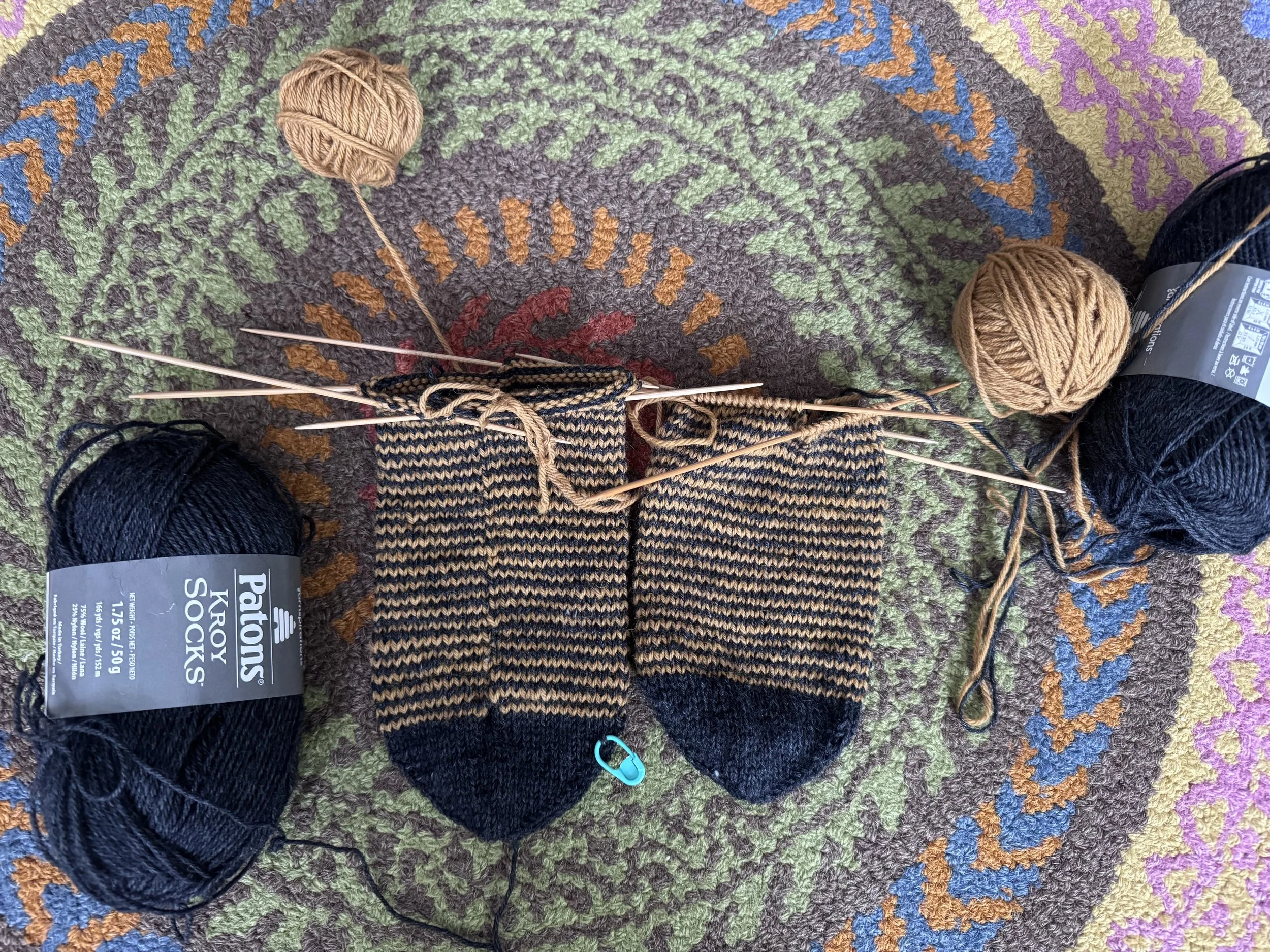
progress
I like to knit both of my socks (and mittens) at the same time. This helps me keep the same gauge so I don’t end up with one smaller than the other - I tend to knit more confidently and more tightly as I move through projects.
-
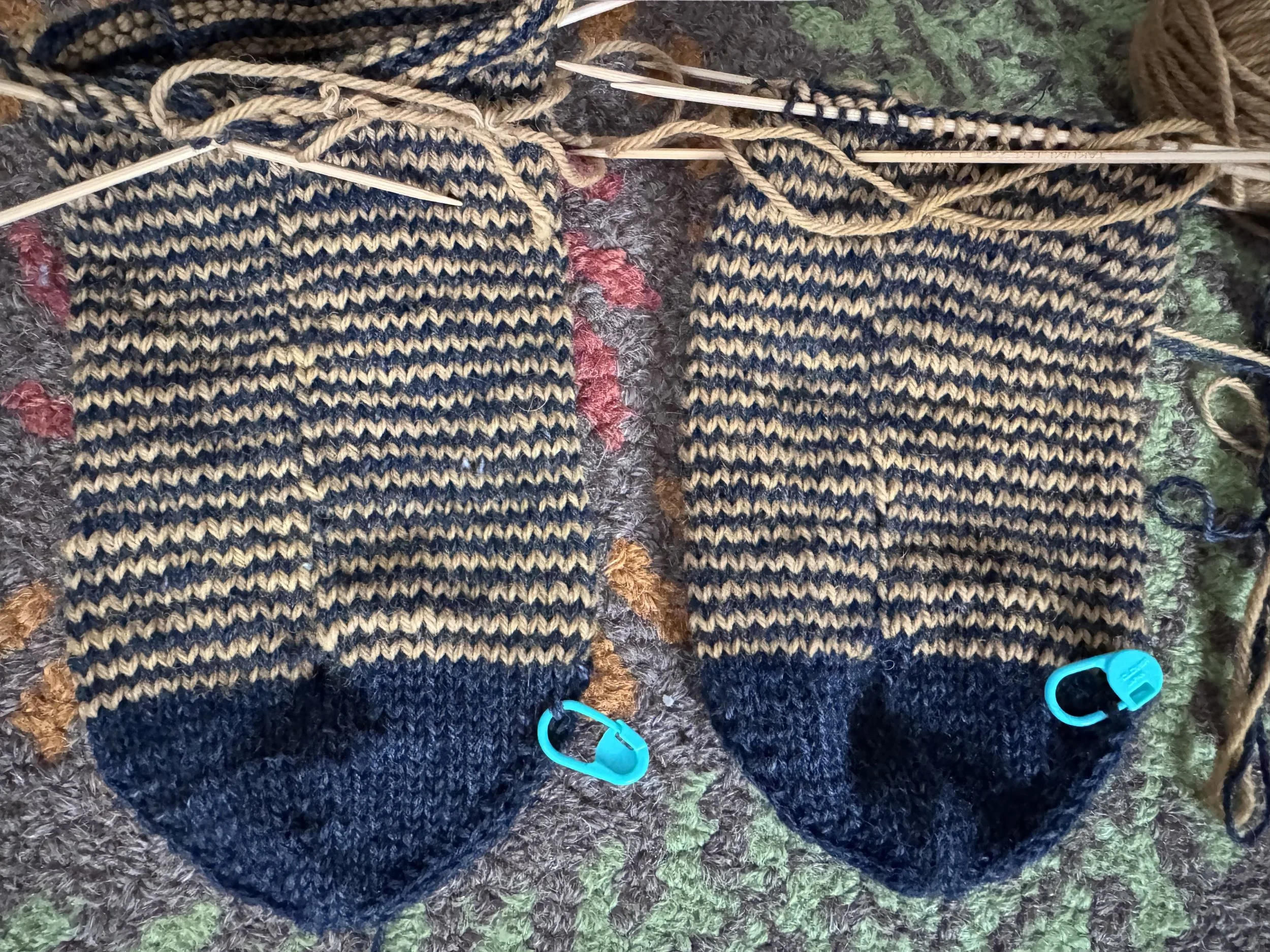
jogs on both
Oh well. I generally work 55 rounds after the toe increases are all done and then I am ready for the heels.
-

back to original needle setup
I break both yarns before starting on the heel and then move the stitches back to their original needle configuration so that the beginning of the round is at the side of the foot. And I double-check that the line showing the yarn color changes is in the middle of my working needle.
-
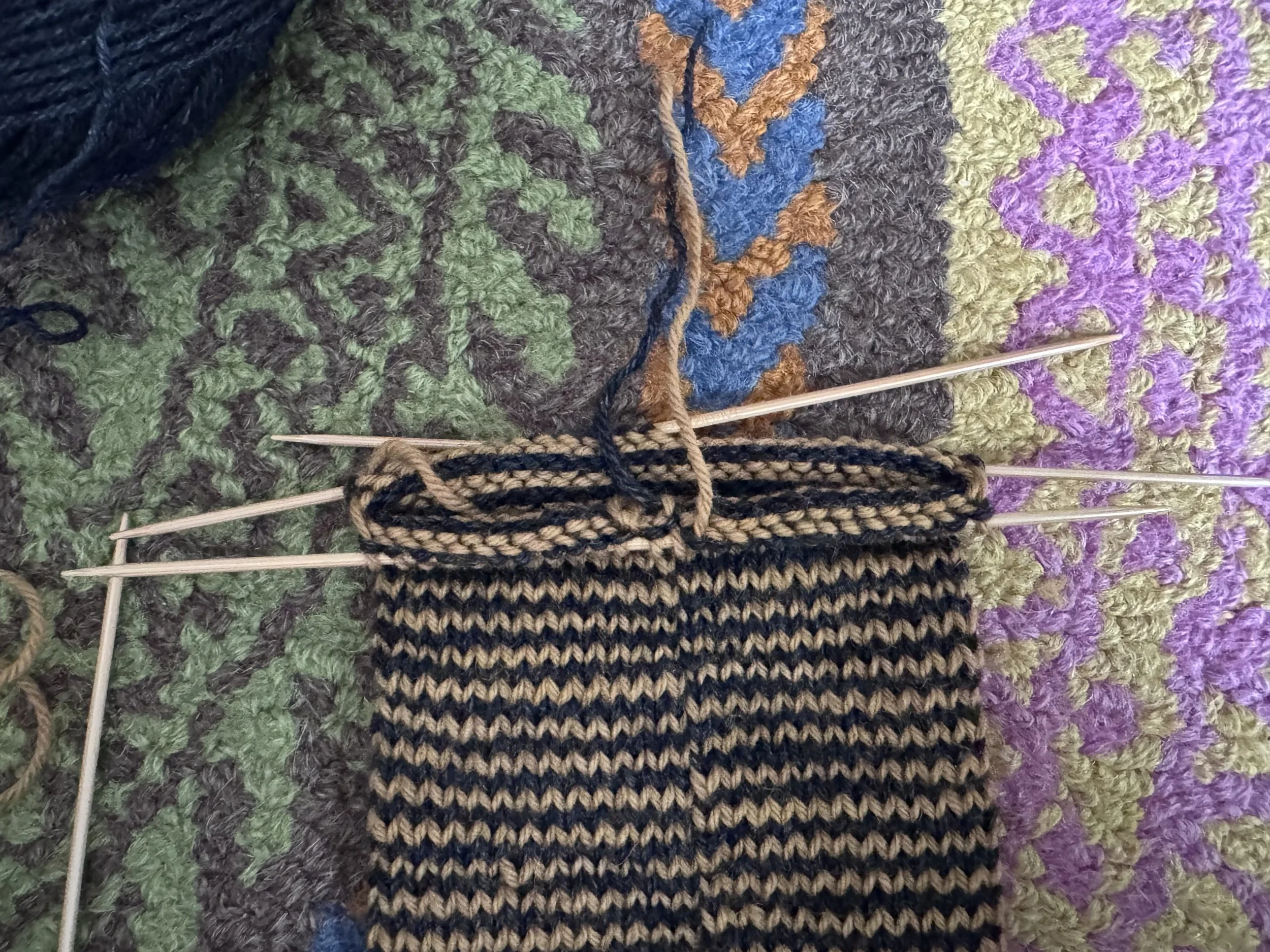
another view
For my sock, I have 26 stitches on the needle that I will be using to make the heel, and 13 stitches on each of the other needles.
-
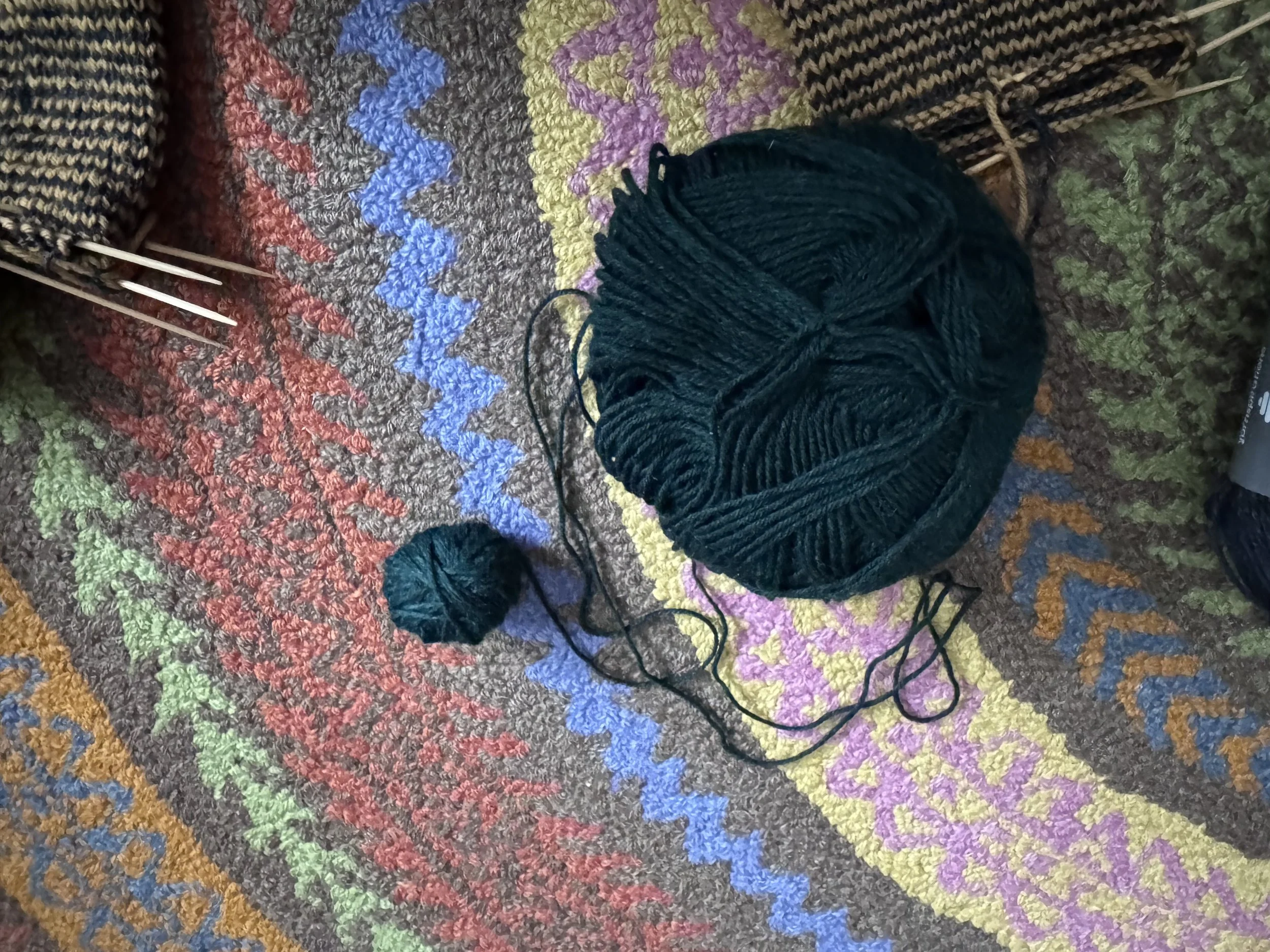
some floppy yarn
I have not found this yarn to be very durable, in spite of the dreaded 25% nylon content, so I am going to double it for the heels. In addition to strength, it should make some very cushy fabric.
-
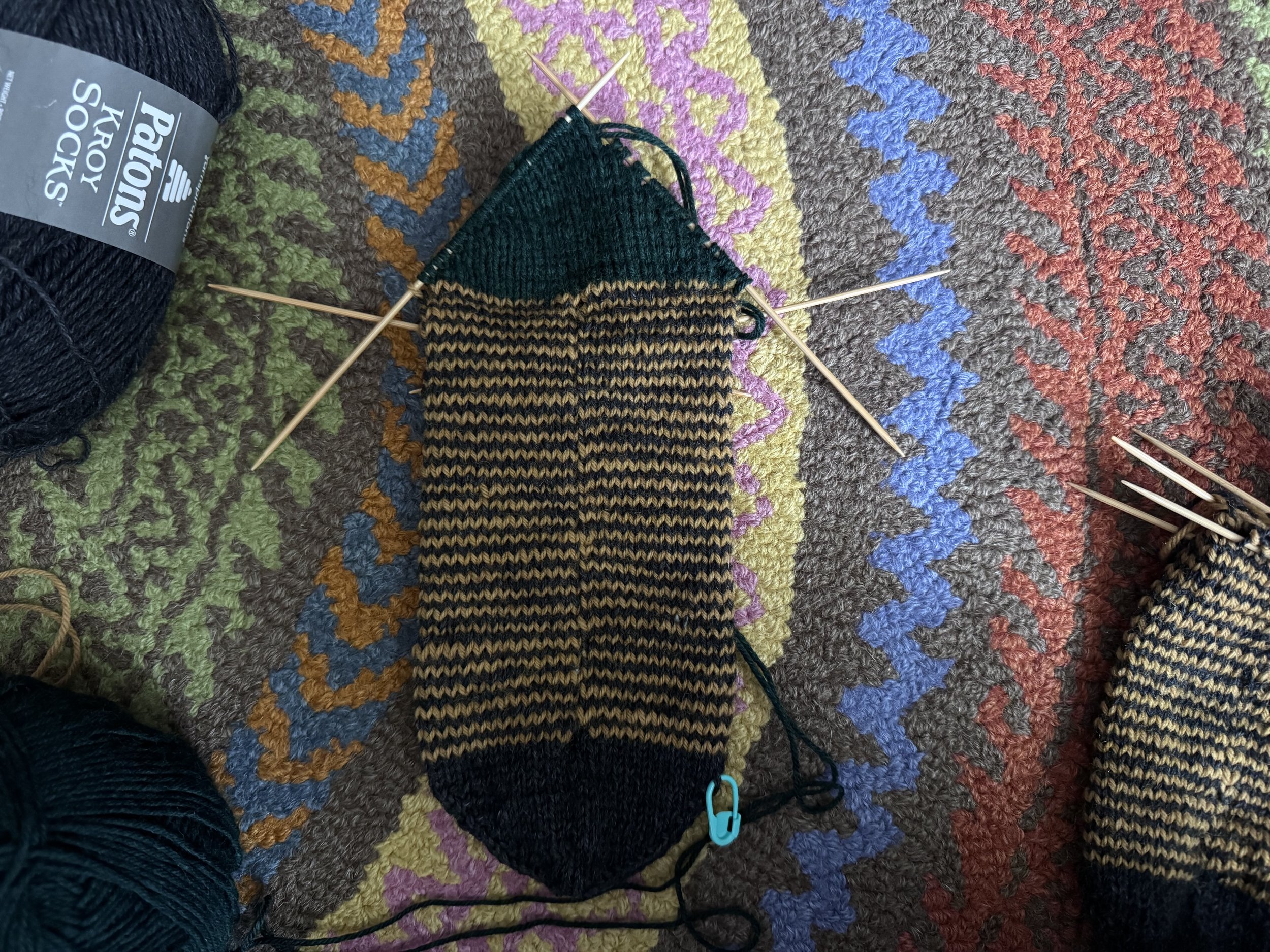
down to 8 working stitches
This is achieved by working back and forth, working on each row 1 stitch fewer than on the previous row, and doing a yarnover at the beginning of each row.
-
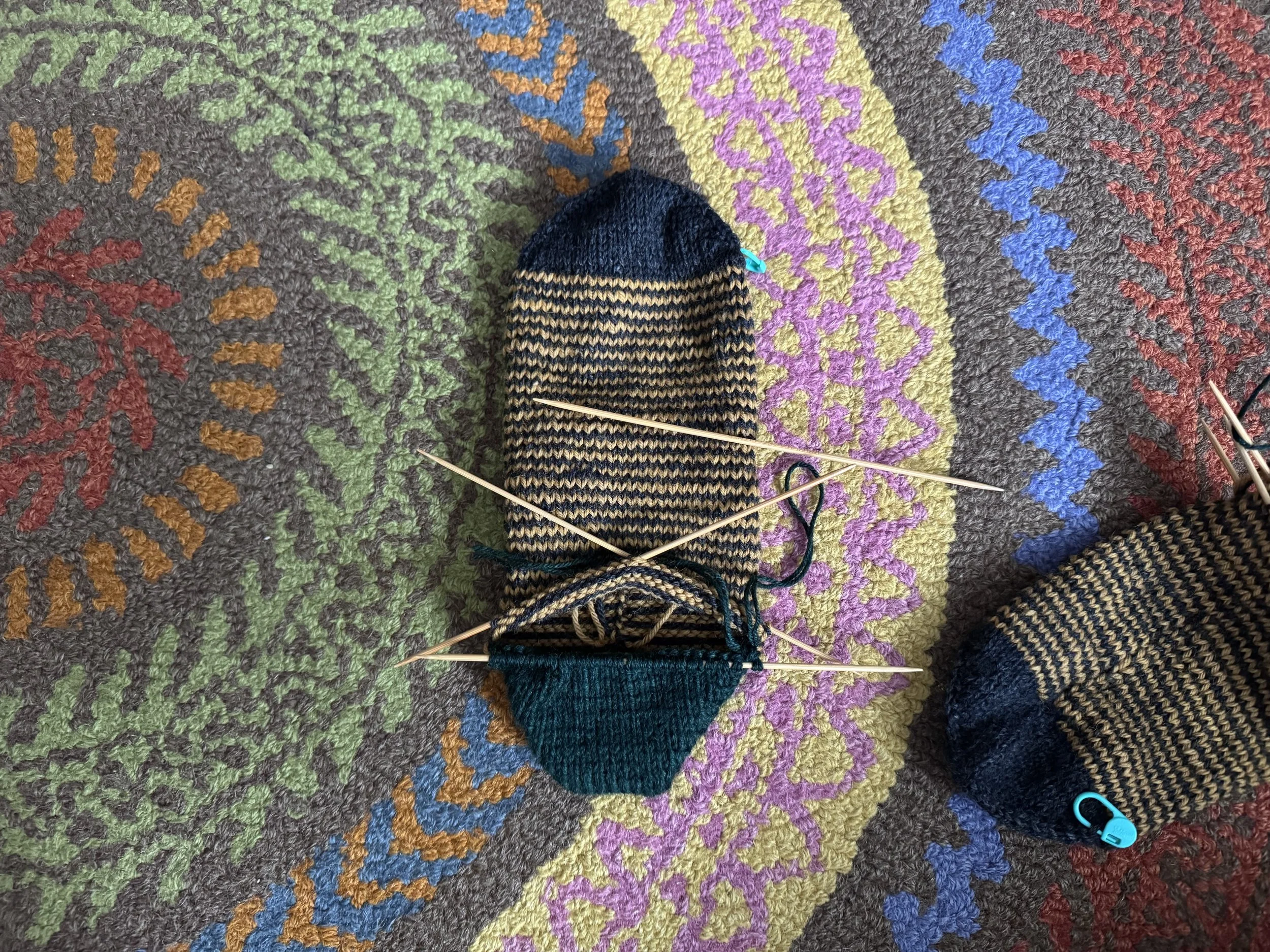
back up to 26 stitches (plus yarnovers)
Now that I am back up to 26 stitches, I will break the green yarns, move my beginning of round back to the middle back of the sock, and start working again with the alternating colors. I just finished with the orange color and so will start knitting with the dark grey.
-
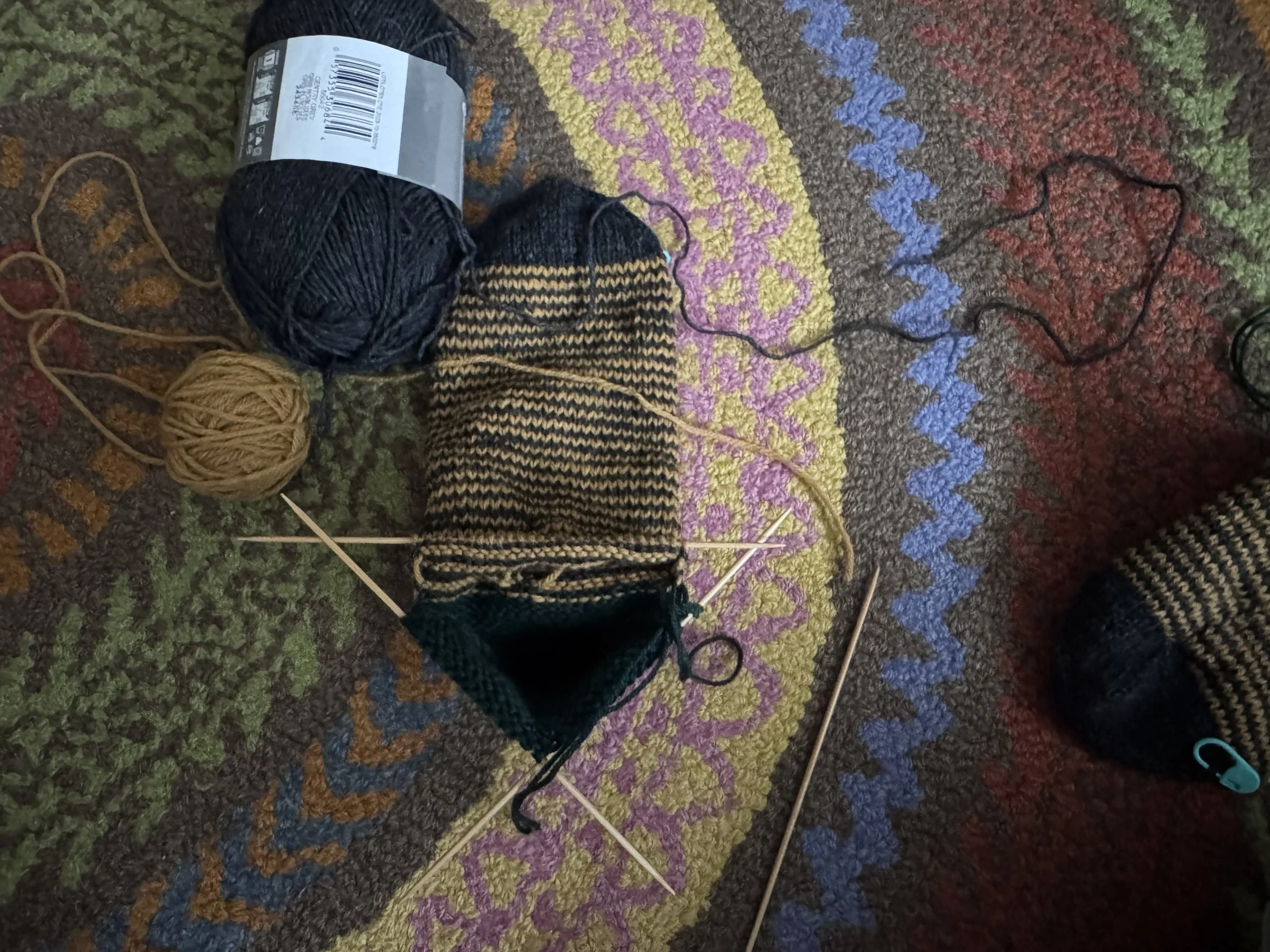
view from above
Here the needles are all set up to start knitting again. I still have to deal with the yarnovers and will do that on the first two rounds by knitting the yarnovers with adjacent stitches on the first round and then on the second round, making sure that I am back to the desired 52 stitches.
-
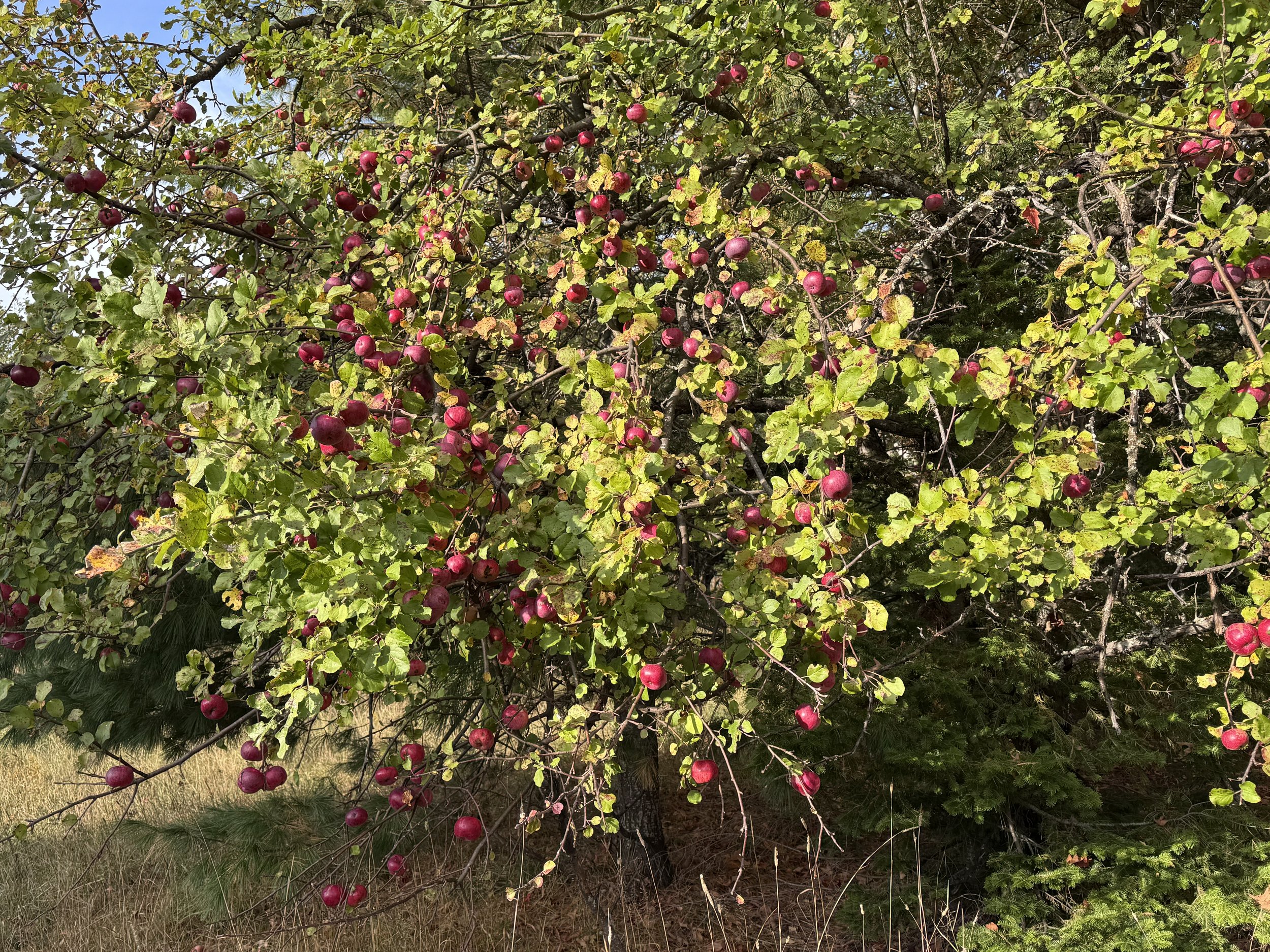
apple interlude
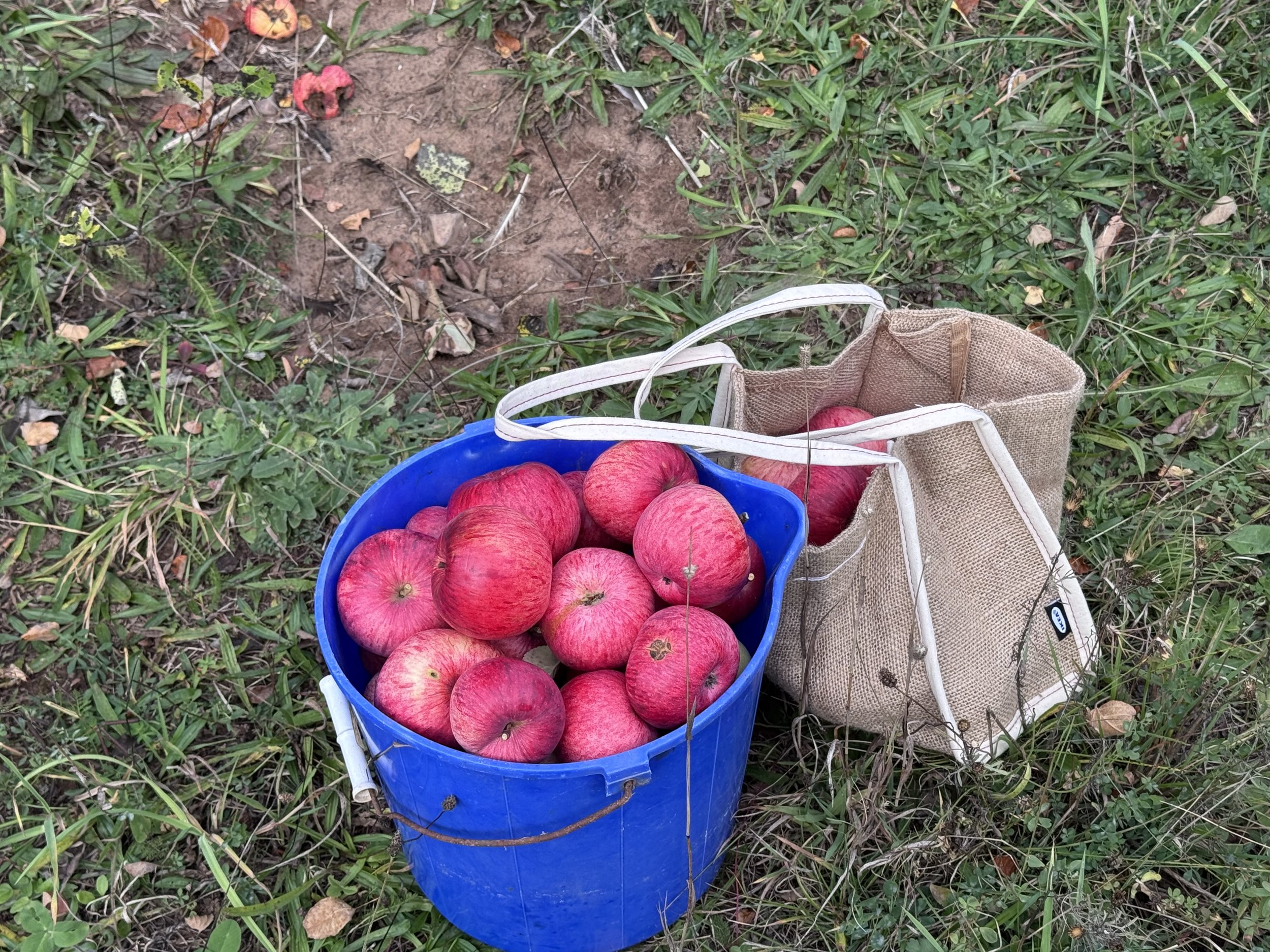
I spend about ten days visiting the farm; the apple trees are very generous this year.
-
-
-
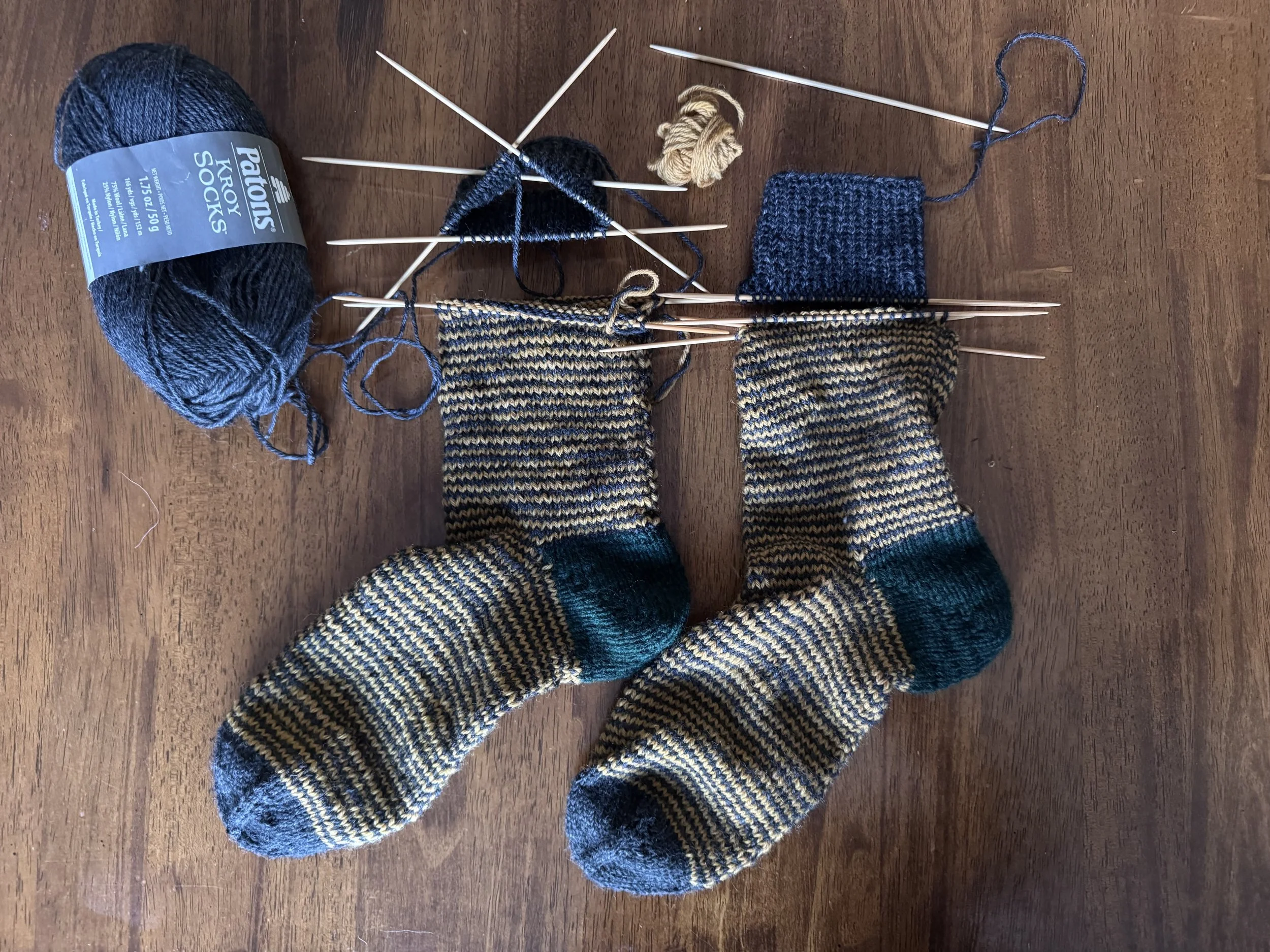
back to business
I knitted 44 rounds after the heel was finished and am ready for the ribbed cuff.
It sounds like a lot of extra work, but I like to knit my upper ribbing separately and weave it to the body of the sock. If I don’t, I invariably bind off too tightly and the socks are hard to put on. There are of course worse things, but that ranks pretty high in my book. And I don’t mind the weaving. It is quite fun, really, and it gives me a chance to marvel at the beauty and complexity of knit stitches, and at our ancestors’ ingenuity in figuring out how to make fabric out of a single thread and some sticks.
-
New List Item
Description goes here