dyeing with woad
-
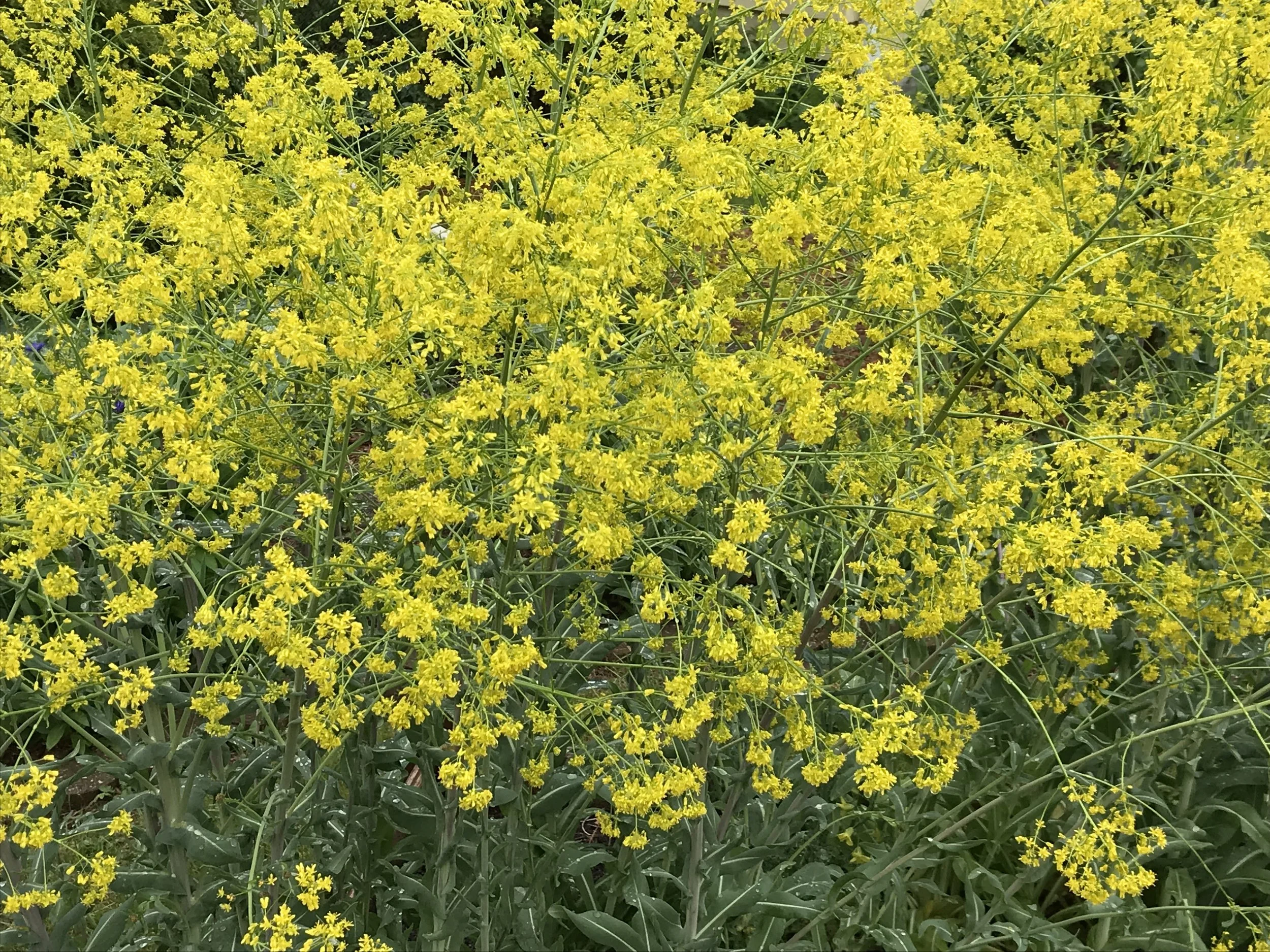
woad in bloom
These lovely spring flowers contain a threat: If I let all of them go to seed, woad would take over not only my yard but the yards of my neighbors and perhaps the world beyond. I will cut down the vast majority of them long before they come close to setting seed, and I will keep a careful eye on the remaining stalks so that I can harvest the seed as soon as it is ripe.
-
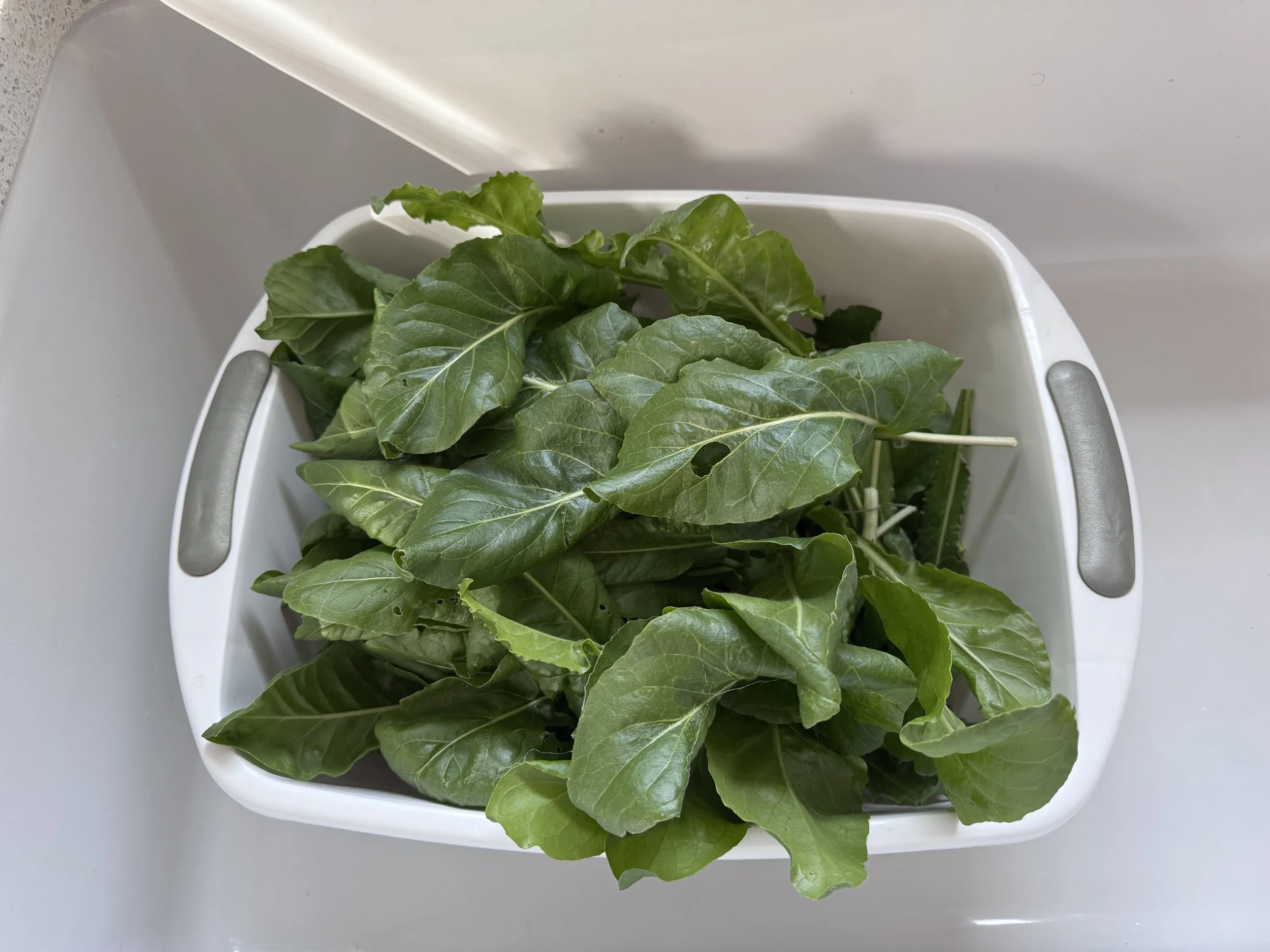
leaves for dye
It is best to harvest woad leaves after midsummer and on plants that are in their first year. Woad is a biennial plant and flowers in its second year. Maybe the energy it puts into flowering takes away some of the gusto from its indigotin-producing efforts.
We now have reached the fall of the year and once again, I have been too chicken all summer to try fermenting my woad leaves. Last year I made woad balls that I have also been too chicken to use. But today I have picked the greenest-looking leaves I have, and I am going to try a non-fermented version of dyeing with woad.
-
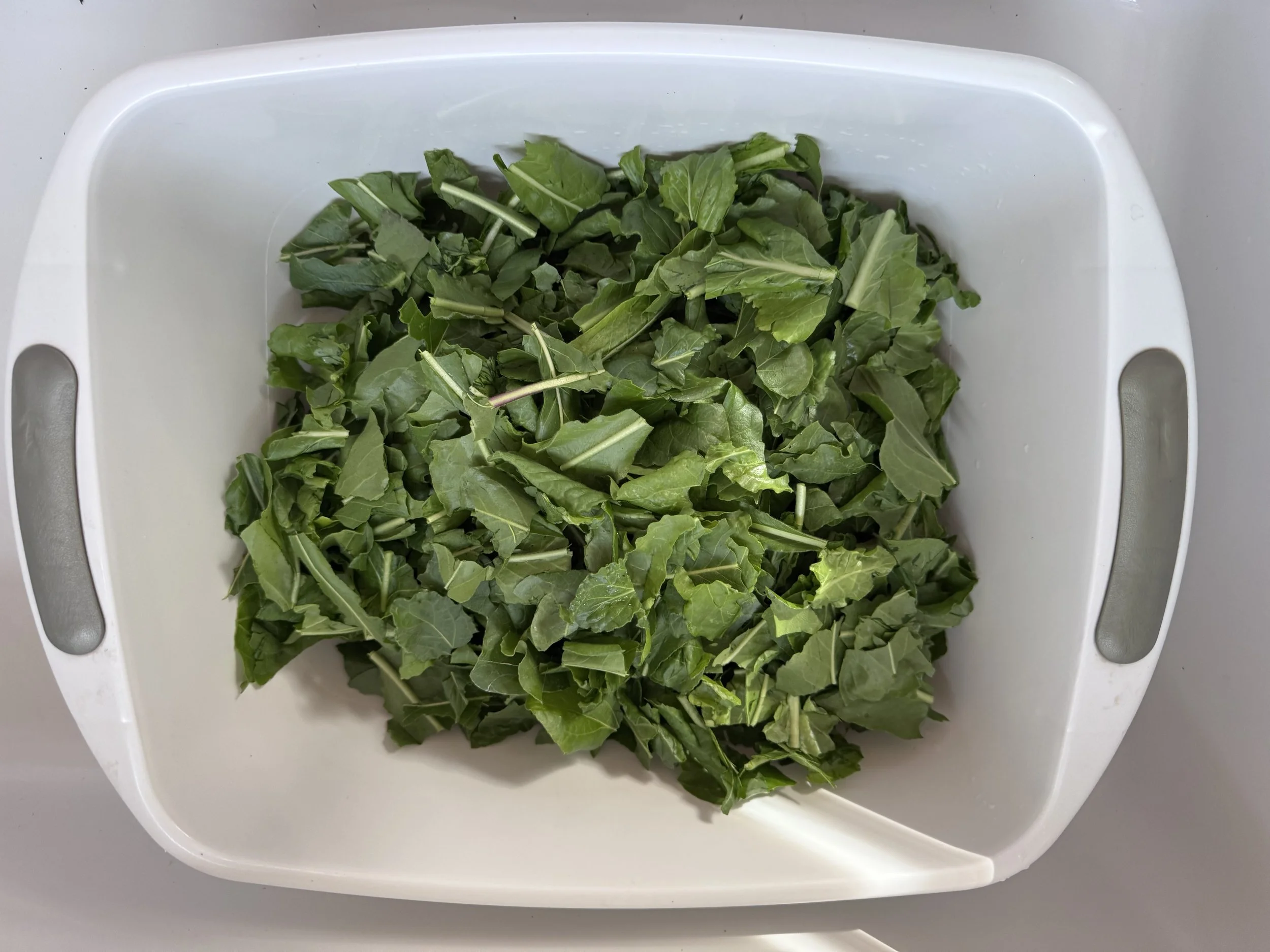
this is about 250g
I am not worrying much about weights because my leaves are so old; I figure I'd better use all that I can get. I did, however, weigh the leaves. I am going to salt these and smush them up, and see if they have any green juice in them.
-
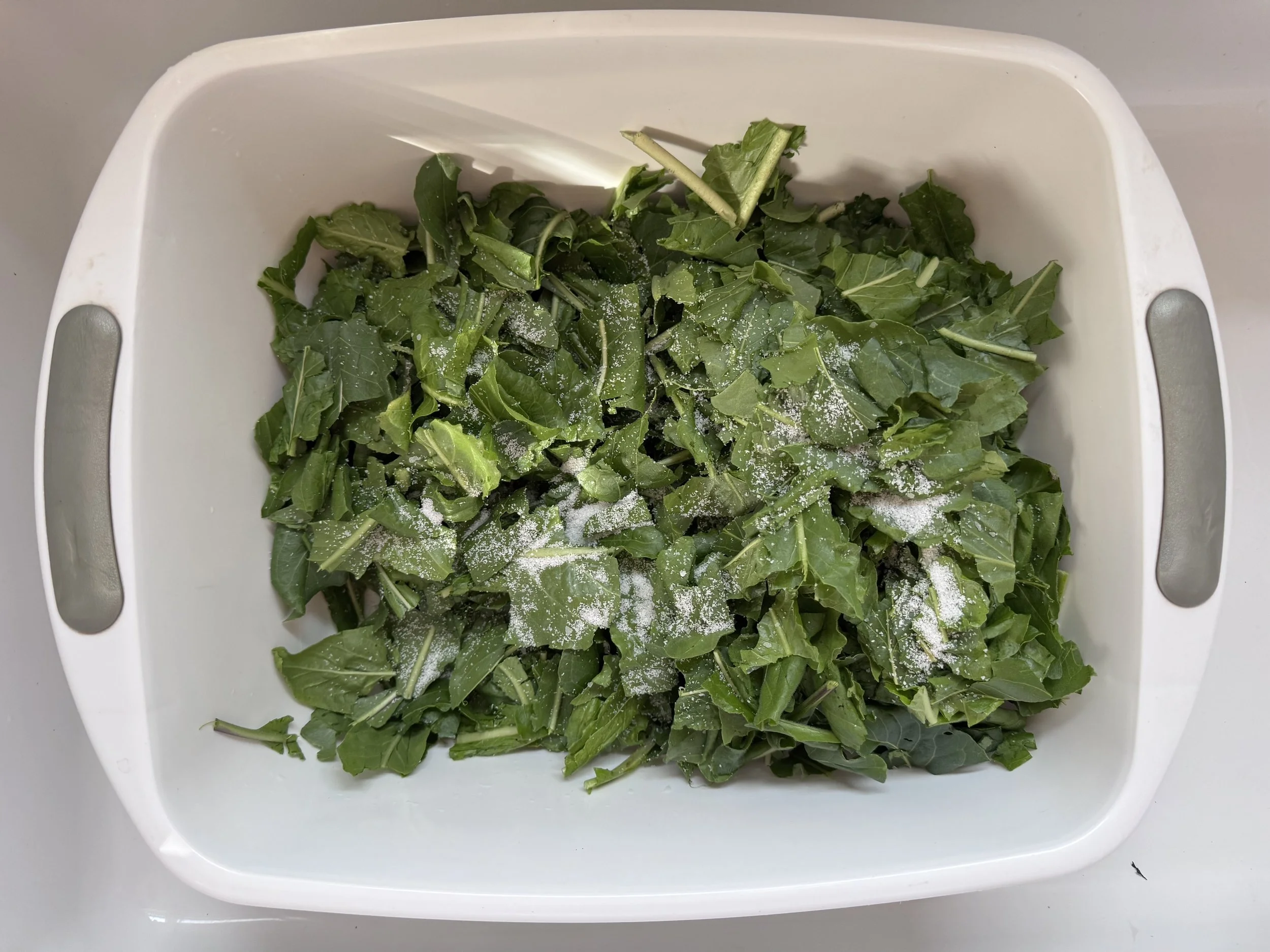
salted
I did not measure my salt; I sort of layered it over the bottom third, the middle, and the top of the leaves. Now I will smush them up and let them sit for a bit.
-
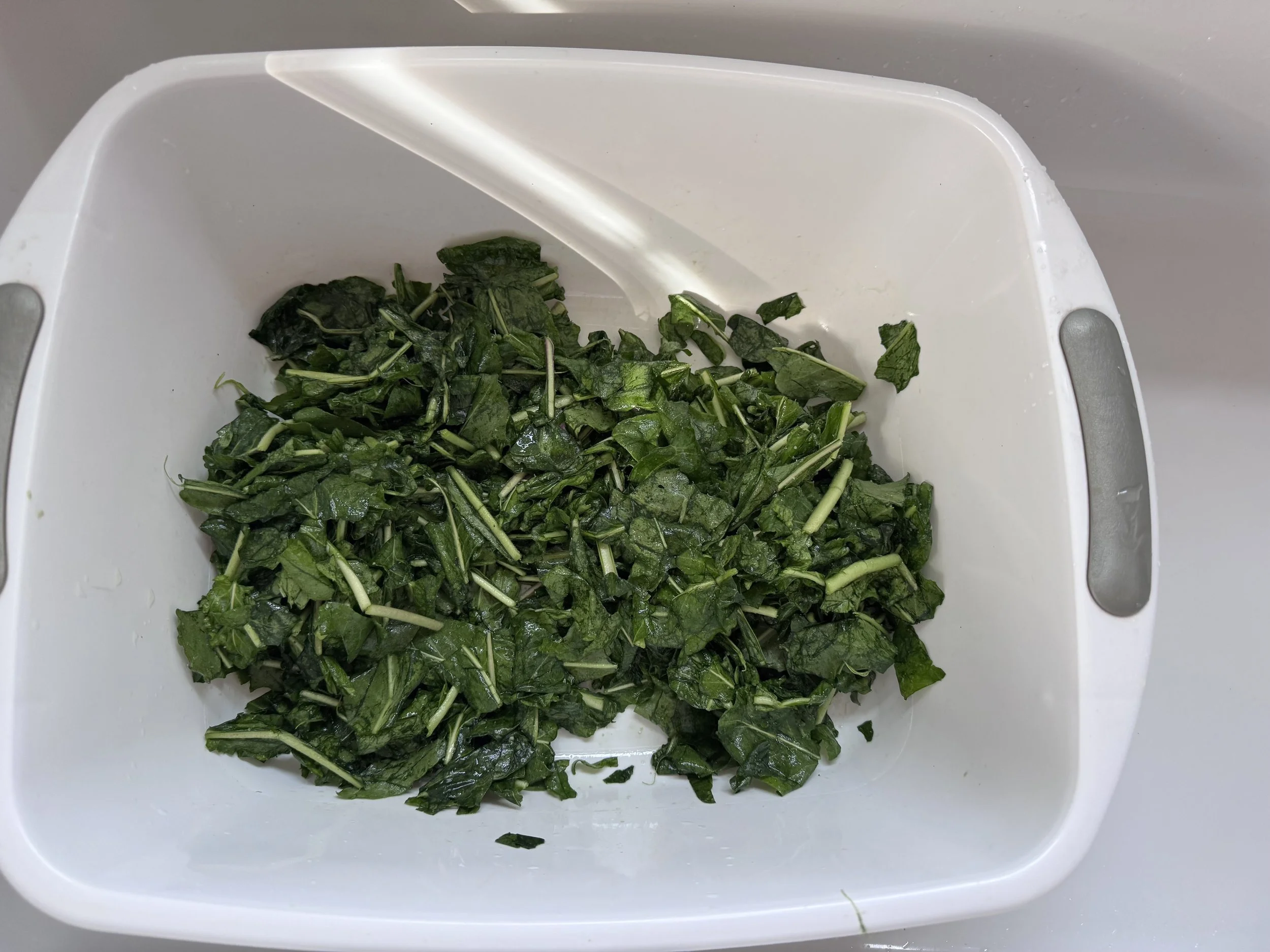
less than 10 minutes later
Wow. Next time I make woad balls, I will add some salt.
-
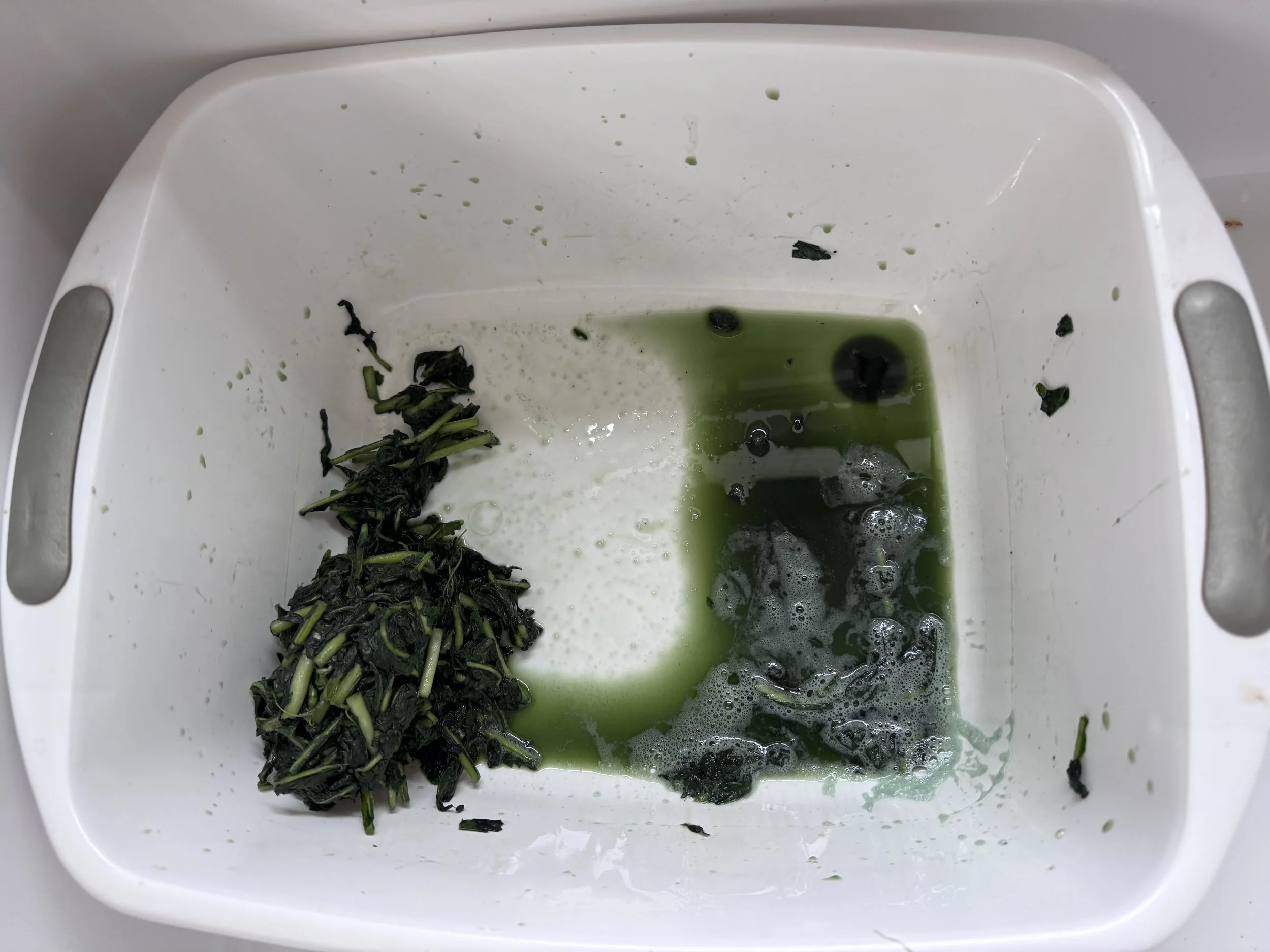
an hour later
Smushing and squishing got me to this point. It is hard to believe that all of those leaves reduced to that sad little pile, but there we are. Time to add some damp yarn to the juice.
-
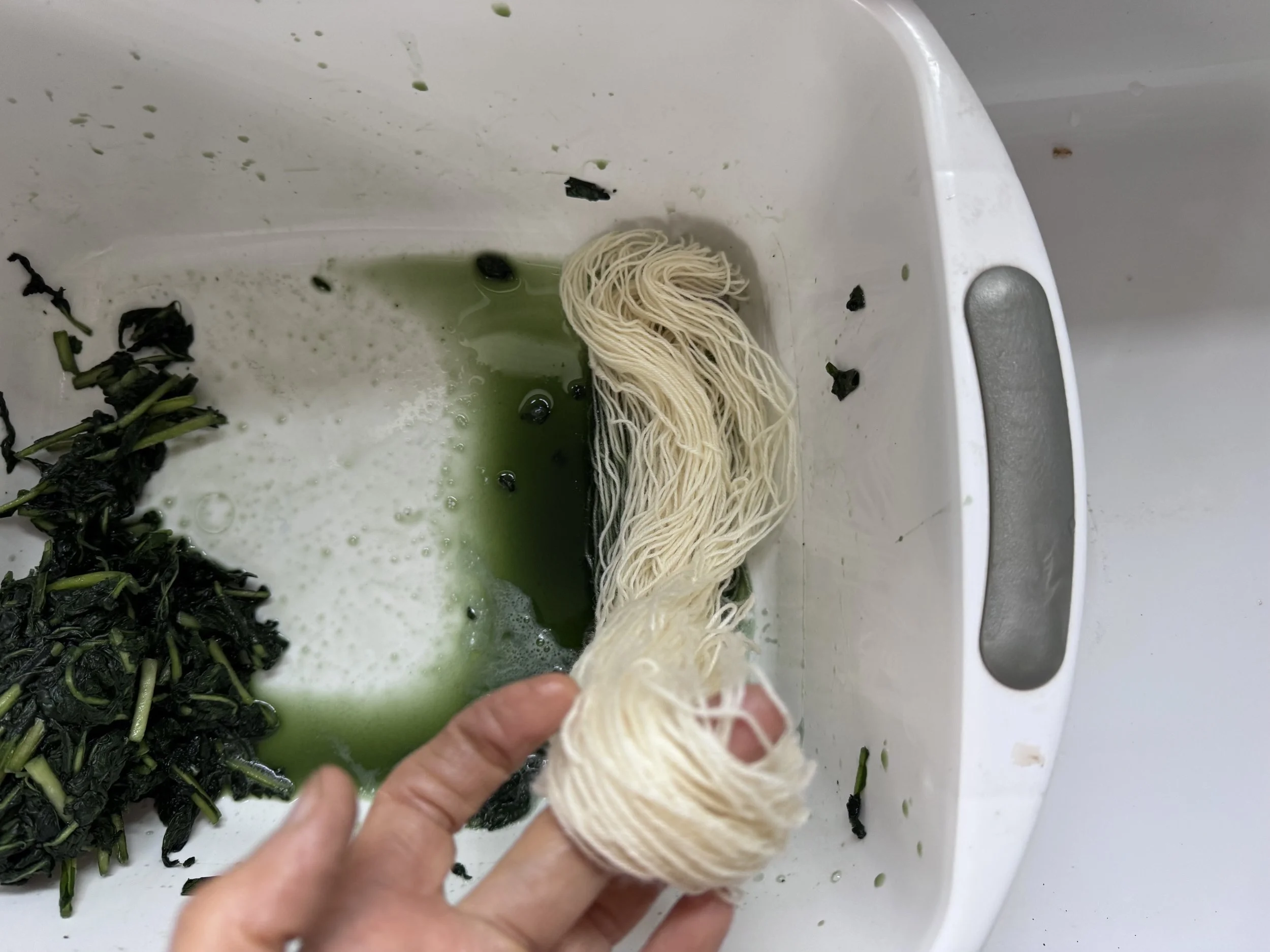
merino in
This is 20g of Knomad merino, fingering weight. I mordanted it with alum. It is not necessary to mordant fibers dyed with indigotin-containing pigments, but since I didn’t do any fermenting or oxidizing, I figured it might not hurt to mordant the yarn.
-
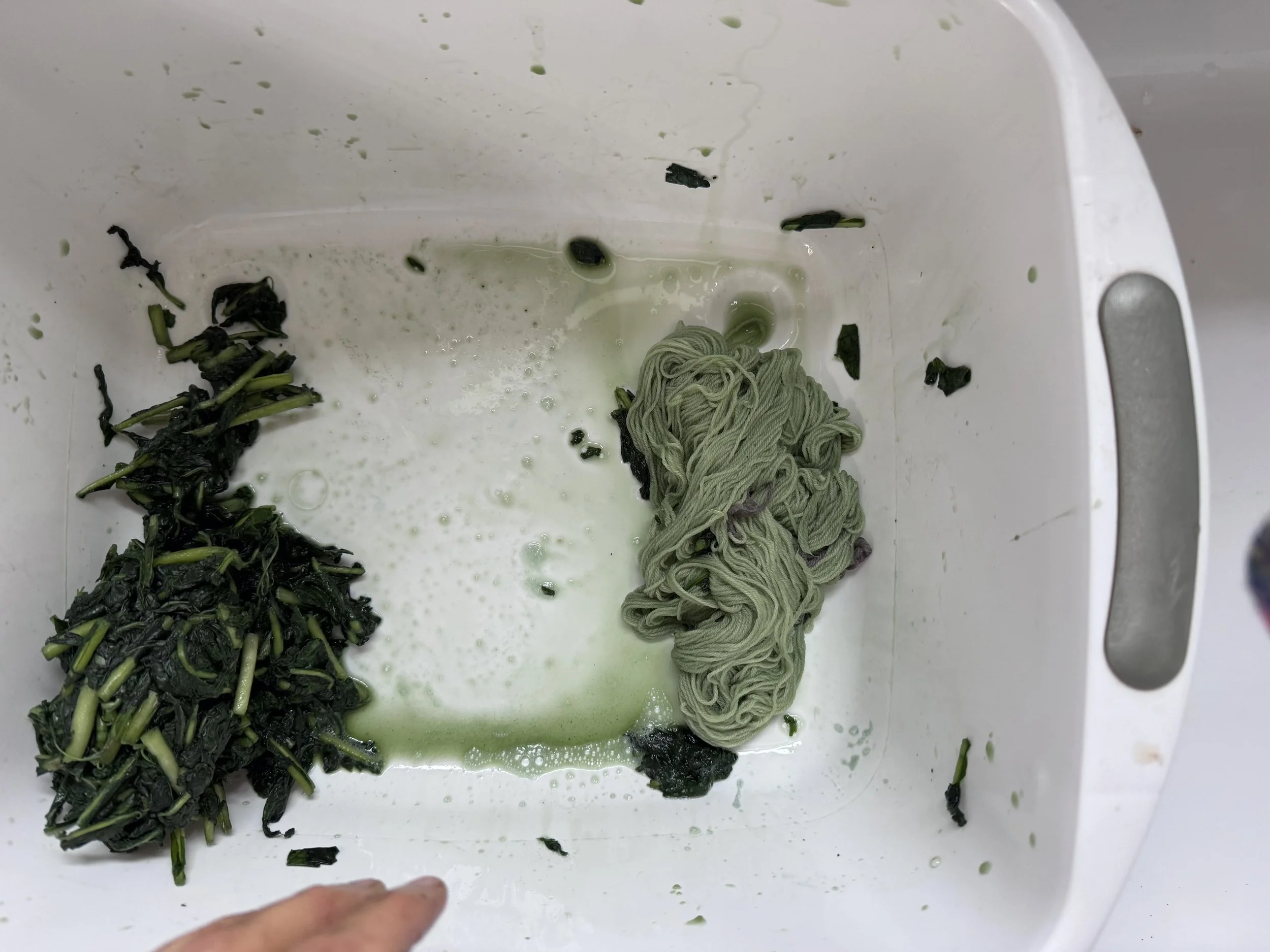
nice green
I will slop it around in the liquid and let it sit for a bit.
-
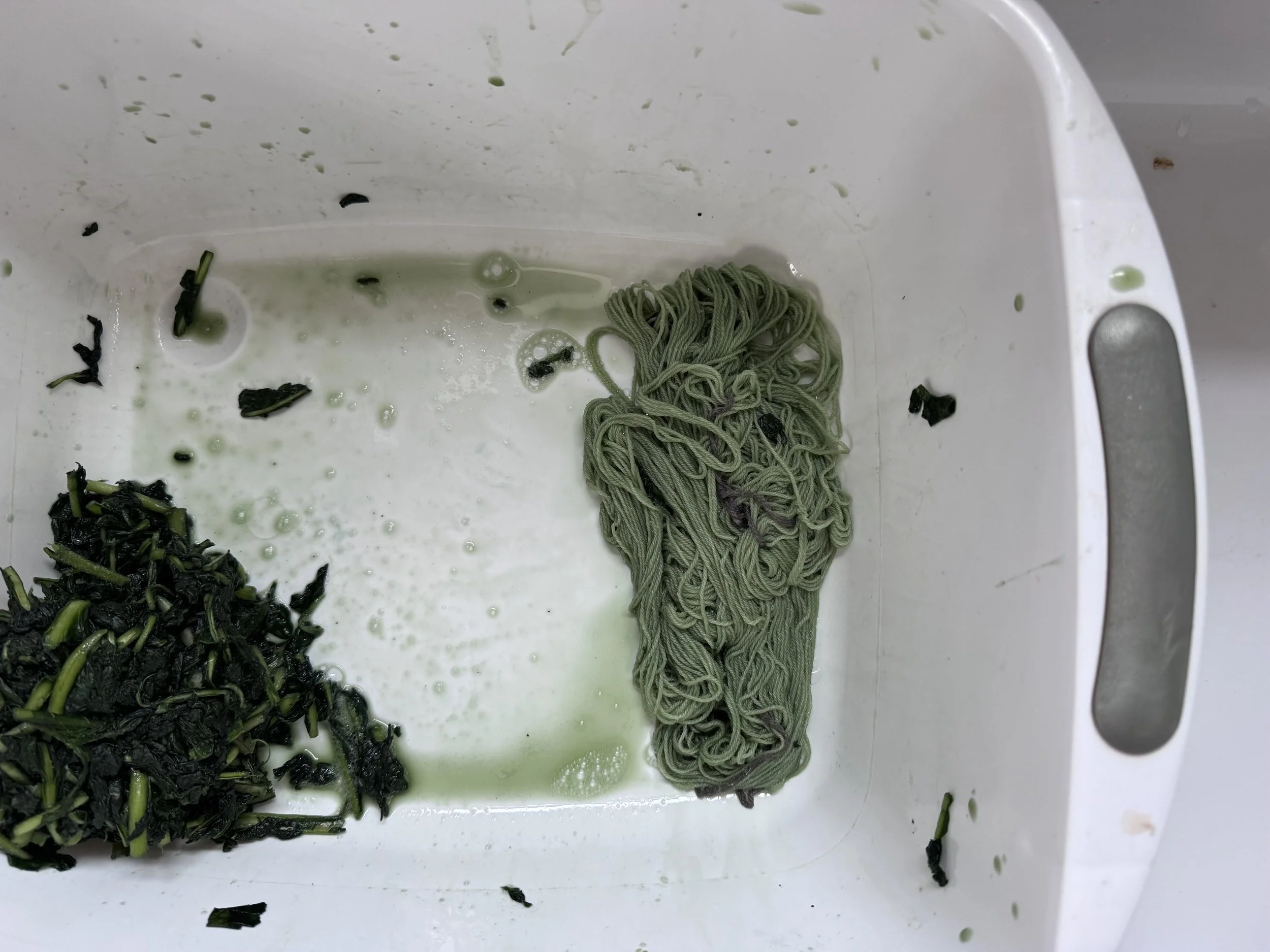
five minutes later
The color is already much more saturated. I think I will take it out and let it drip dry, and in the meanwhile, I will cook the leaves with some more yarn. I could cook the leaves and then strain them, and then dye the yarn, but I thought it might be fun to see if the leaves, uh, leave any trace of blue.
-
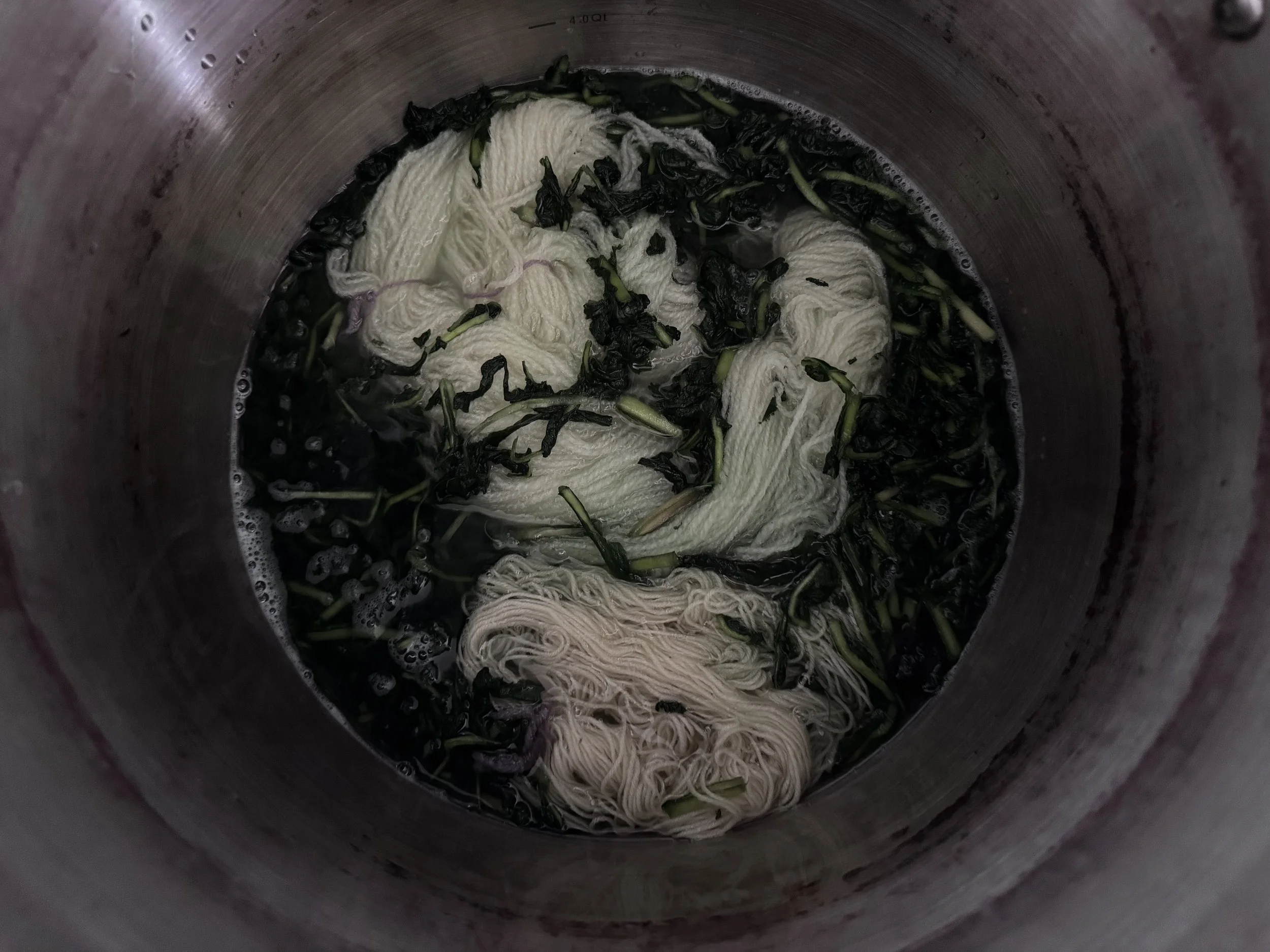
merino and shetland in
Those who know say that the leaves should yield a pinky brown color when cooked. Here I have another 20g hank of the Knomad merino, plus about 50g of natural white Shetland wool, both mordanted with alum.
-
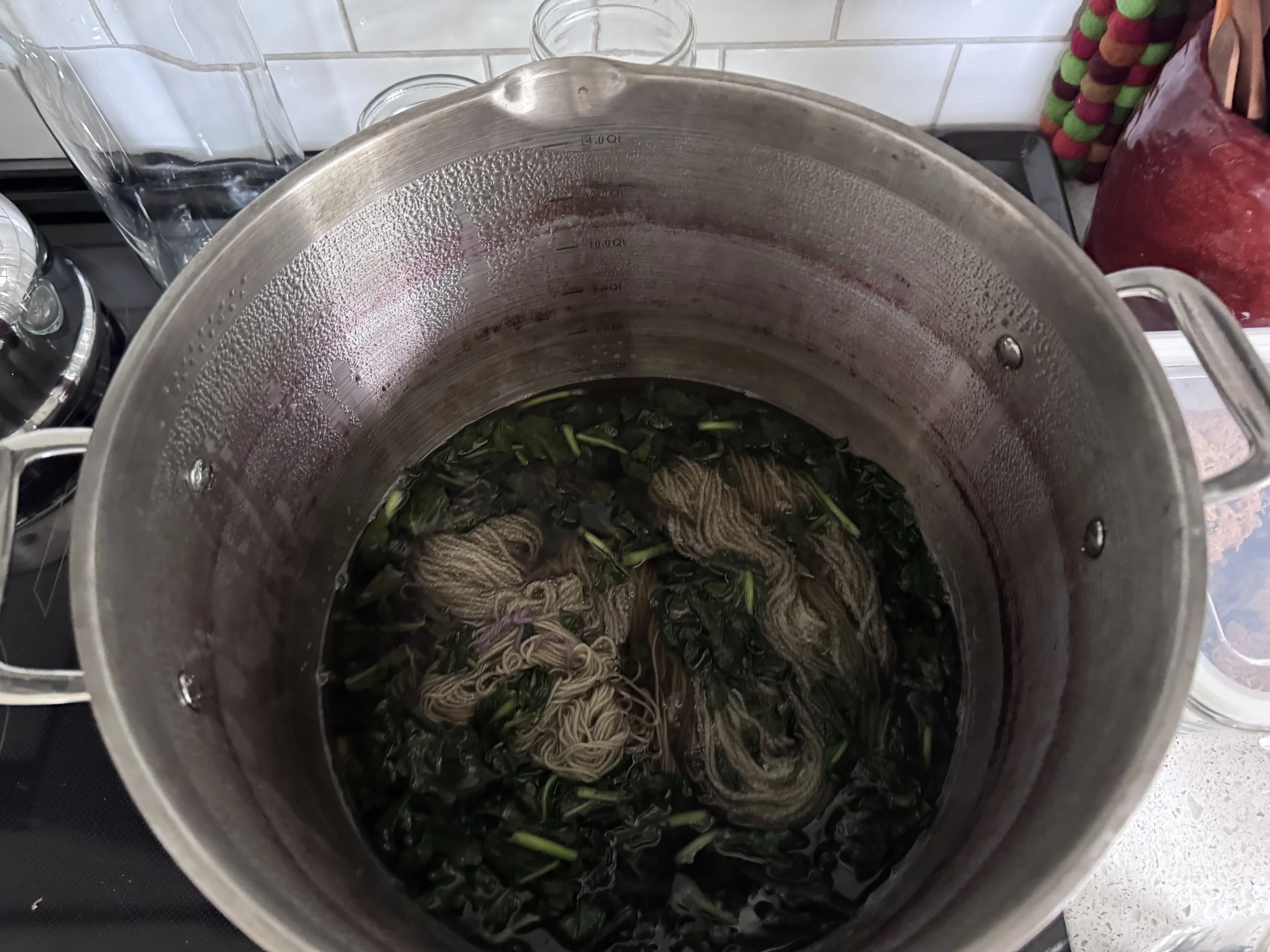
turning pink?
I can’t quite tell what colors are coming out - but though I can’t tell, time will.
-
second exhaust
After I removed the yarn, the dye water still looked quite pink, so I put in another alum-mordanted hank of Shetland, and cooked that for about an hour. Did I take a photo? No I did not.
-
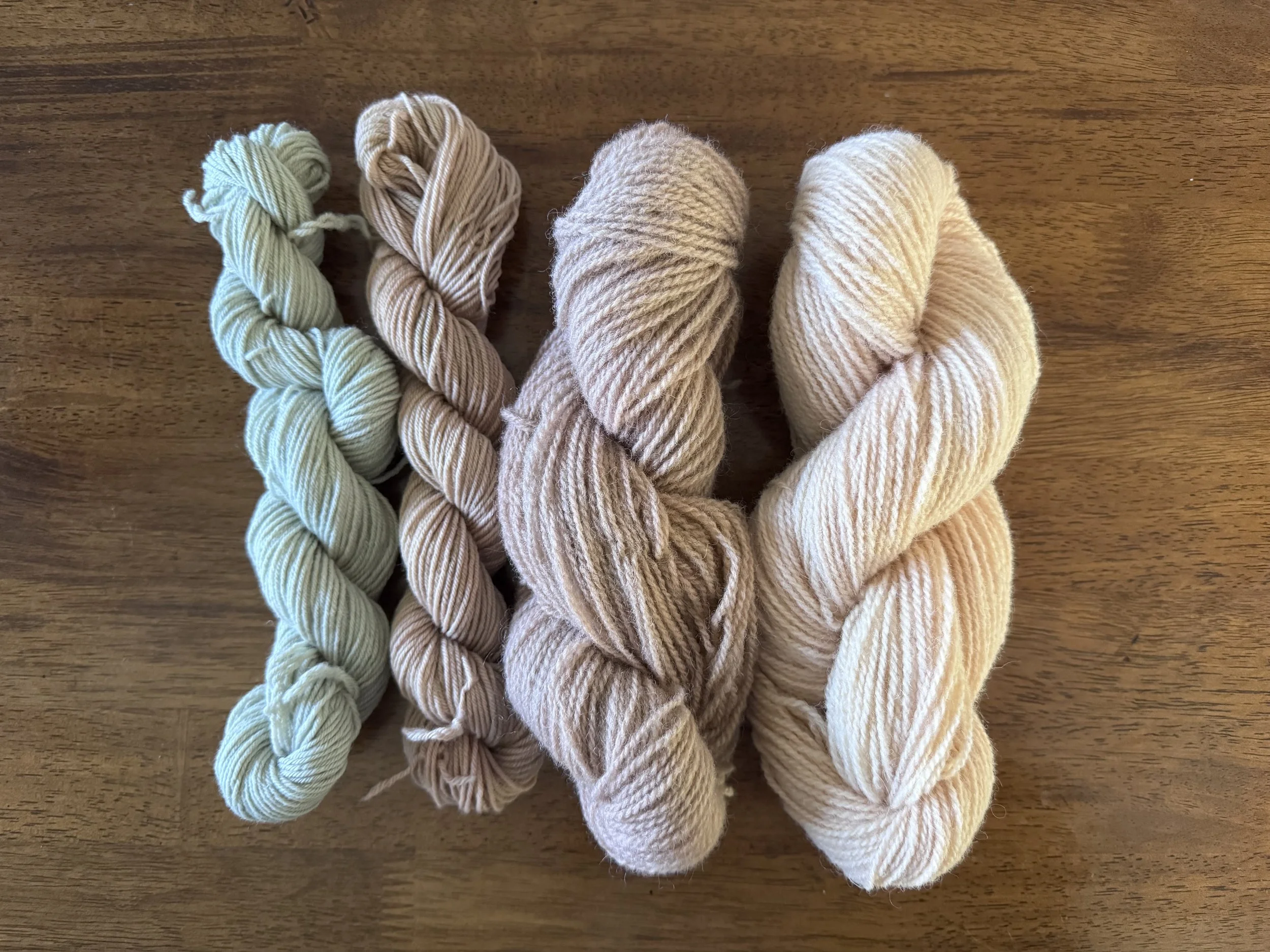
four yarns
Here are, from left to right, the yarn that sat in the green juice, the first exhaust of the merino and the Shetland in cooked leaves, and the second exhaust of the Shetland in the cooke leaves.
The color looks a bit washed out. I will try taking a photo outside, and see if I get a truer result.
-
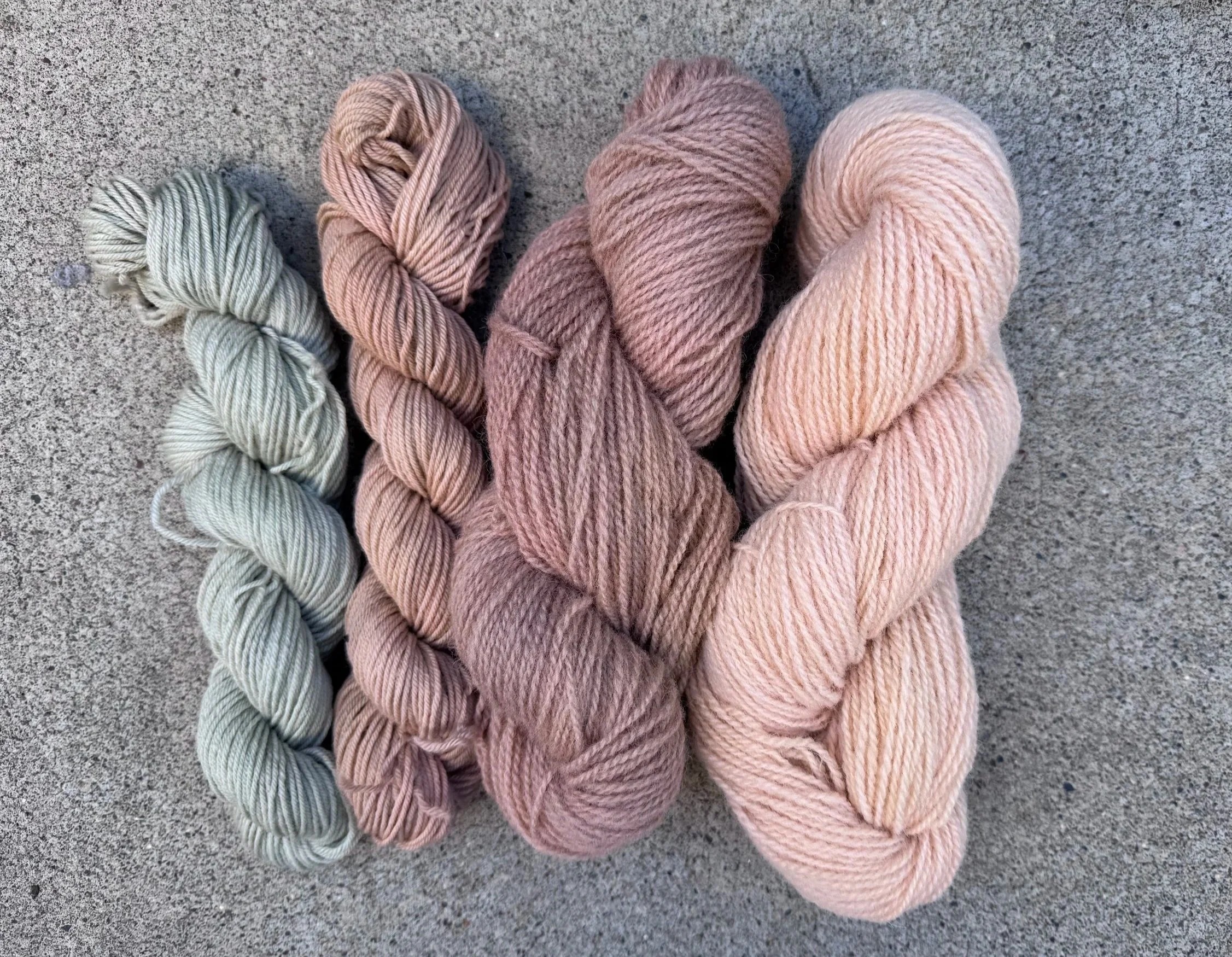
better
Good enough to eat!
-
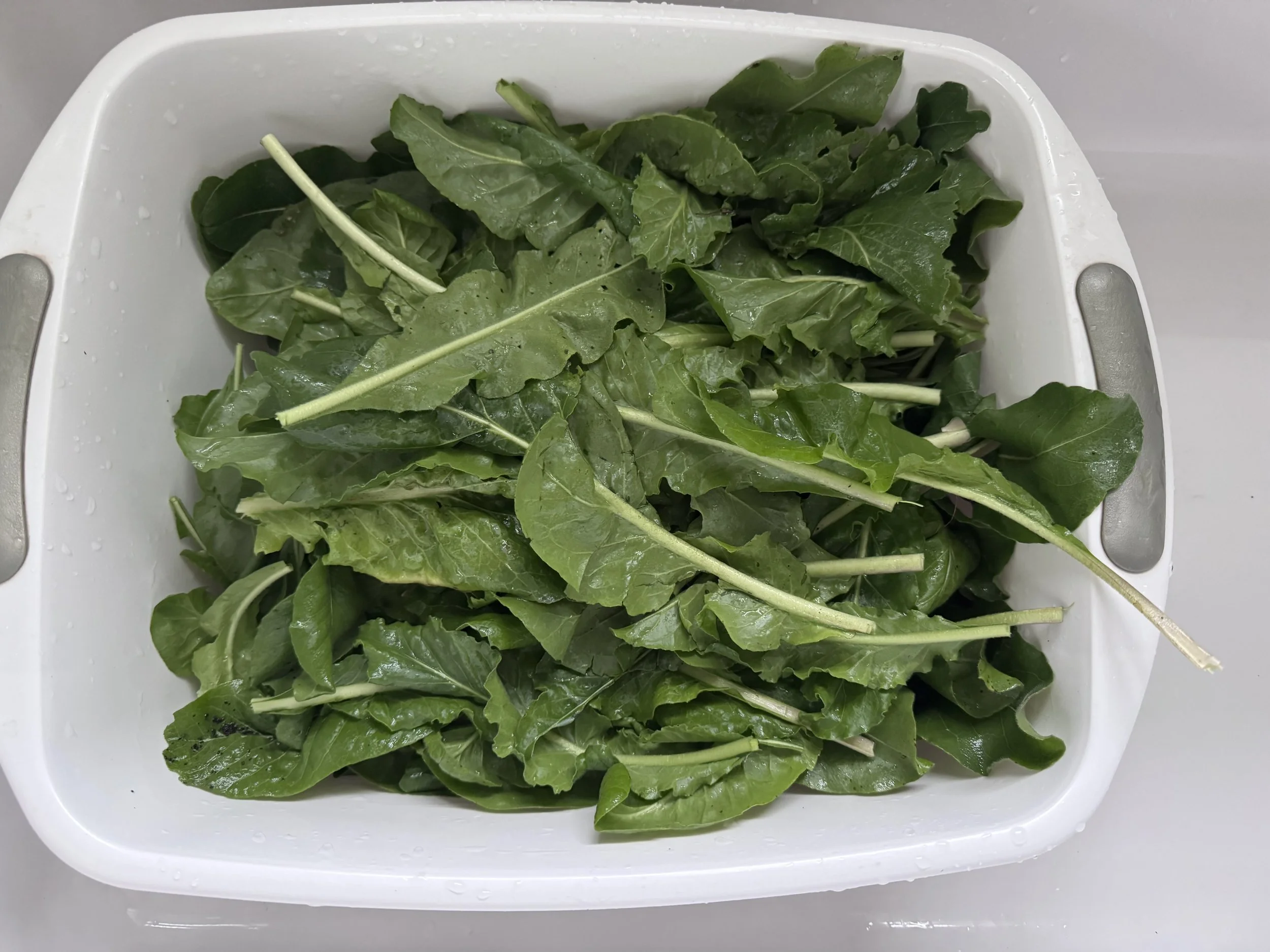
Let's do it again
The pink that came off of the leaves is so gorgeous and complex that I want to try more of this.
-
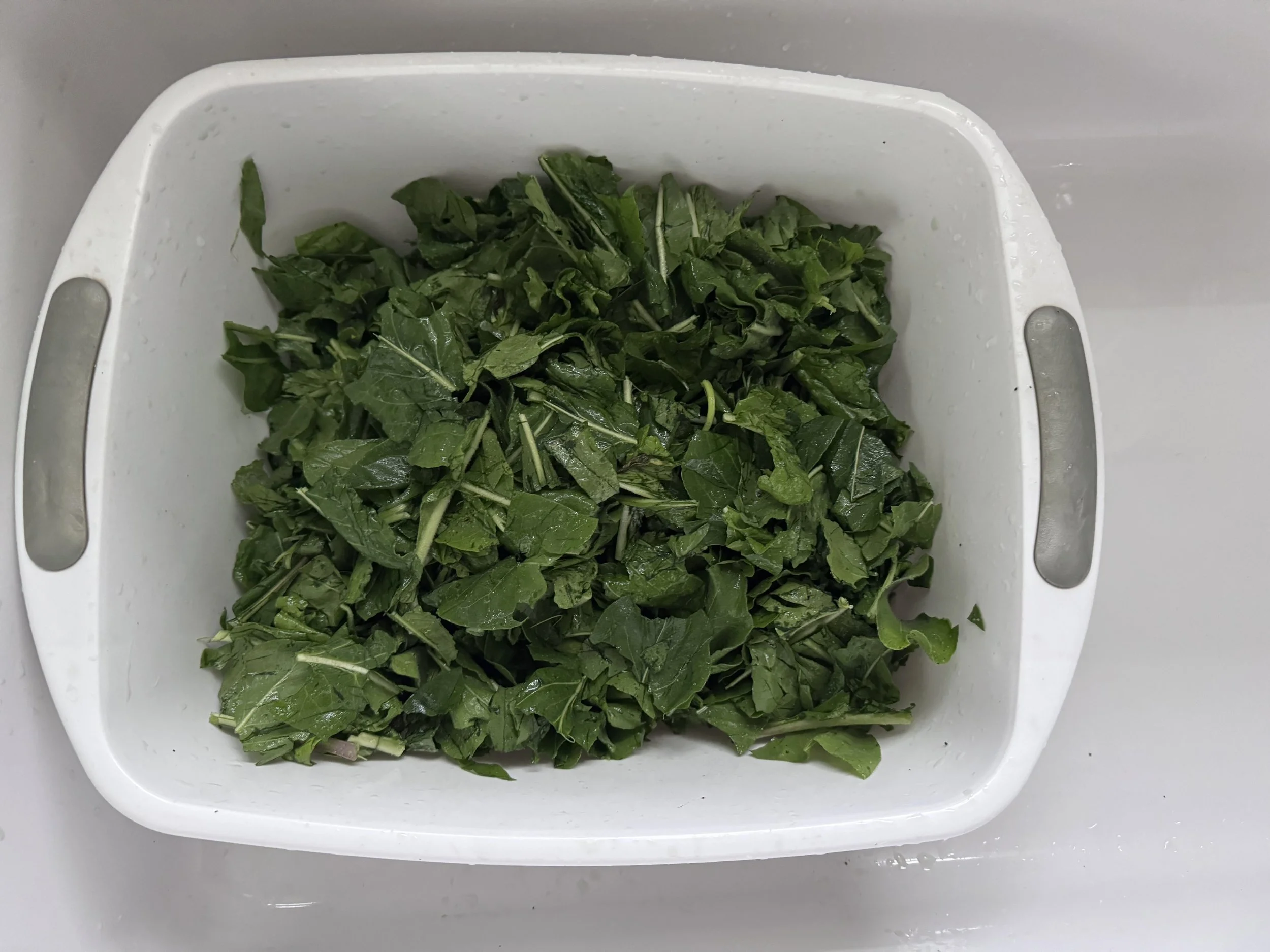
prepped
These leaves are not as vibrant as my first batch, so I am using a lot more of them - closer to 400g.
-
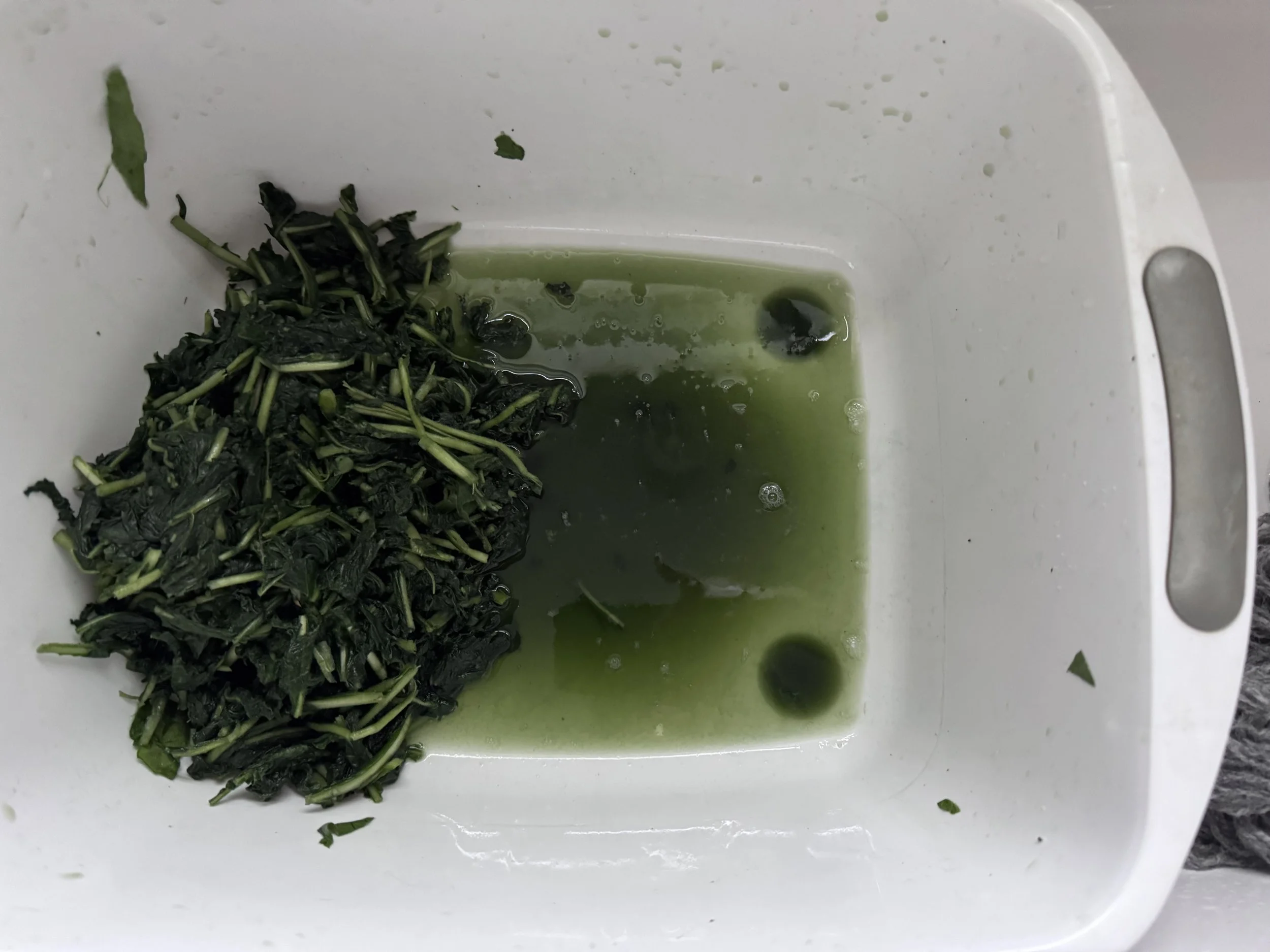
tired leaves, tired dye
Yes, this is not nearly as saturated as the first round’s dye. It looks watery.
-
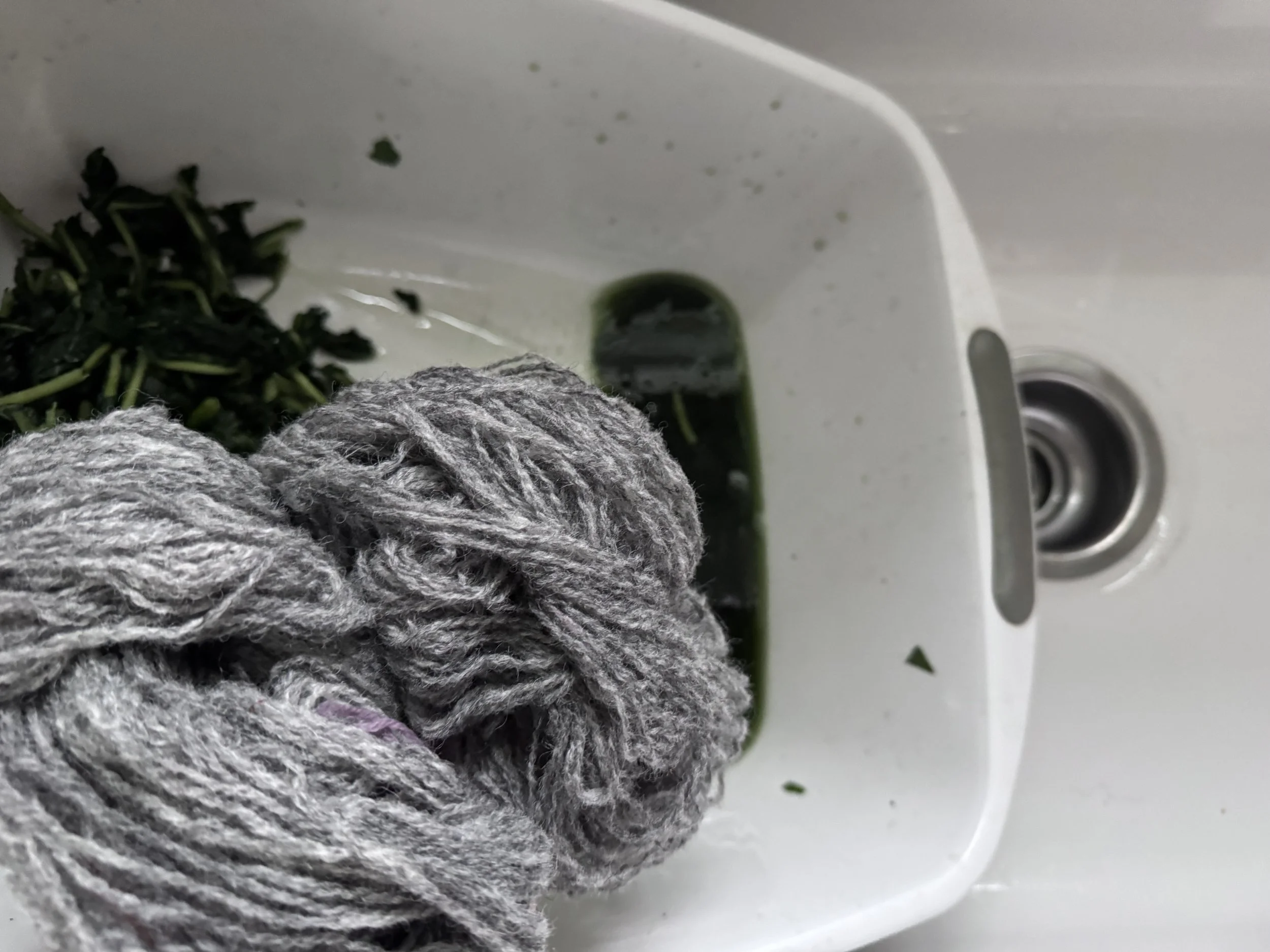
light gray shetland
I will try another 50g of alum-mordanted Shetland, but this time, a light gray. This is from Jamieson and Smith and I hope it is a natural color, though I can’t be sure, as it is not part of the Shetland Supreme line.
-
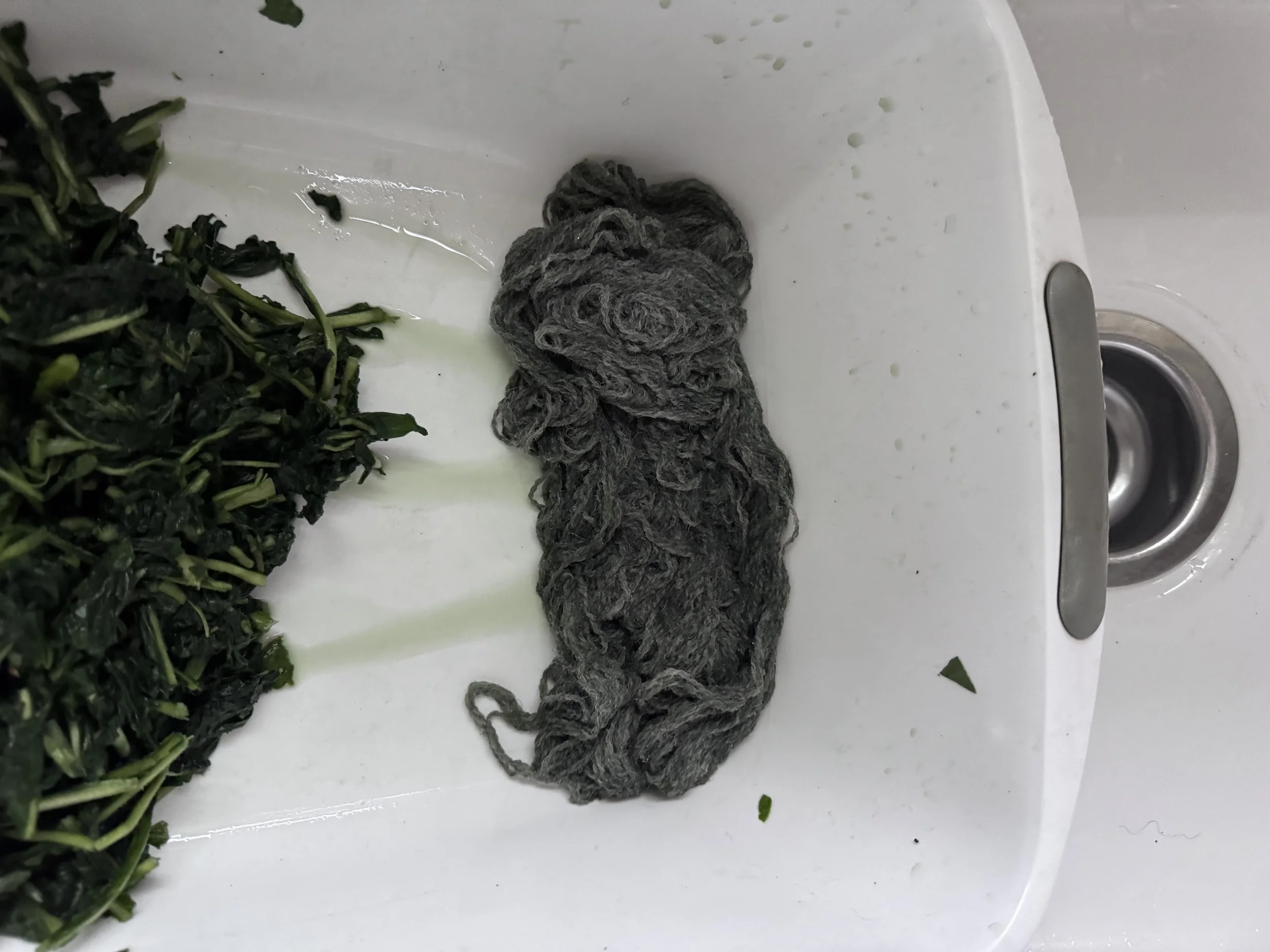
a darker green
It makes sense that the color is darker, as the yarn base is gray and not white.
-
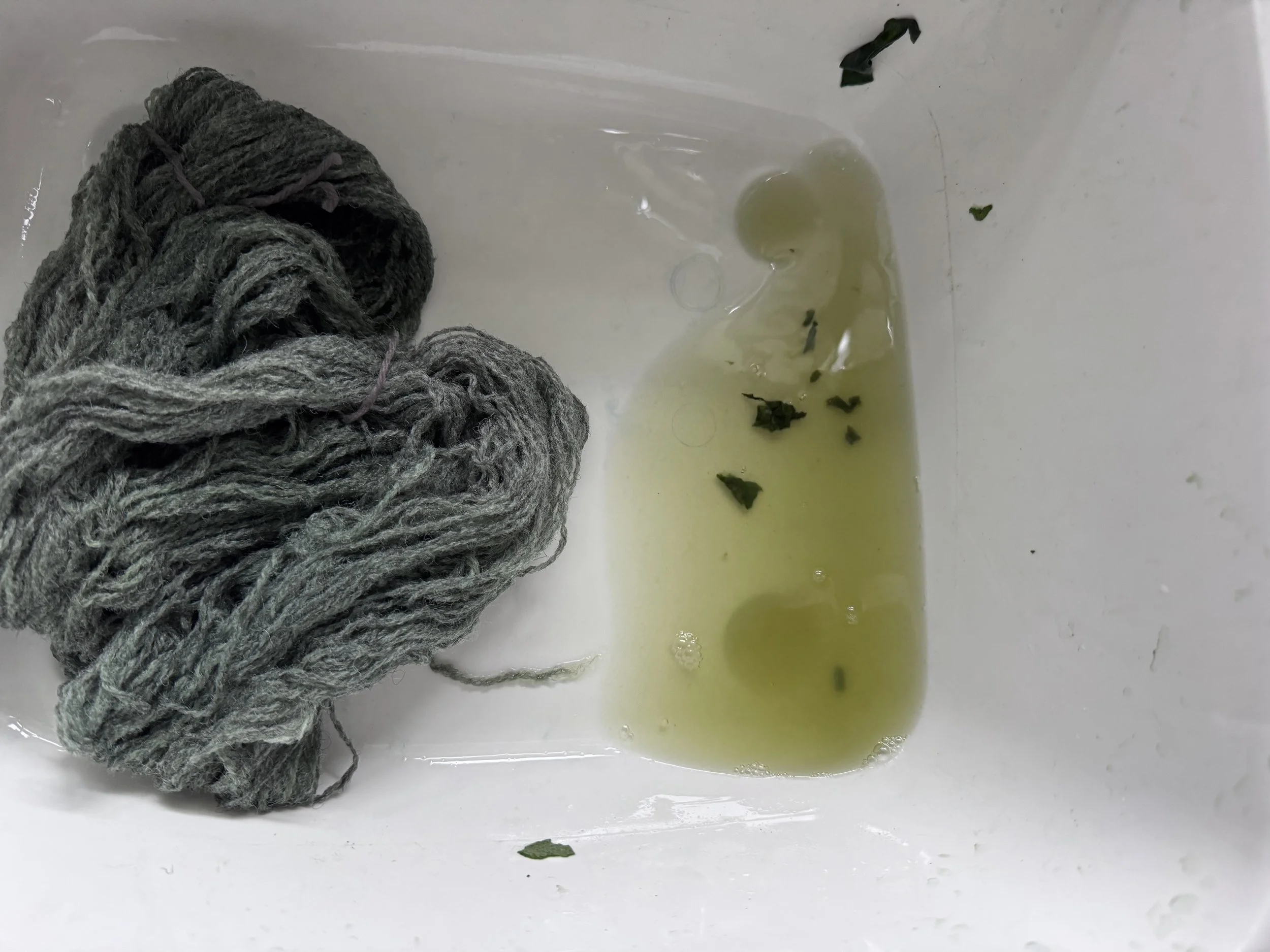
not much pigment left
That took up just about all of the color from the liquid. Next, I will cook the leaves with some more yarn.
-
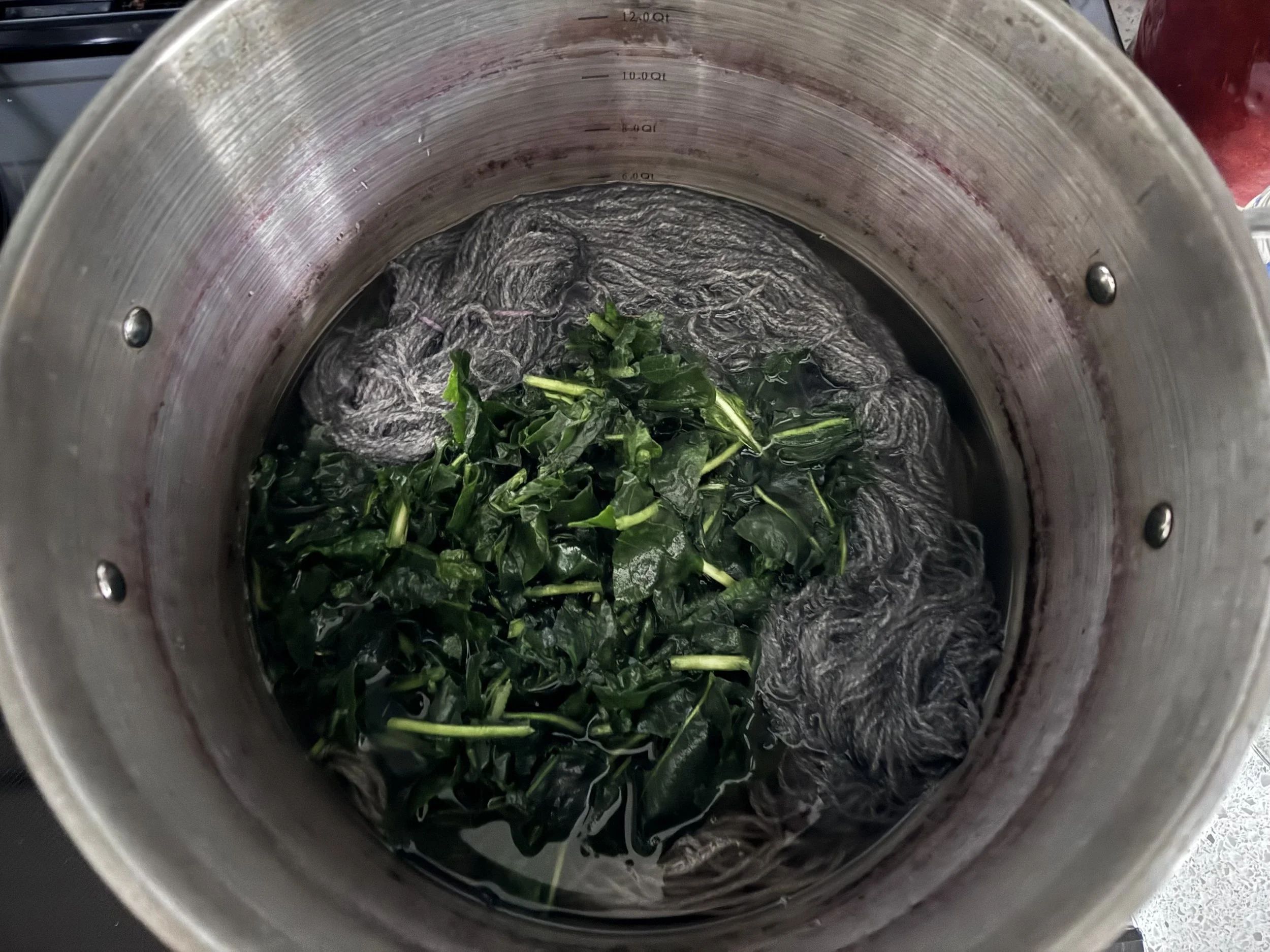
two more hanks
Here I have yet another 50g of the mordanted gray Shetland, along with about 100g of a light brown DK wool that I think I got from Purl Soho on a cone, also mordanted with alum.
-
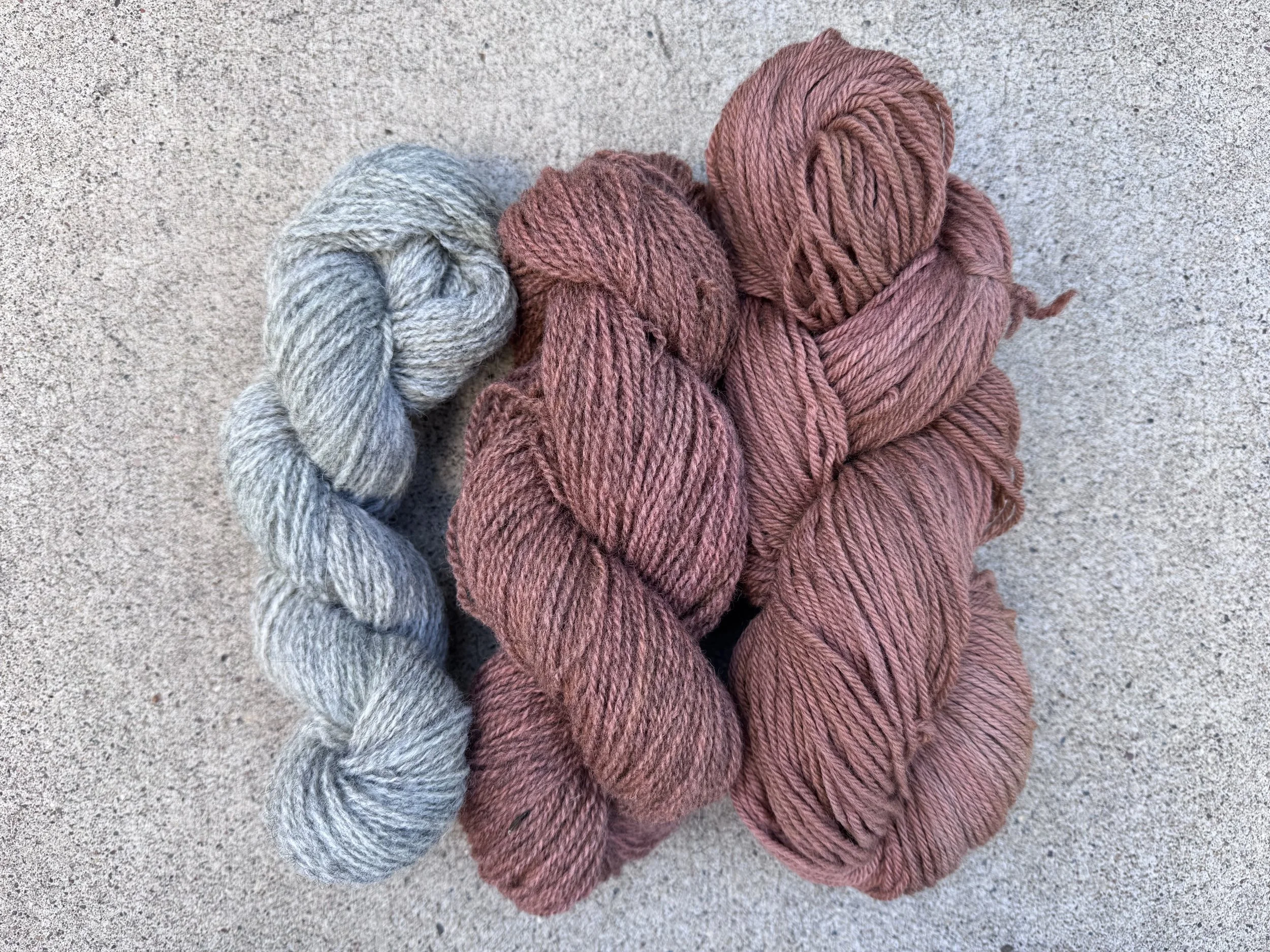
next three
The outdoors photo is not working as well here; the green yarn looks slightly washed out, and the pinks on the other two yarns look really saturated (Shetland on left, DK on right).
-
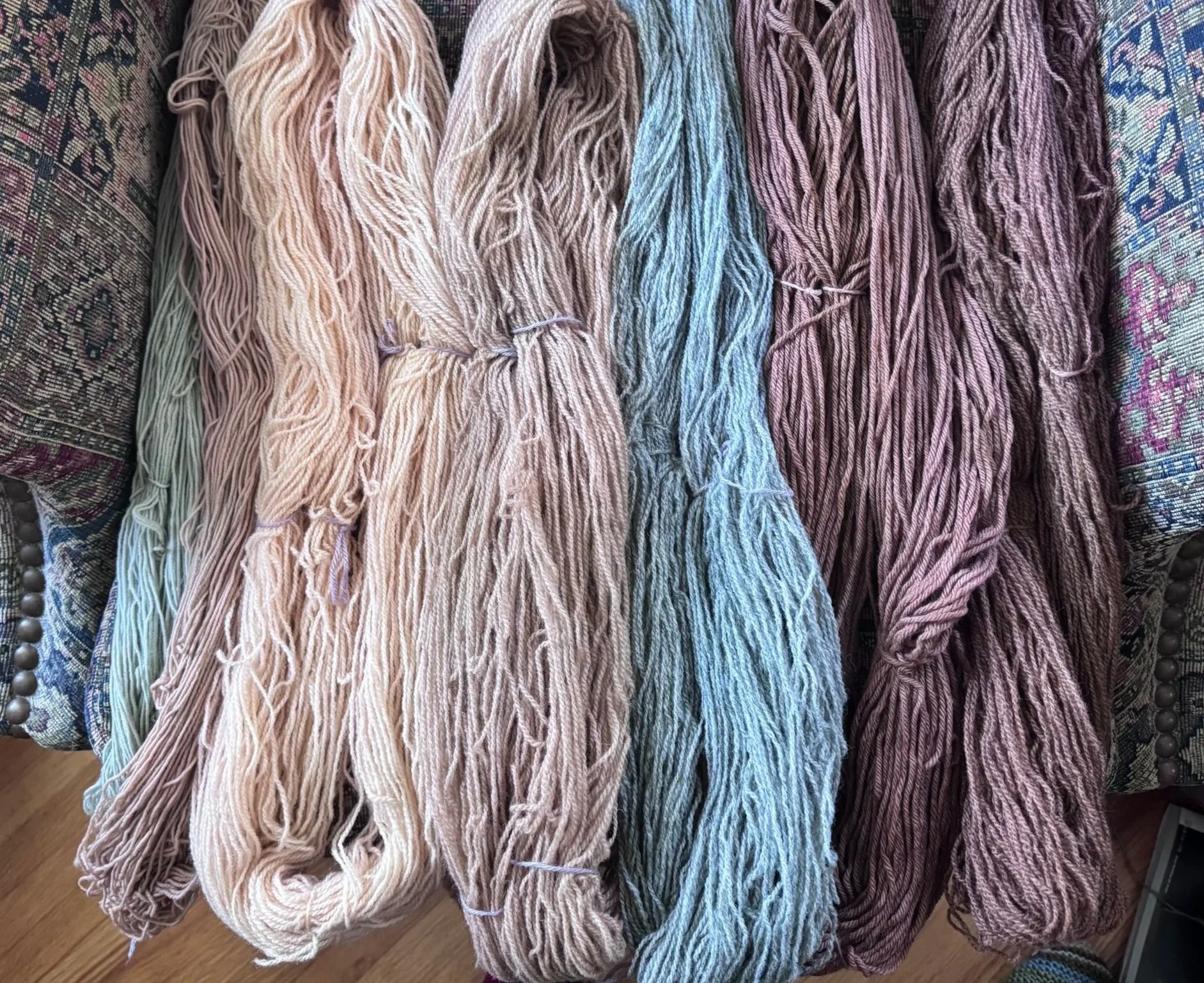
first two batches
I have enough leaves, I hope, for another biggish batch, and then I will have to read some more about fermenting woad and see if I can get past the fear. The books make it look so easy . . .
-
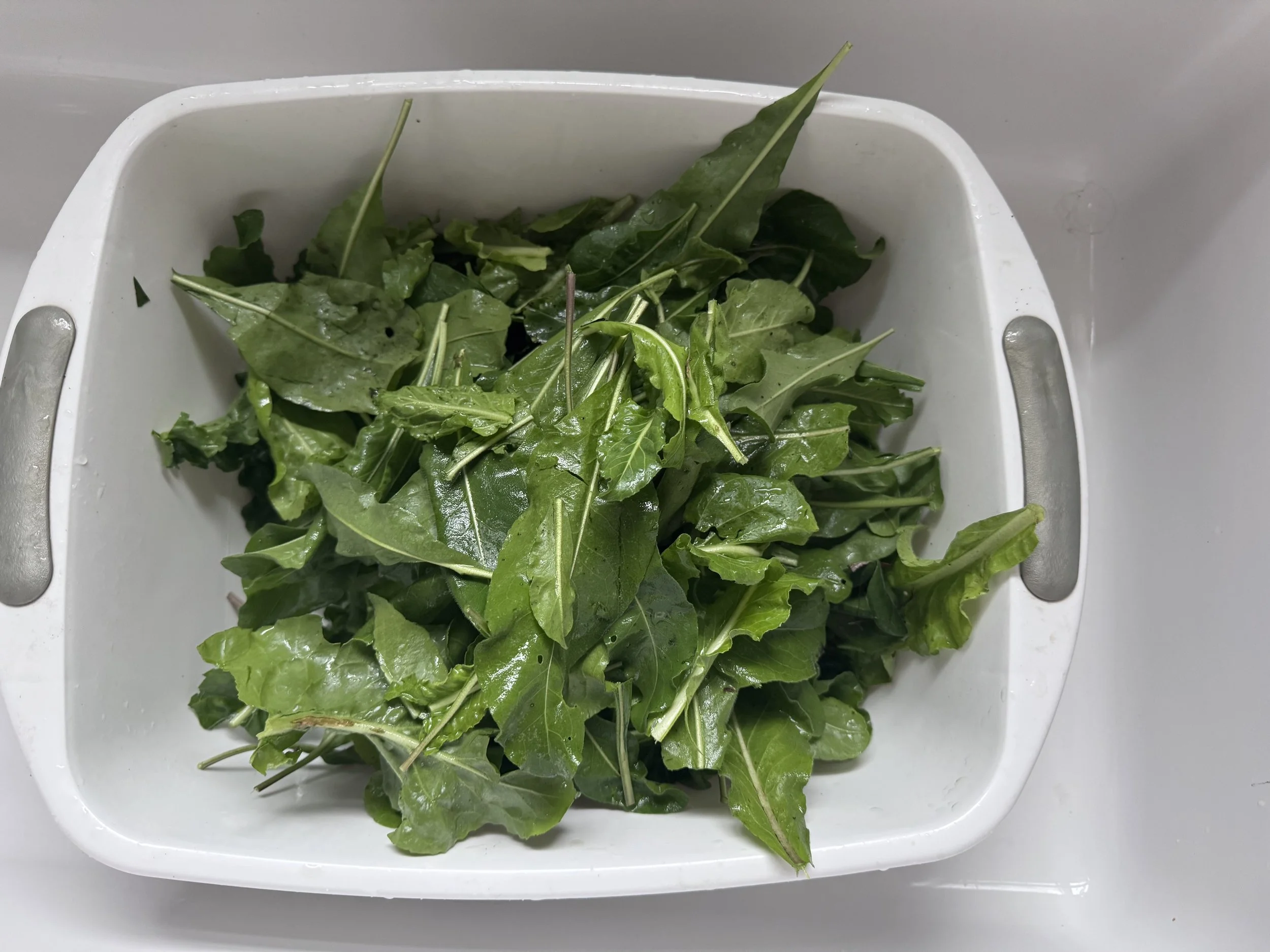
Last leaves
I am not going to salt or smush these, but will rather just tear them up and cook them, and then strain off the leaves. I am going to try dyeing some of my unspun lambswool as well as some light gray Shetland roving that I have been hoarding for the last few years.
-
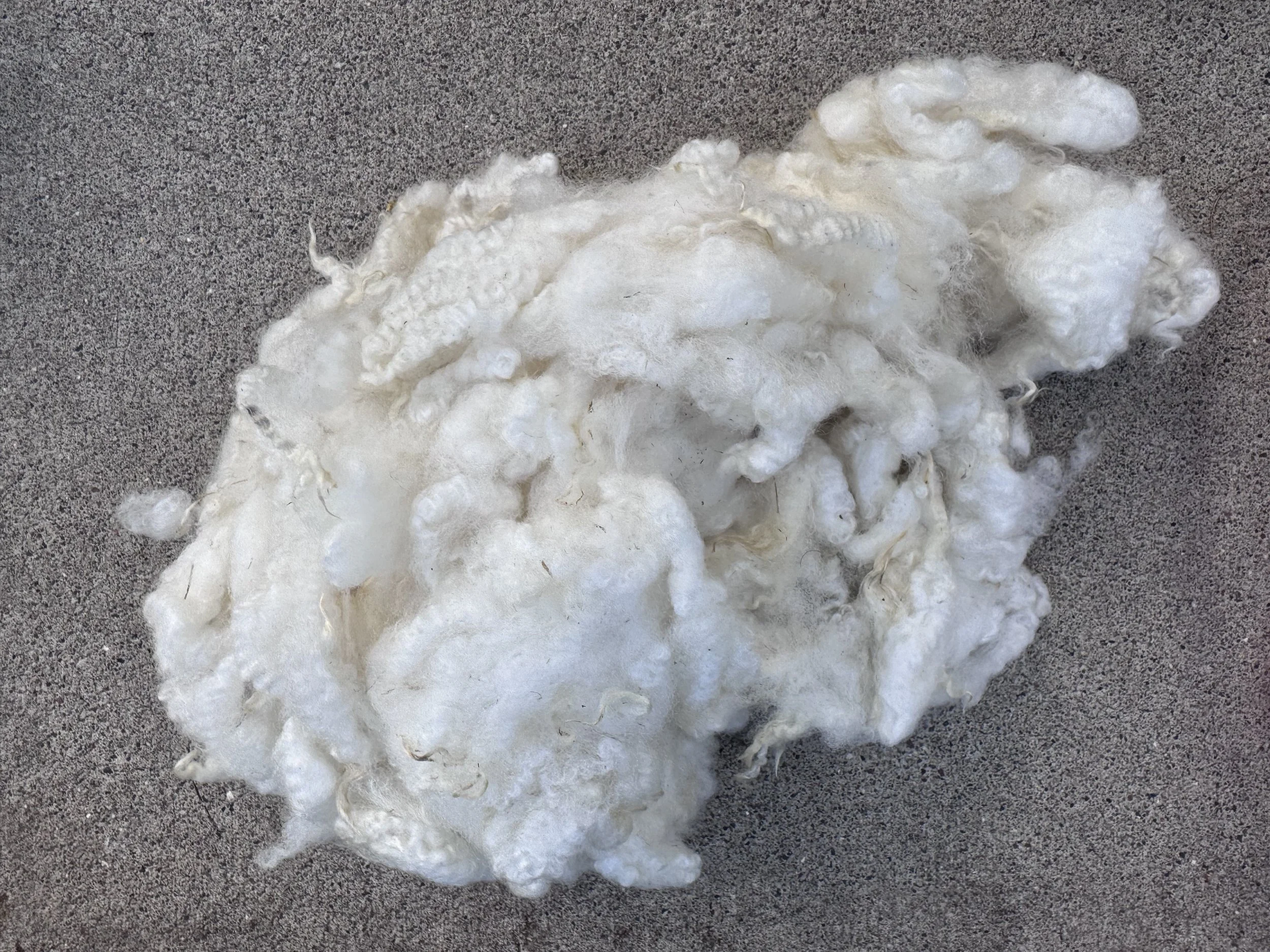
some lambswool
This is wool from a poor little lamb on a local farm and I have had it for some time. This bit is scoured but not mordanted. I worry that that any extra handling will felt it, so I will dye it un-mordanted. I am hoping that at least a bit of pink will stick.
-
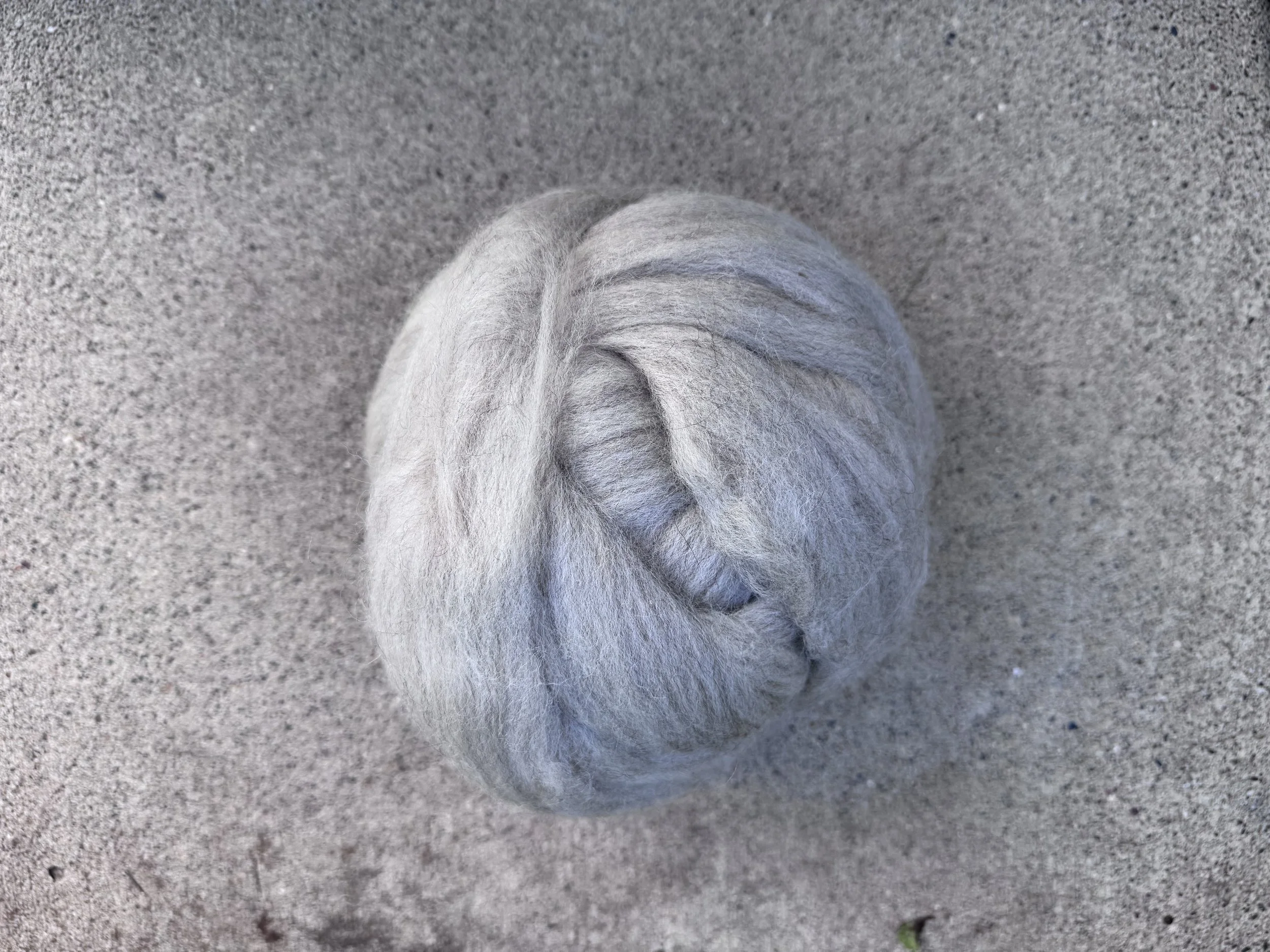
some silvery roving
And here is the Shetland roving. I will dye about about 100g. As with the lambswool, I am not going to mordant it but rather just stew it gently in the dye (leaves strained) and hope for the best.
-
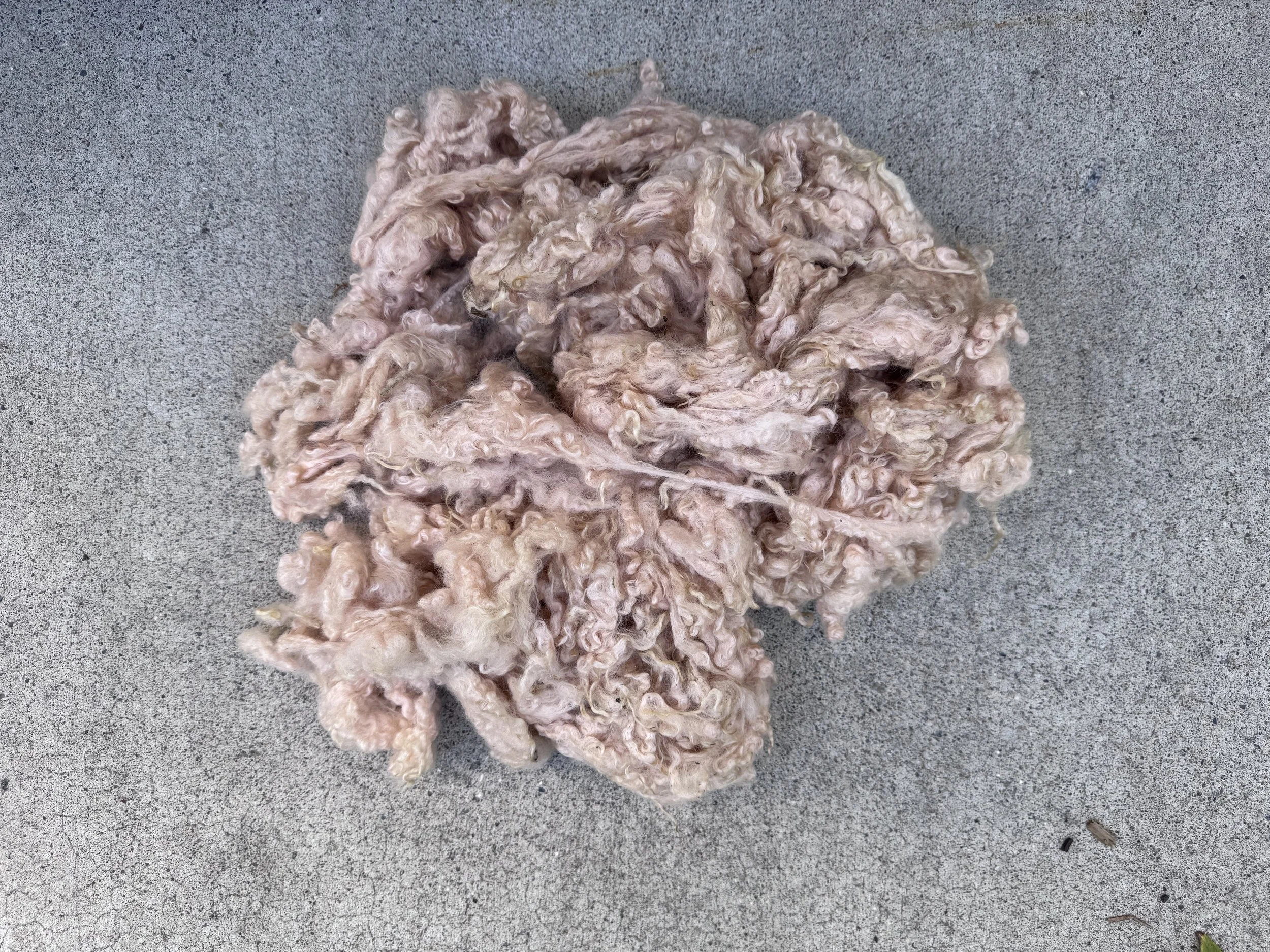
it stuck!
It boggles my mind that cooking those tired green leaves could create a dye that turns white wool this color.
-
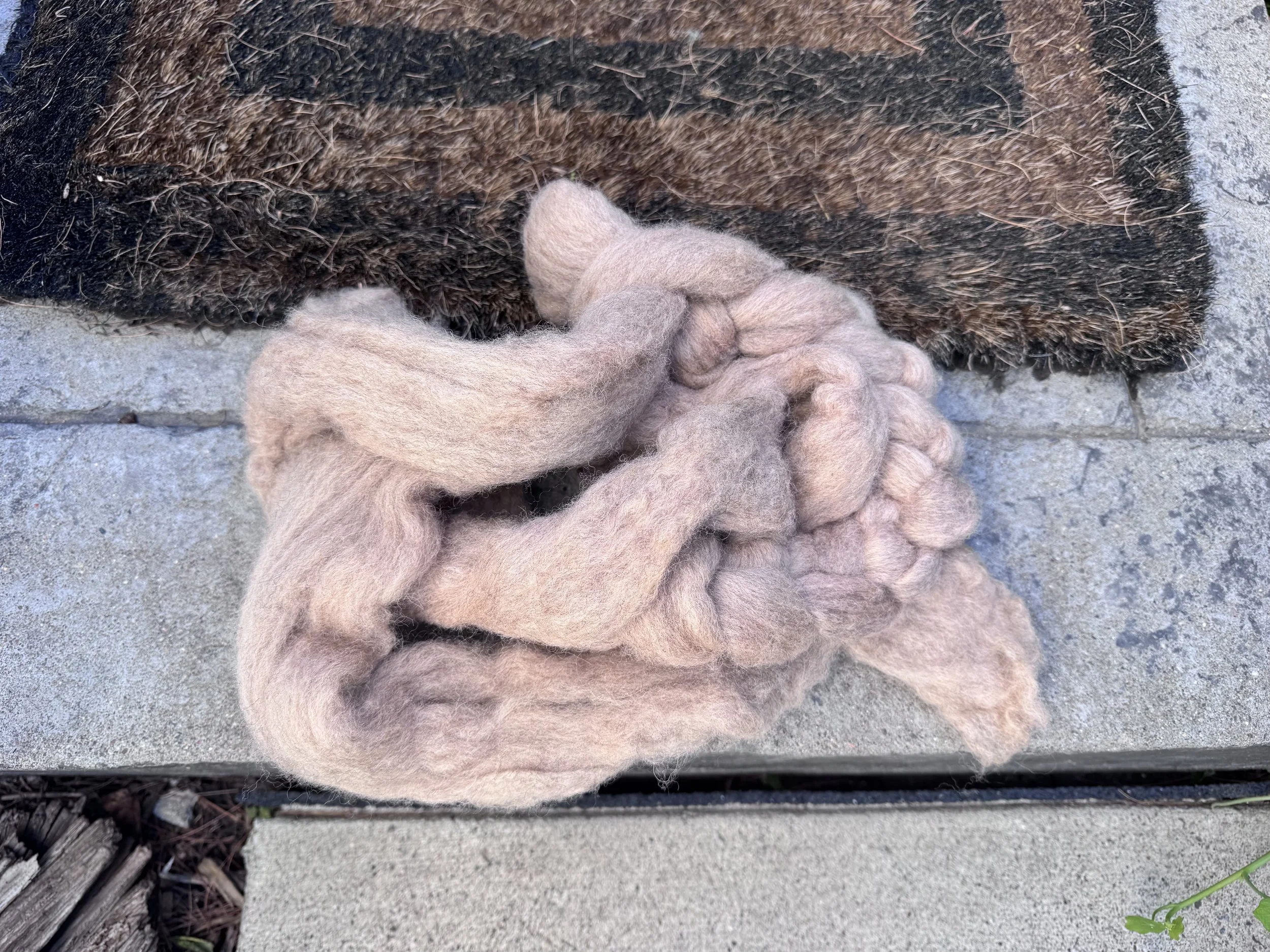
still damp
This needs a bit more drying; the parts that are still wet look gray, but where it is dry, it is a nice, fuzzy pink. I asked for a batt carder for my birthday this year (and I got one!), and I will use it blend this with some dark brown roving and maybe some orange roving (which I still need to dye with my marigolds) which I will then spin into some splendid autumnal yarn.
-
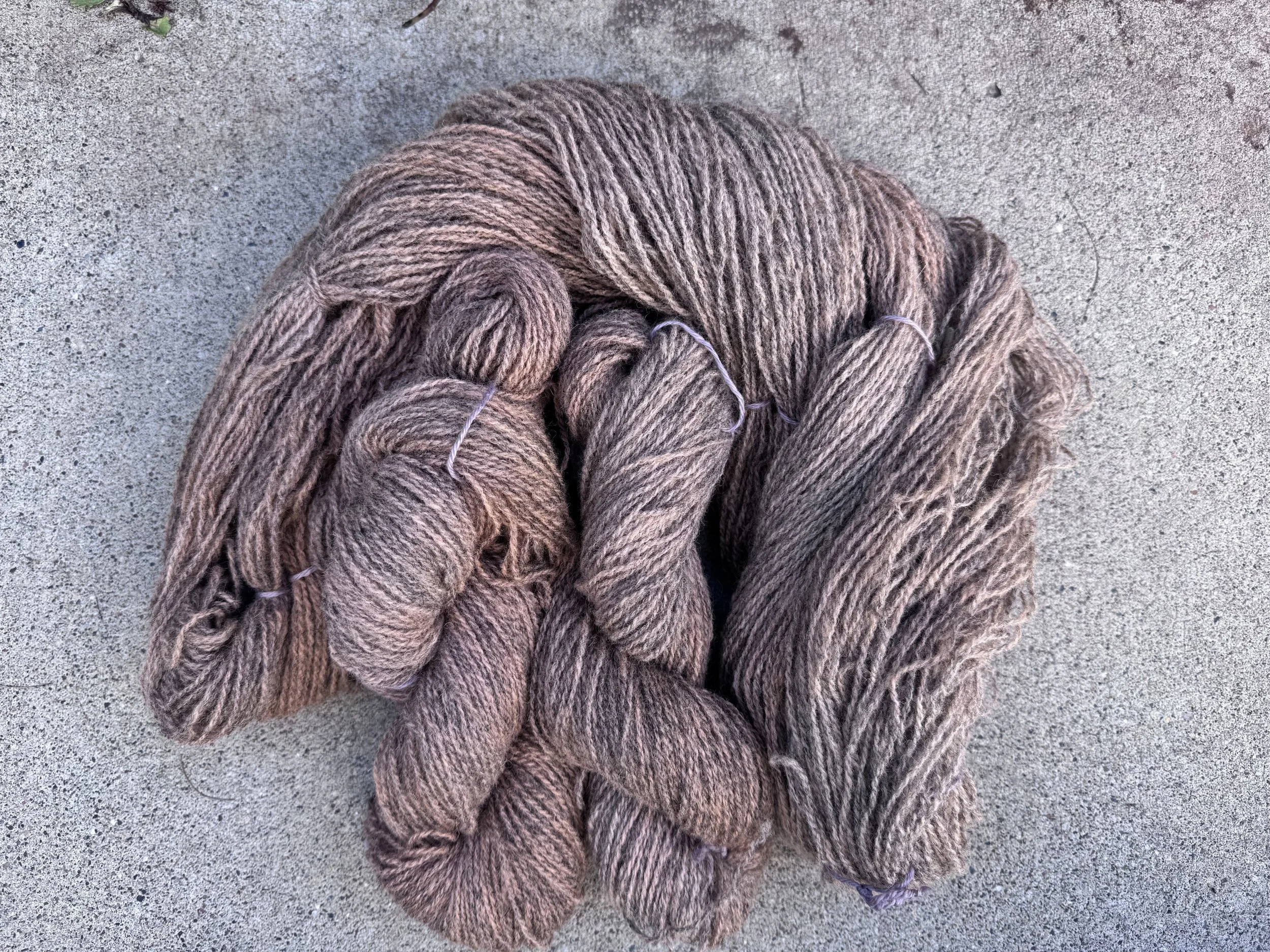
200 more grams of Shetland
And here are four more 50g hanks of gray Shetland, cooked in the second exhaust of the leaves, with the leaves. They turned out quite wacky, which I like, with colors ranging from pink through brick to gray through blue. Very stormy. I wonder if I got all of this variation because I didn’t remove the indigotin by salting and smushing the leaves? So much to wonder about and to experiment with.
-
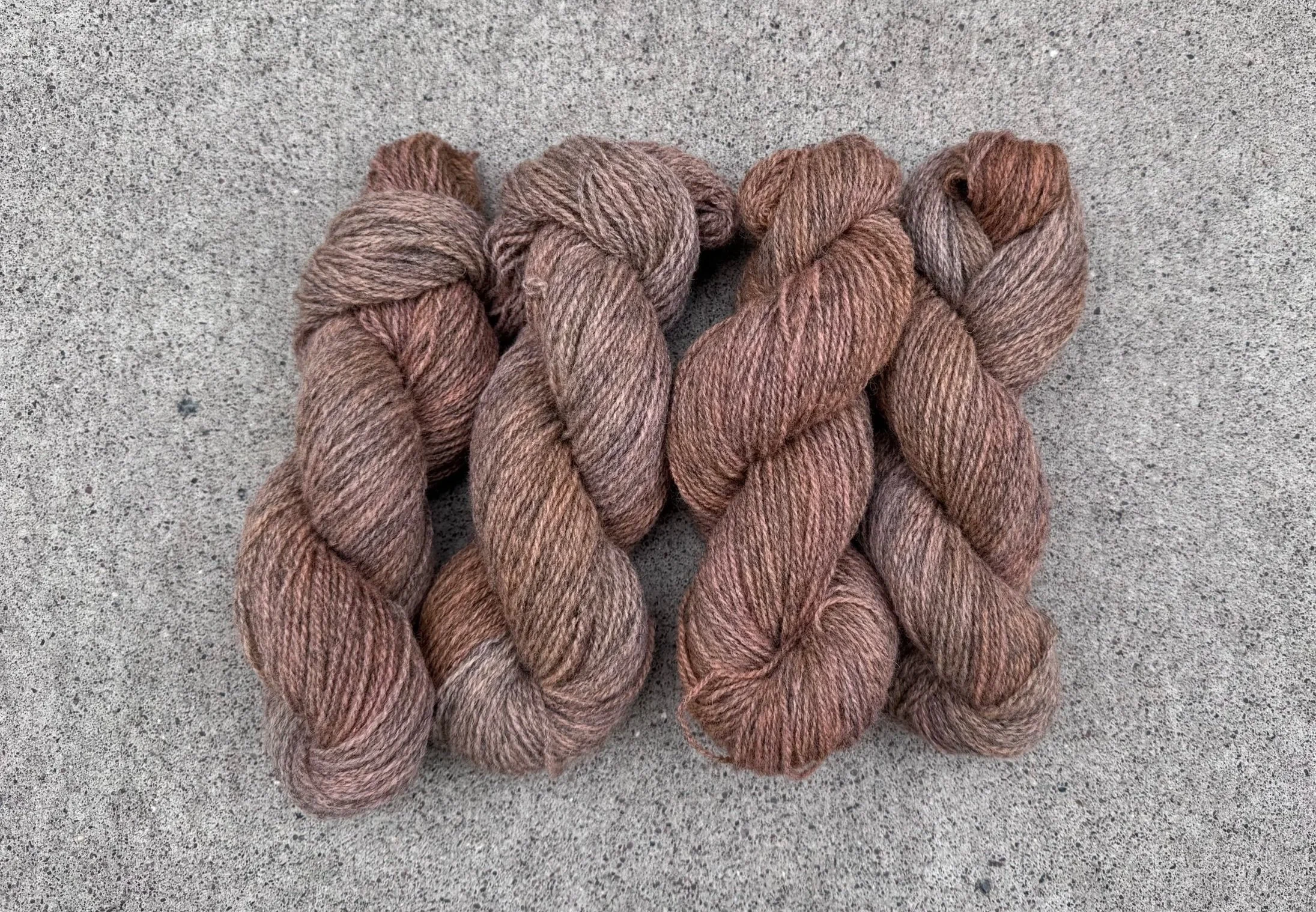
all trussed up
-
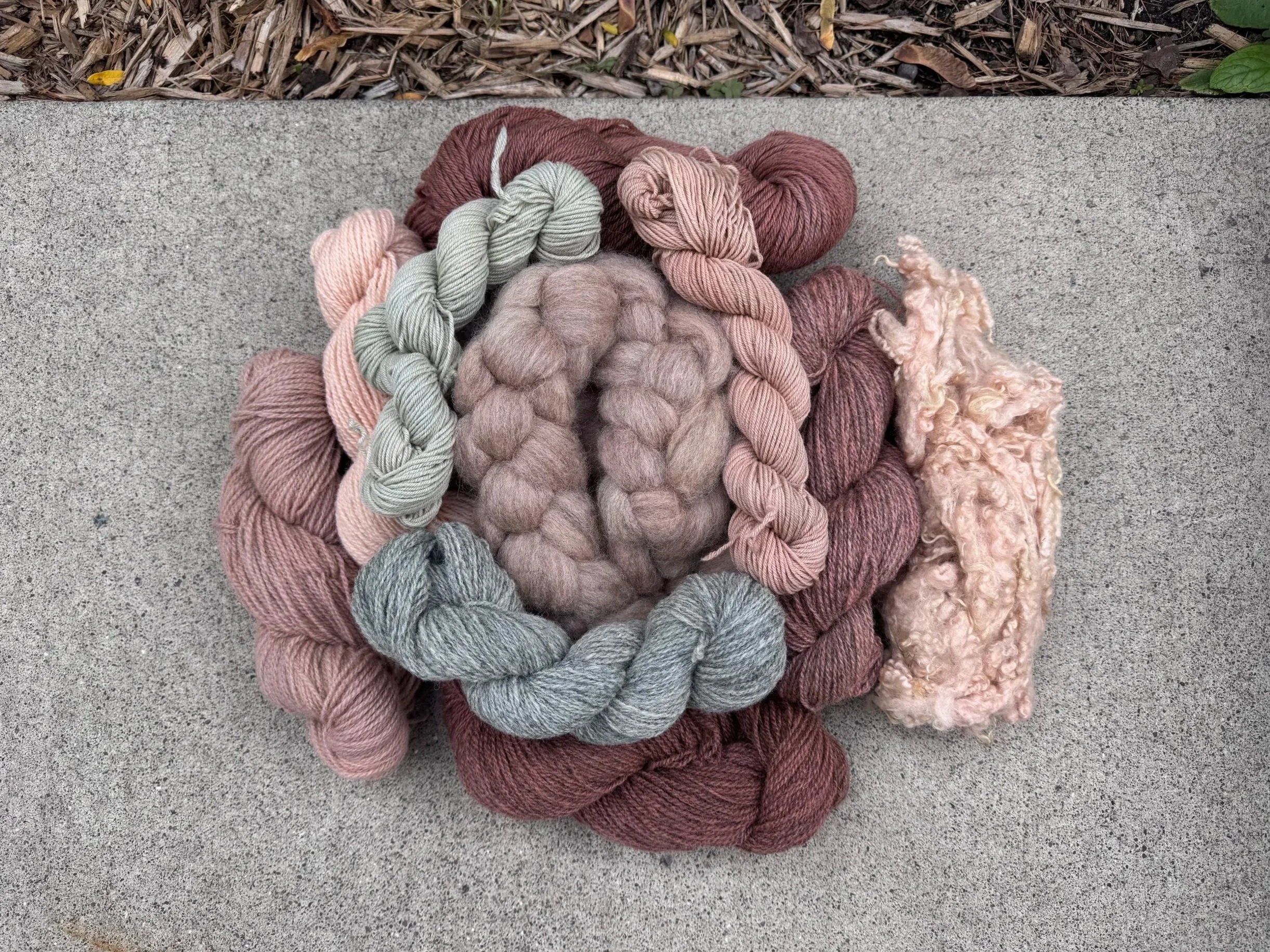
all together
Here are all three batches together. I want to make something that uses all (or most) of these. Would knitting or weaving be best, I wonder?